

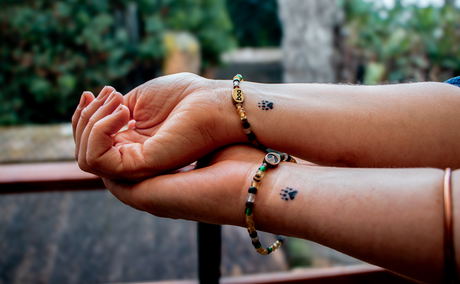
Some memories are captured in photographs. Others come home with you in a slightly more permanent way. For Australian volunteers Jamie, Hayley and Jess, and Cango Academy student Zenny, their time together in the Klein Karoo was marked with an experience they will quite literally carry with them forever.
Lilo Gets a Stitch | Understanding Glaucoma in Wildlife
Posted on Thu May 28, 2026.
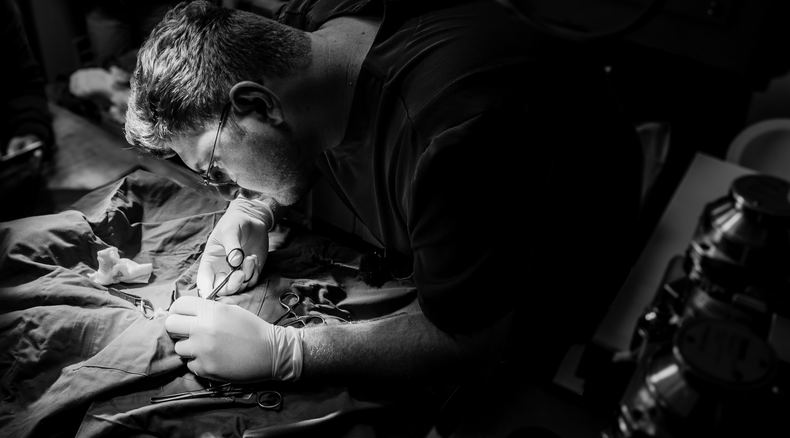
Recently, one of our much-loved brown lemurs, Lilo, underwent an important veterinary procedure after developing a condition known as glaucoma.
Glaucoma occurs when pressure builds up inside the eye due to fluid not draining properly. Over time, this pressure can damage the eye itself as well as the optic nerve - the part responsible for sending visual information to the brain. In both humans and animals, glaucoma can become extremely painful if left untreated.
What makes glaucoma particularly challenging is that it is often very difficult to detect early. This is true not only in wildlife species, but also in domestic cats and dogs. In many cases, animals instinctively hide signs of discomfort, and symptoms may only become noticeable once the condition has already progressed significantly. By the time visible swelling, cloudiness, or behavioural changes appear, irreversible damage may already have occurred.
In wildlife medicine, cases like this are especially rare and can be even more complicated to diagnose due to the unique anatomy, behaviour, and stress sensitivities of exotic species.
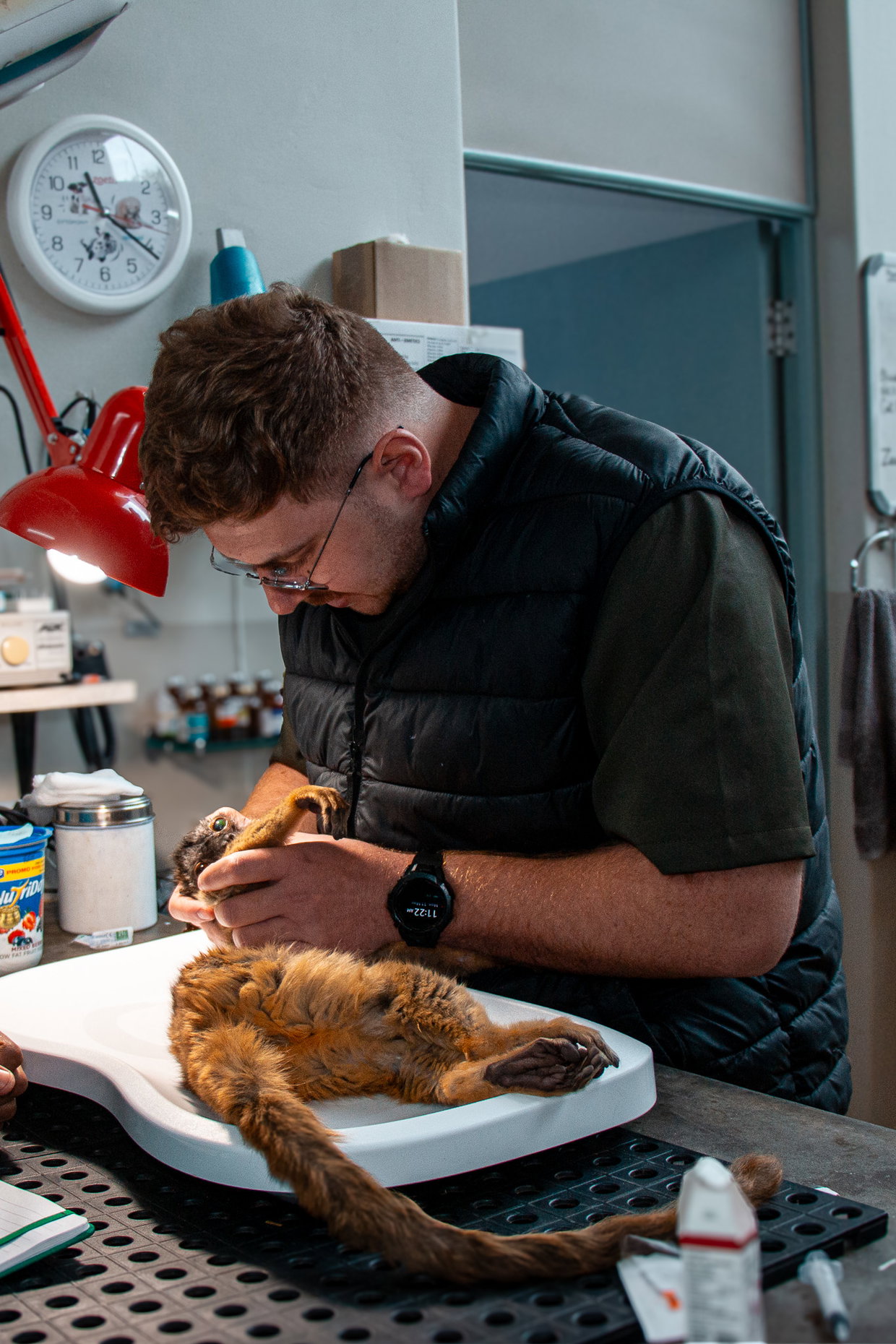 After veterinary assessment, Lilo was initially treated with specialised eye drops aimed at reducing the pressure within the eye and relieving discomfort. Unfortunately, despite careful treatment and monitoring, the condition did not improve sufficiently. To prevent ongoing pain and further complications, the veterinary team made the decision to surgically remove the affected eye, a procedure known as an enucleation.
Although the idea of removing an eye may sound alarming, animals adapt remarkably well after the procedure and are often far more comfortable once the source of pain has been removed. In many cases, animals quickly return to normal behaviour, eating, climbing, socialising, and interacting confidently with their environment.
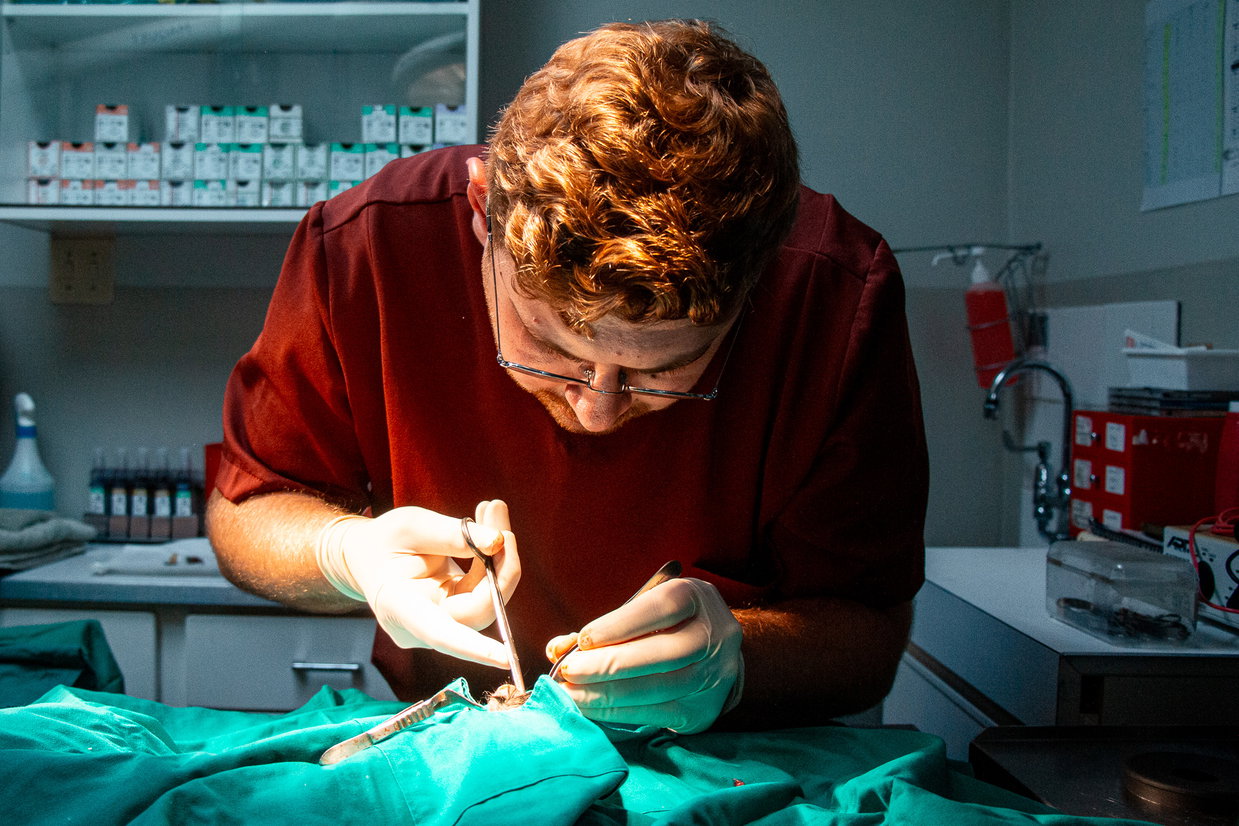
The surgery was performed by Dr Shaun Sagor under the guidance of Dr Carlisle. Because of the small size and specialised anatomy of a lemur, the surgery required exceptional precision and care.
The procedure also provided a valuable educational opportunity for our LOOP Abroad group of pre-veterinary students. Throughout the surgery, students rotated through the theatre to observe and ask questions about wildlife medicine, anaesthesia, surgical techniques, and animal welfare. Dr Shaun and Dr Carlisle took the time to explain each step of the process in detail, helping students gain practical insight into the realities and responsibilities of veterinary care in conservation settings.
Experiences like these are incredibly important for future veterinarians, as they highlight not only the science behind animal medicine, but also the compassion and ethical decision-making involved in providing animals with the best possible quality of life.
 We are very happy to share that Lilo is recovering well and continues to receive close care and monitoring from the team. Her resilience serves as a wonderful reminder of how adaptable animals can be when given the proper care, treatment, and support.
At Cango Wildlife, every medical decision is made with one goal in mind:to ensure that the animals in our care live healthy, comfortable, and enriched lives.
Share This Post
Latest News
-
 A Little Piece Of Africa, Forever
Wed September 30, 2026 -
 From Cango To Kruger: Sharing The Story Of Project ZOA
Wed September 30, 2026 -
 Planting For The Future: Arbor Month Takes Root At Cango Academy
Wed September 30, 2026 -
 Building Trust, One Click At A Time
Tue September 29, 2026 -
 Trust Is Earned, Not Expected
Tue September 29, 2026 -
 Born To Be Wild: Celebrating 40 Years & Building The Next 40
Tue September 29, 2026 -
 Coming Home To Cango
Tue September 29, 2026 -
 A New Campus And It Is Only The Beginning
Thu August 27, 2026 -
 Making Waves Beyond Cango
Thu August 27, 2026 -
 Two Peas In A Pod
Thu August 27, 2026
Further Reading
A Little Piece Of Africa, Forever
Wed September 30, 2026
Read This Article
From Cango To Kruger: Sharing The Story Of Project ZOA
Wed September 30, 2026
Read This Article
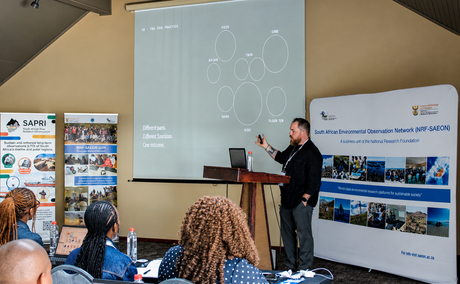
Cango Wildlife CEO Douglas Eriksen recently took Project ZOA to a new audience, delivering the keynote address at the 18th NRF-SAEON Graduate Student Network Indibano in Hazyview, Mpumalanga, on 16 September 2026. The South African Environmental Observation Network (SAEON), a research platform of the National Research Foundation, brings together scientists working across South Africa’s terrestrial, marine, freshwater and atmospheric environments. Its Graduate Student Network connects Master’s and PhD researchers from across the...
Planting For The Future: Arbor Month Takes Root At Cango Academy
Wed September 30, 2026
Read This Article
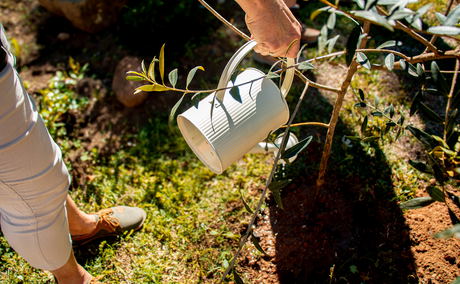
The final day of Arbor Month brought with it a fitting moment of growth at the newly opened Africa Skills Cango Academy, as representatives from the Garden Route District Municipality joined the Cango team for the handover and planting of indigenous trees. The Garden Route District Municipality donated 35 indigenous plants, comprising 20 Karee trees and 15 Spekboom, to be planted at the Academy. The initiative formed part of Arbor Month and...
Share This Post