

Oudtshoorn is about to gain a new kind of neighbour: a working campus, built on sustainability principles, aimed squarely at the town's future workforce. On 1 September, Cango Wildlife will officially open its new Africa Skills Cango Academy site to an invite-only audience of civic and business leaders. Four days later, on 5 September, the doors open to the public for a community open day at 291 Adderley Street. Locals will be...
The Strength To Say You're Not Fine
Posted on Fri June 26, 2026.
There is a particular silence that most men know how to perform. It arrives with the question "how are you?" and it sounds something like: fine. Work's busy. Can't complain.
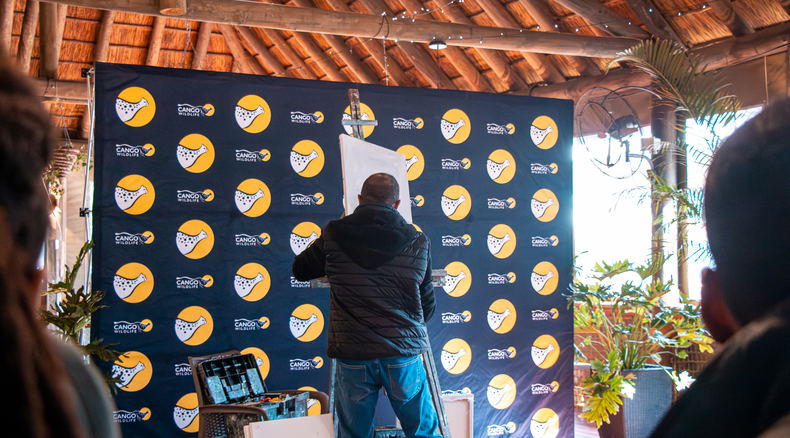
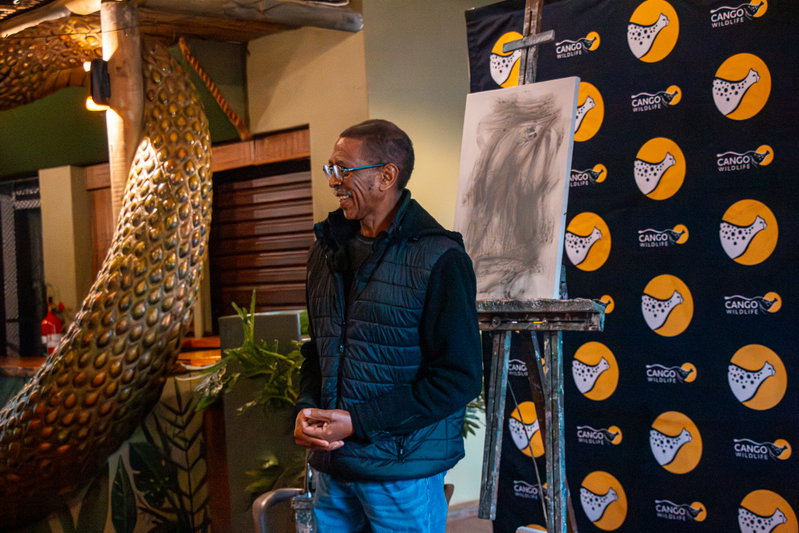
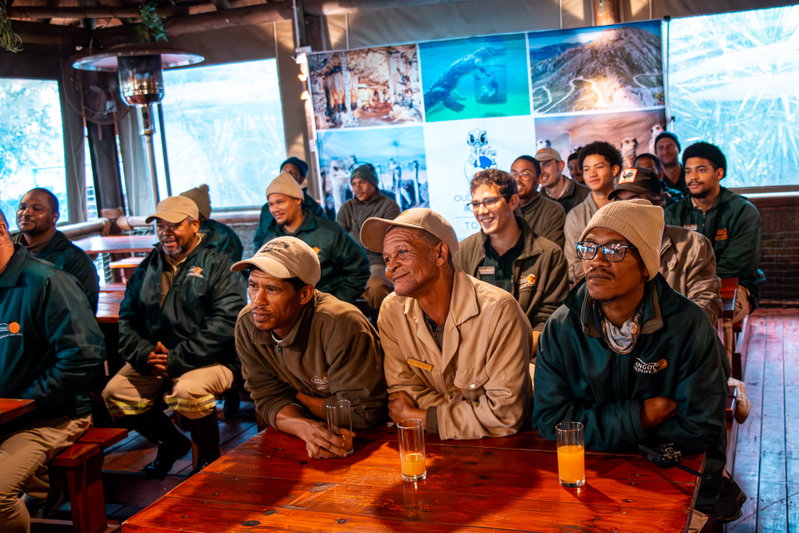
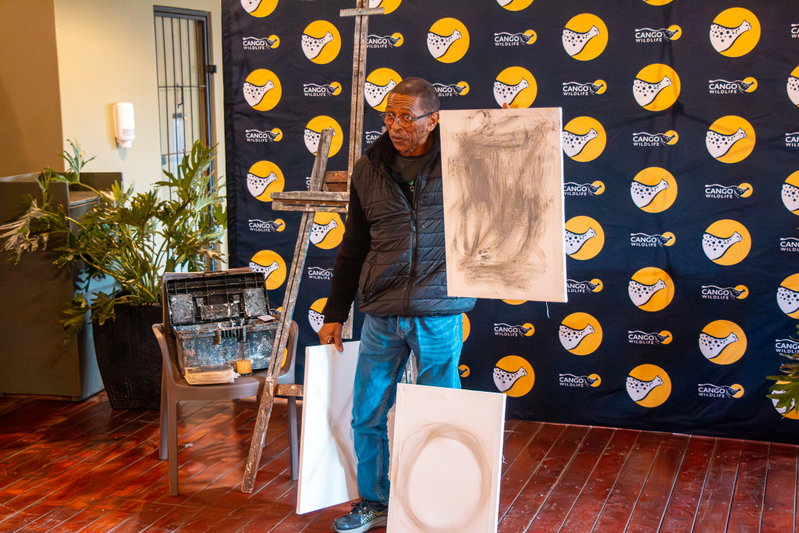
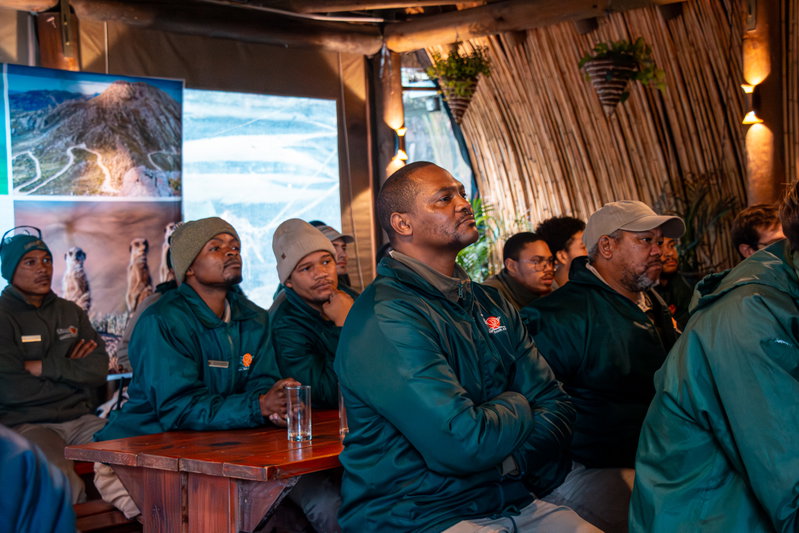
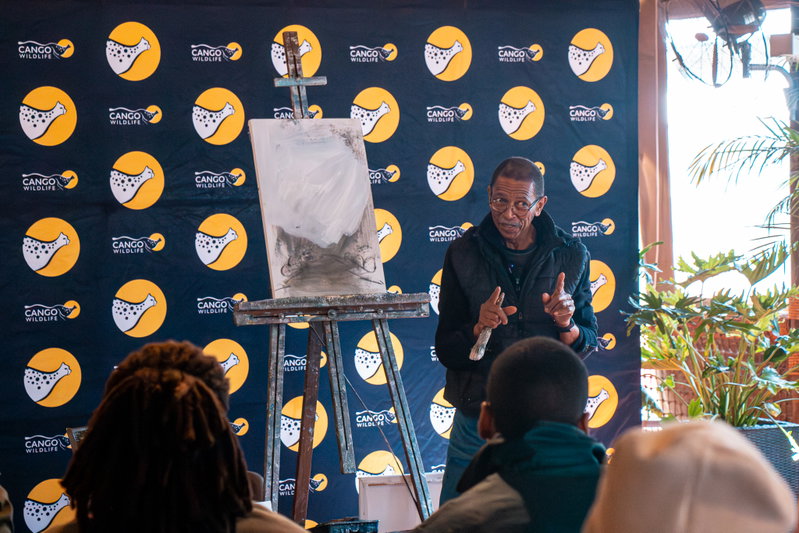
On the morning of 26 June 2026, that silence was invited to leave. Cango Wildlife’s male staff gathered for a men's mental health seminar organised by one of our own animal caregivers, Siyabonga Dlamini, in honour of Men's Mental Health Month. Our speaker was Anthony Noble, a George-based artist, educator, and motivational speaker whose reputation for turning a blank canvas into something extraordinary (figuratively and literally) had preceded him. It was a good morning and a necessary one.
The Numbers Behind the Silence
South Africa is not a gentle place to be a man. The figures are stark: men account for approximately 79% of all mental-health-related deaths in the country. South African men are four to five times more likely to die by suicide than women. The country ranks tenth globally for suicide rates, recording an estimated 14,000 deaths from intentional self-harm each year. These numbers represent the shape of a crisis that largely goes unnamed because the people it is most affecting have been taught, usually from childhood, not to name it.
That problem is not unique to conservation work, but it is not absent from it either. The work our male staff do is physical, demanding, emotionally complex, and often invisible to outsiders. Caring for animals through injury, illness, and loss; managing the relentlessness of daily operations; showing up regardless of what is happening at home - these are not conditions that invite vulnerability. In environments where toughness is a professional virtue, the gap between what a man feels and what he says can be very wide indeed.
This is precisely why mornings like today matter.
The Man Who Made It Happen
The seminar would not have happened without Siyabonga Dlamini. He is an animal caregiver, not a mental health professional or an events coordinator, and yet he identified a need in the men around him and did something about it. More than that: he opened the morning by sharing some of himself.
Siya spoke from personal experience about growing up in a world that told boys to be strong and never paused to ask whether they actually were. He talked about how depression in men so often does not look like sadness; because sadness would be too visible, too easy to recognise. It looks like irritability. Like working longer and longer hours because stillness feels unbearable. Like the friend who used to call every week and then, quietly, stopped.
Siya also made a distinction that is easy to say and harder to internalise: “The strongest man,”he told the room, “is the one who speaks and looks for help.” Coming from someone who had clearly tested that claim against his own life, it landed with real weight.
He called on us to be men who ask the question directly. Not “how are you” as a greeting, but “how are you, really” as a genuine inquiry - and to ask it twice, because the first time often draws the performed answer. His challenge to us was simple: find someone who is struggling and be the person who asks.
A Canvas Worth More Than You Think
Anthony Noble spent 40 years teaching English and art in primary schools across the Eastern Cape and the Garden Route before retiring in 2021. He turned that retirement into a second career: Perisos Pottery, his studio in George, offers ten sessions pairing the making of clay vessels with life lessons drawn from decades in the classroom and a deep personal faith. He has taught a blind man to throw clay on a wheel. He has hosted a marriage proposal. He currently holds a brush steadier than most people half his age, all while fighting leukaemia and prostate cancer simultaneously.
He came to us not despite those diagnoses but, in part, because of them. The experience of receiving two life-altering phone calls in short succession - first leukaemia, then, the following morning, prostate cancer - had led him to a decision about what he was going to do with what remained of his life. He was going to live it, and he was going to tell others that they could too.
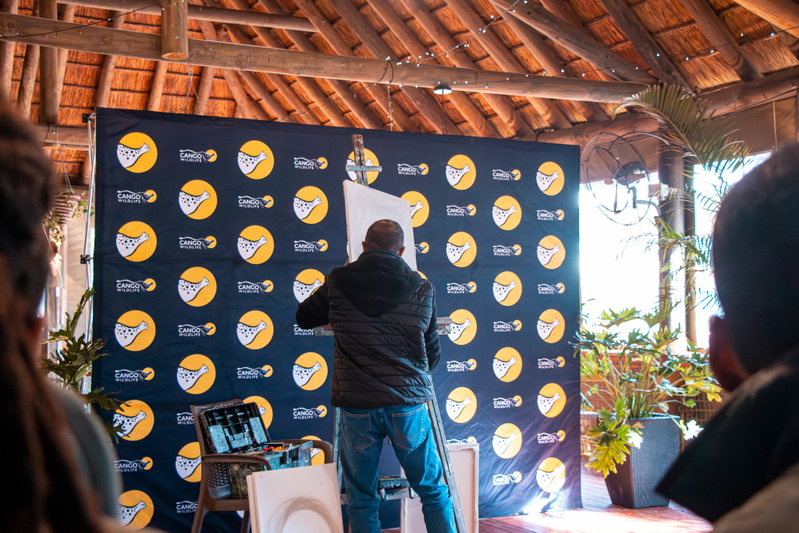
Anthony brought a canvas. He also brought oil paints, a palette knife, one single worn brush, and a stopwatch.
What followed was something genuinely unexpected and inspiring. In just over 34 minutes, while speaking the entire time (and reading scripture, sharing stories, answering questions) he painted a complete mountain landscape with water, cliffs, mist, and an aloe in the foreground. The room watched a blank canvas become something coherent and beautiful in real time.
That was the point. When he first showed us the canvas, unprimed and unmarked, he asked what we would pay for it. Two rand, someone offered. He named it. He applied the first brushstrokes. He returned to the question. By the end, the figure had changed considerably. The canvas had not. What had changed was what we understood it to be capable of becoming.
The men in the room were not an especially difficult crowd to connect this to.
What Was Said, and Why It Mattered
Both Siya and Anthony circled the same truths from different directions. That vulnerability is not the enemy of strength but its foundation. That you cannot recover from what you refuse to feel. That the men around us who go quiet, who withdraw, who fill every waking hour because sitting still is too dangerous, are sending a signal. That unaddressed trauma does not disappear with time; it changes shape into a short temper, a numbness, a difficulty with closeness that feels inexplicable to those closest to you.
Anthony spoke about forgiveness with the kind of clarity that only comes from having genuinely wrestled with it. He described unforgiveness as drinking poison and expecting the other person to die. He shared the story of an eight-year-old boy who heard this metaphor and immediately understood that he needed to forgive an absent father - a man he had never met, and who had left before he could form a memory of him. Five years of carried weightand only eight years old.
He also said something that is, for many men, the hardest thing to hear: "Asking for help is not the end of your strength. It is the beginning of it."
To the Men at Cango, and to Those Who Love Them
To the men who were in that room this morning: you were seen. Something honest happened today, and it cost some of the people in that room something to be part of it.
To the men who were not there, or who are reading this from further afield: the task is not complicated. Find one person you can be honest with. Not the performed version of fine but actually being honest. If that person does not exist yet, the resources below are a starting point.
And to the women, partners, families, and friends who have men in their lives: ask twice. Ask in a way that makes it safe to answer honestly. Do not wait for the man to bring it up himself, because for many men, the conditioning against doing exactly that runs very deep. The ones who go quiet are not always the ones who are coping. They are sometimes the ones who have concluded that no one will understand. Prove that wrong.
The silence is the signal. It has always been the signal.
Thank You
A genuine and heartfelt thank you to Siya for seeing a need in the people around him and doing something about it and for making this morning happen through nothing more than care and initiative. And to Anthony Noble, for bringing his art, his candour, his faith, and decades of hard-won wisdom to our community. To read more about him and his studio, Perisos Pottery, you can find him on Facebook.
Both men gave us something worth keeping today.
If You or Someone You Know Needs Support
South African Depression and Anxiety Group (SADAG) The country's largest patient advocacy and mental health support group.
• 24-hour helpline: 0800 567 567
• Crisis text line: SMS 31393
• Website: www.sadag.org
Lifeline South Africa 24-hour support line offering counselling and crisis intervention.
• National helpline: 0861 322 322
• Website: www.lifeline.org.za

Share This Post
Latest News
-
 A New Campus And It Is Only The Beginning
Thu August 27, 2026 -
 Making Waves Beyond Cango
Thu August 27, 2026 -
 Two Peas In A Pod
Thu August 27, 2026 -
 A Cango Experience They’ll Carry Forever
Thu August 27, 2026 -
 The Story Behind The Menu
Thu August 27, 2026 -
 The Importance of Enrichment at Cango Wildlife
Thu August 27, 2026 -
 Knowledge, Laughter and a Little Friendly Competition
Fri July 31, 2026 -
 Shaping The Next Generation Of Wildlife Veterinarians
Thu July 30, 2026 -
 Walking Together
Thu July 30, 2026 -
 Celebrating The People Behind The Care
Thu July 30, 2026
Further Reading
A New Campus And It Is Only The Beginning
Thu August 27, 2026
Read This Article
Making Waves Beyond Cango
Thu August 27, 2026
Read This Article
At Cango Wildlife, learning is not something that ends with a qualification. It continues every day through the animals in our care, the people we work alongside and the knowledge shared across the wider wildlife community. For Pippa, one of our dedicated Animal Caregivers, that passion for continued learning is now taking her beyond Cango Wildlife as she begins making her mark within the broader animal-care community. Recently, Pippa was invited to...
Two Peas In A Pod
Thu August 27, 2026
Read This Article
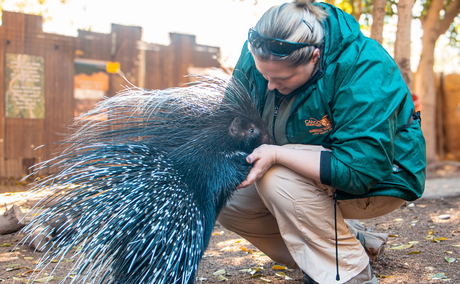
How patience, trust and training created a special bond between Animal Caregiver Pippa and Patricia, our Cape Porcupine When Patricia arrived at Cango Wildlife as a tiny baby, few could have predicted the relationship that would develop between this little bundle of quills and Animal Caregiver Pippa. For Pippa, however, the connection began with something very simple: time. Bottle feeds, playtime, cleaning and every spare opportunity to be around Patricia became the...
Share This Post