

Oudtshoorn is about to gain a new kind of neighbour: a working campus, built on sustainability principles, aimed squarely at the town's future workforce. On 1 September, Cango Wildlife will officially open its new Africa Skills Cango Academy site to an invite-only audience of civic and business leaders. Four days later, on 5 September, the doors open to the public for a community open day at 291 Adderley Street. Locals will be...
Hanging in there...
Posted on Mon May 10, 2021.
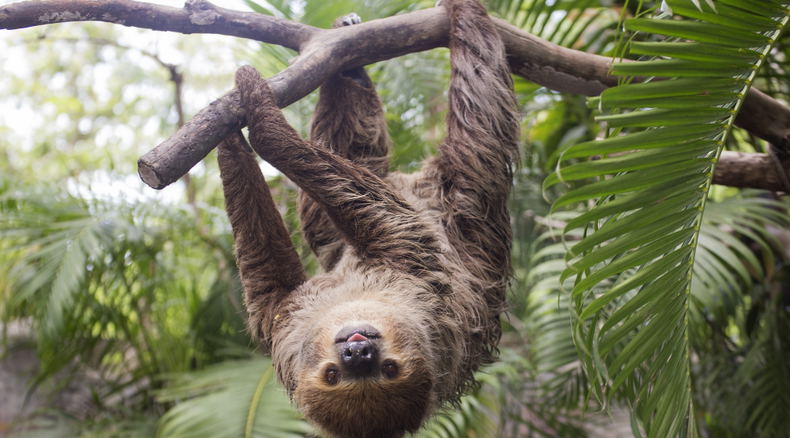
Ahead lies a monumental week for us as our CWR family expands! Not by 1 or 2… but by 3! Choloepus didactylus, more commonly known as Linnaeus’s Two-toed Sloths, will be joining the CWR family from 10 May 2021. Our Zoological team is abuzz with excitement and all efforts are being made to prepare their new home.
We have powered through one of the most challenging times in our facility’s history. Our sails had never been so windless and our fundraising endeavours were drained. There was always one constant though, and that was to get through lockdown and open our doors again! The pandemic threw the world a curve ball and we were not prepared. At the time, we were in the planning stages of a new exhibit when the virus spread. Everything we had planned, ground to an extreme halt, and after 35 years, we had to close our doors to the public, thankfully only temporarily. More than a year later and so much has changed! This past year taught us determination like no other, that having faith is fundamental and that innovation is not an option, sometimes it is a sheer necessity. More than anything though, it has taught us how much Cango Wildlife Ranch means to so many and the support that we received was overwhelming. As things slowly returned to ‘normal’, we decided to make our new exhibit a reality once again! Amazonia, now a token of thanks to our dedicated supporters and another wonderful part of the world that we will be able to highlight and educate the public on daily.
Ahead lies a monumental week for us as our CWR family expands! Not by 1 or 2… but by 3! Choloepus didactylus, more commonly known as Linnaeus’s Two-toed Sloths, will be joining the CWR family from 10 May 2021. Our Zoological team is abuzz with excitement and all efforts are being made to prepare their new home.
Also known as the Southern Two-toed sloth, it takes its name from the two curved claws at the end of each limb. The impressive biology of a sloth allows it to spend 90% of its life hanging upside down which is made possible by their organs being attached to their rib cage to eliminate pressure on the lungs. This means that, unlike us, a sloth can hang upside down with no effect on its breathing what-so-ever. As sloths go, these are considered large with an average length of around 65cm. Their hair parts from the stomach downwards to their back, allowing water to run off in rainstorms, and its natural tan colour is often tinged with green from algal growth. Unique grooves in the hair facilitate this growth of algae, which helps camouflage the sloth against predators. To conserve energy, sloths move slower than any other mammal on the planet. This modest pace means that sloths generally travel no more than 38 meters in a single day, and on the rare occasion that they find themselves at ground level, they crawl only 30 cm per minute.
Sloths are notoriously leisurely in all aspects of their life and only descending from the canopies to move from one tree to another or to defecate. When they are on the ground, they are extremely vulnerable to predation, and as a result, they have bladders and rectums with a very high capacity, allowing them to wait as long as a week before descending! They range from Venezuela and Colombia into eastern Ecuador, as far south as Peru and across to the Atlantic coasts of northern Brazil. Our sloths have joined us from a centre called Noah’s Ark, and now form part of only 3 accredited facilities in South Africa to house these magnificent creatures. We are hard at work to ensure that their habitats meet all their tropical needs, and they will therefore find temporary sanctuary in our Tropical Temple in the ‘Valley of Ancients’ while we complete their state-of-the-art home in Amazonia.
Recently, legendary naturalist Sir David Attenborough, sat down with BBC Earth to answer some of his most frequently asked questions, the most recurrent being, ‘If you could be any animal for a day, what would it be?’ Without hesitation Attenborough responded, ‘A sloth’! Sleeping up to 20 hours a day, hanging around with little to do and beloved by all - sounds about as good as it gets!
Over the past 2 decades, mainstream media has also highlighted the gentle nature of these mellow slowpokes, significantly increasing public interest and curiosity, and we cannot disagree, they are truly remarkable animals worthy of all their notoriety. To fully admire and appreciate these fascinating beings, please visit Cango Wildlife Ranch in Oudtshoorn – where you can meet Sid, Wookie and Shaggy.
Share This Post
Latest News
-
 A New Campus And It Is Only The Beginning
Thu August 27, 2026 -
 Making Waves Beyond Cango
Thu August 27, 2026 -
 Two Peas In A Pod
Thu August 27, 2026 -
 A Cango Experience They’ll Carry Forever
Thu August 27, 2026 -
 The Story Behind The Menu
Thu August 27, 2026 -
 The Importance of Enrichment at Cango Wildlife
Thu August 27, 2026 -
 Knowledge, Laughter and a Little Friendly Competition
Fri July 31, 2026 -
 Shaping The Next Generation Of Wildlife Veterinarians
Thu July 30, 2026 -
 Walking Together
Thu July 30, 2026 -
 Celebrating The People Behind The Care
Thu July 30, 2026
Further Reading

A New Campus And It Is Only The Beginning
Thu August 27, 2026
Read This Article
Making Waves Beyond Cango
Thu August 27, 2026
Read This Article
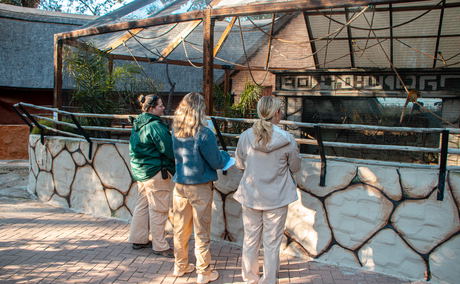
At Cango Wildlife, learning is not something that ends with a qualification. It continues every day through the animals in our care, the people we work alongside and the knowledge shared across the wider wildlife community. For Pippa, one of our dedicated Animal Caregivers, that passion for continued learning is now taking her beyond Cango Wildlife as she begins making her mark within the broader animal-care community. Recently, Pippa was invited to...
Two Peas In A Pod
Thu August 27, 2026
Read This Article
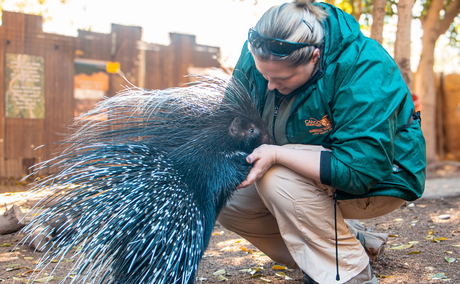
How patience, trust and training created a special bond between Animal Caregiver Pippa and Patricia, our Cape Porcupine When Patricia arrived at Cango Wildlife as a tiny baby, few could have predicted the relationship that would develop between this little bundle of quills and Animal Caregiver Pippa. For Pippa, however, the connection began with something very simple: time. Bottle feeds, playtime, cleaning and every spare opportunity to be around Patricia became the...
Share This Post