

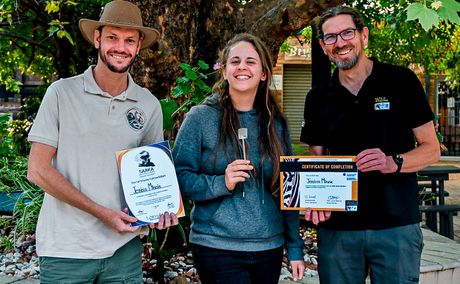
Continuous learning and professional development play an important role in maintaining high standards of animal care and welfare. From 7 to 10 September 2026, I had the privilege of attending a four-day Animal Husbandry Workshop hosted at Lory Park Animal and Owl Sanctuary and presented by Wild Welfare UK. The workshop was an incredibly valuable experience, offering the opportunity to expand my knowledge, exchange ideas with fellow animal care professionals and gain...
Are Blood Cells Bigger in Bigger Animals?
Posted on Thu October 29, 2026.
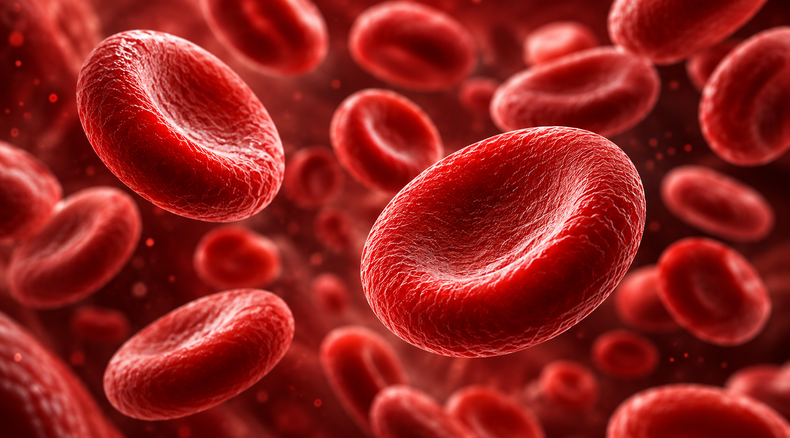
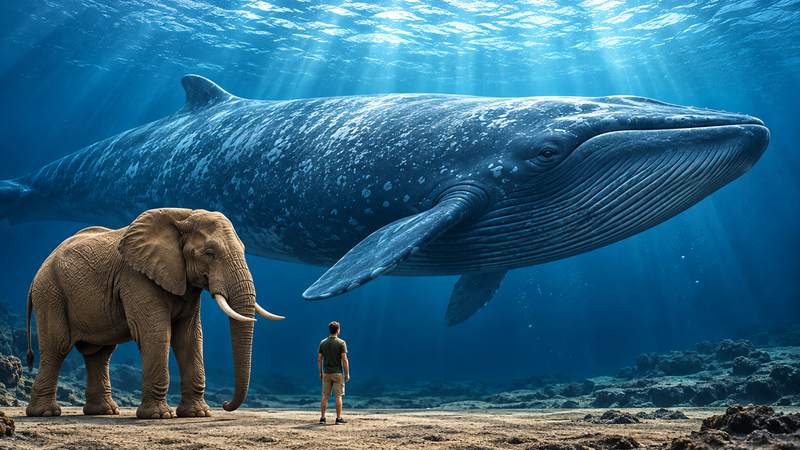
Have you ever wondered whether the blood cells of a massive blue whale are significantly larger than those of a human? Considering the enormous difference in body size, you might expect the answer to be a resounding yes. However, the science behind it is far more fascinating than you might think!
Red blood cells play an essential role in transporting oxygen throughout the body, supporting everything from movement and growth to the functioning of vital organs. While larger animals generally require more oxygen overall, their blood cells are not necessarily much bigger than those of smaller species.
In fact, scientists have spent decades investigating the relationship between body size, cell size and metabolism, with some surprising discoveries along the way.
A Whale of a Discovery
One particularly interesting study, published in 1953, compared the red blood cells of blue whales and humpback whales with those of humans.
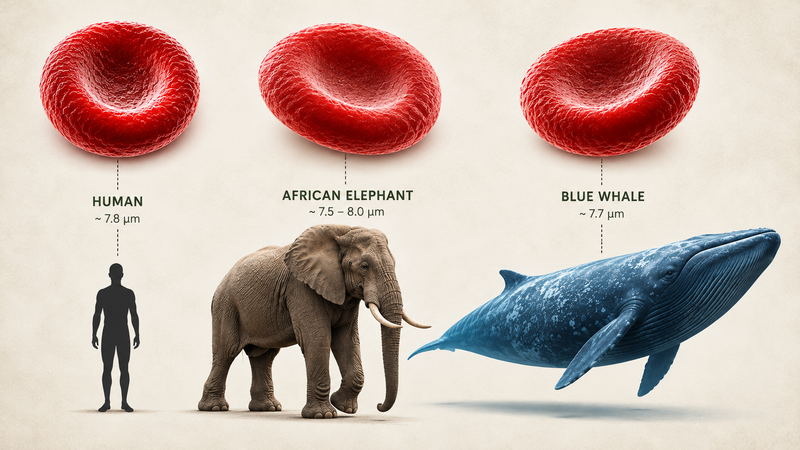
Researchers found that blue whale red blood cells measured approximately 7.7 micrometres in diameter, while humpback whale cells averaged 8.2 micrometres. Human red blood cells, by comparison, measured approximately 7.8 micrometres.
That's right! Despite a blue whale weighing thousands of times more than a human, its red blood cells are almost identical in size to ours.
This remarkable finding demonstrates that an animal's overall size does not necessarily determine the size of its individual cells. Instead, larger animals often have vastly greater numbers of cells working together to support their bodies.
The Connection Between Cells and Metabolism
Research has also explored how cell size relates to metabolism, the process through which living organisms convert energy to sustain life.
Studies involving different species of geckos have shown that larger species can have larger red blood cells and lower metabolic rates relative to their body size.
This supports the idea that cell size may influence how efficiently organisms use energy, although scientists continue to investigate the complex relationships between cell size, metabolism and the body's circulatory system.
Interestingly, larger mammals such as elephants and whales generally use less energy per kilogram of body weight than smaller mammals. However, their enormous size means they still require substantial amounts of oxygen and energy overall.
Blue whales provide a particularly impressive example. As the largest animals known to have ever lived, they can consume several tonnes of krill in a single day. Their highly adapted respiratory and circulatory systems also allow them to store and use oxygen efficiently while diving beneath the ocean's surface.
But What About Insects?
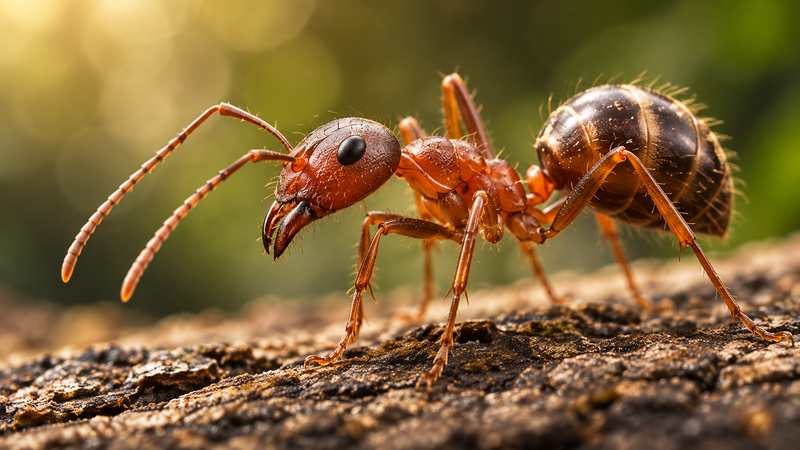
While mammals rely on red blood cells to transport oxygen, insects have developed an entirely different approach.
Instead of blood like ours, insects circulate a fluid called haemolymph, which transports nutrients, hormones and waste products throughout their bodies.
Unlike human blood, haemolymph generally does not carry oxygen. Insects obtain oxygen through tiny openings along their bodies called spiracles, which connect to a network of tubes that deliver air directly to their tissues.
This fascinating adaptation helps explain why insects have different physical limitations from mammals and other vertebrates.
However, insects were not always as small as the ones we encounter today!
Millions of years ago, during periods when atmospheric oxygen levels were considerably higher, some prehistoric arthropods reached extraordinary sizes.
One example is Meganeuropsis, an enormous dragonfly-like insect with a wingspan exceeding 70 centimetres. Another is Arthropleura, a giant, millipede-like arthropod that could grow more than two metres long.
Scientists believe higher atmospheric oxygen concentrations may have contributed to the evolution of giant arthropods, although environmental conditions, evolutionary adaptations and other factors also played important roles.
Small Cells, Extraordinary Differences
Perhaps one of the most fascinating aspects of biology is that animals of vastly different sizes are often built from cells that are surprisingly similar in scale.
From tiny insects to enormous whales, much of the difference in body size comes down to the number, arrangement and specialisation of cells rather than simply having much larger individual cells.
Of course, there are exceptions. Cell sizes vary considerably between different organisms and tissues, and some species have evolved unusually large or small cells to meet their particular needs.
Ultimately, the natural world reminds us that size is not always what it seems. Whether we are looking at the microscopic structure of a blood cell or the enormous body of a blue whale, every species has evolved remarkable adaptations to survive in its environment.
And the next time you see an ant scurrying across the ground, consider this: its body may operate very differently from ours, but the microscopic building blocks of life are just as extraordinary.
Share This Post
Latest News
-
 Advancing Animal Welfare
Thu October 29, 2026 -
 Dust, Determination and a Little Klein Karoo Glory
Thu October 29, 2026 -
 Exciting New Beginnings
Thu October 29, 2026 -
 The Cango Wildlife Klein Karoo Business Relay
Thu October 29, 2026 -
 Every Job Is a Conservation Job
Thu October 29, 2026 -
 Specialised Dental Care for Our Big Cats
Thu October 29, 2026
Further Reading
Advancing Animal Welfare
Thu October 29, 2026
Read This Article
Dust, Determination and a Little Klein Karoo Glory
Thu October 29, 2026
Read This Article
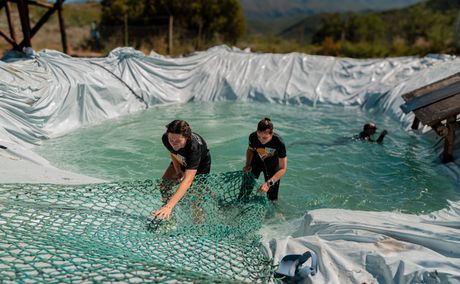
The Cango Wildlife team traded their usual working environment for muddy trails and obstacles at the 2026 Dust 4 Glory Challenge. On 17 October 2026, Wilgewandel Holiday Farm in Oudtshoorn came alive with energy, determination and plenty of muddy smiles as participants gathered for the annual Klein Karoo Dust 4 Glory Obstacle Challenge.
Exciting New Beginnings
Thu October 29, 2026
Read This Article
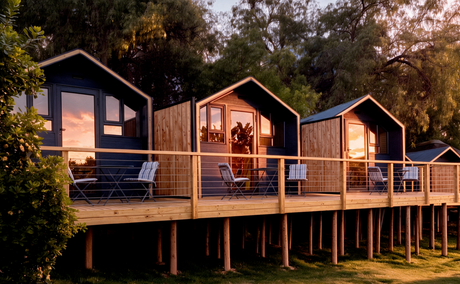
As Cango Wildlife celebrates 40 years of conservation in 2026, we continue to introduce new ways for visitors, volunteers and interns to experience and connect with our facility. October marked two exciting milestones with the official launch of BOA Pods at Cango Wildlife and our new Circle Volunteer & Intern Community Hub.
Share This Post