

Inside Born to Be Wild 1986, Cango Wildlife's first-ever concert For four decades, the people of Oudtshoorn and the Klein Karoo have stood by Cango Wildlife. They've visited, supported, celebrated and, this year, helped us through some of our hardest days. So when it came time to mark our 40th anniversary, we knew how we wanted to do it. It was our turn to give back. On Saturday, 7 November 2026, we...
From a Keeper's Notebook to the Fight Against Wildlife Trafficking
Posted on Wed November 25, 2026.
Research is defined by the Merriam-Webster Dictionary as the "careful study and investigation for the purpose of discovering and explaining new knowledge."
When we think of research in zoological facilities, we often picture scientists in laboratories analysing blood samples or examining tissue under a microscope. While these are certainly part of it, research in a zoological setting can take many forms. It can include collecting animal or plant tissue samples, blood analyses, recording body measurements and heart rates, monitoring animal behaviour, studying diets and even something as simple as keeping accurate daily observations and notes about the animals in our care.
Over the years, Cango Wildlife has contributed to a variety of research projects, sometimes without even realising just how valuable our contributions might be.
Everyday research
One of our most important contributions happens every day through our routine animal observations and record-keeping. Information recorded in ZIMS (Zoological Information Management System), managed by Species360, creates a valuable database that can be requested and used by researchers worldwide. Those seemingly ordinary daily notes can become part of a much bigger scientific picture.
We also take part in more specific research activities. For example, every year (or sometimes every second year), we undertake gastric biopsy sampling in our cheetahs. This helps researchers monitor the prevalence and progression of gastritis in cheetahs, particularly when evaluating new diets, feeding approaches or management methods.
Then there are the occasional questionnaires that land in our inboxes. These might ask about animal diets, enrichment items, weights or measurements, often as part of someone's bachelor's or PhD research. Although they may seem like small requests, the information we provide can contribute to much broader studies.
The more unusual requests
And then we have the more unusual requests, some of which are particularly fascinating. We have collected faecal samples from different animal species for studies ranging from comparing otter species to training a K9 detection dog to distinguish between leopard and cheetah scat based on scent. We do, however, owe the courier companies an apology, as they must sometimes wonder what exactly has died in their delivery vehicles!
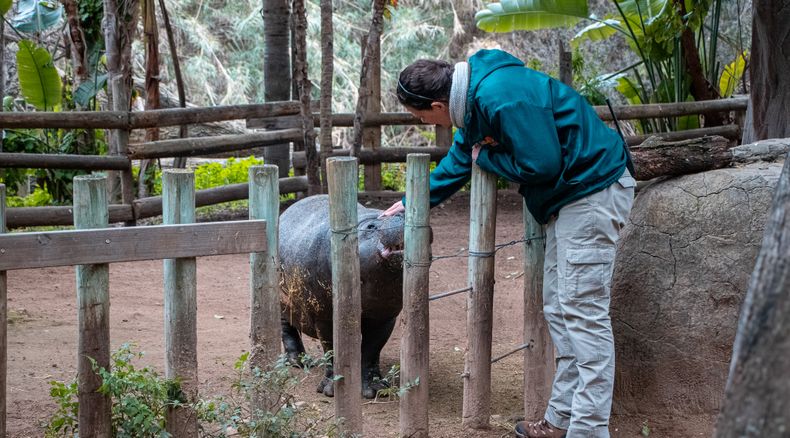
Zoological facilities have an incredible opportunity to contribute to research. Sometimes researchers find it much easier to obtain reliable samples or measurements from animals in human care than to spend days in the bush trying to locate the right species and collect the correct samples. I would love to know how researchers would have measured pygmy hippos in the old days! These days, technology and AI may make certain tasks easier, but our very own pygmy hippos, Hilda and Herbert, have both had their measurements taken and their information contributed to a larger research study.
Whenever possible, Cango Wildlife requests a copy of the completed research paper or publication. These are kept in our research folder, giving us the opportunity to look back over the years and perhaps have a laugh at how research methods, knowledge and our understanding of certain species have evolved.
Our latest contribution: SANBI's DNA Barcoding Project
Our most recent research contribution has been to the South African National Biodiversity Institute (SANBI) DNA Barcoding Project.
This project aims to support the fight against illegal wildlife trade, strengthen anti-poaching strategies and expand the DNA barcode reference library for priority species. DNA barcoding allows scientists to identify species using genetic material, making it a valuable tool for identifying animals or animal products involved in illegal trade.
Cango Wildlife has been able to assist by providing samples from various species, particularly local wildlife from our surrounding area. Having a rehabilitation permit also means that we are equipped to receive injured indigenous wildlife, which sometimes gives researchers access to samples that may otherwise be difficult to obtain.
The sampling process involves photographic documentation and tissue collection. These samples must be collected by an authorised CapeNature official using a specific sampling kit and following the required chain-of-custody procedures, to ensure that the samples are properly documented and traceable.
So far, we have been fortunate enough to contribute two particularly unique samples: one from a very young polecat, estimated to be just 3 to 5 days old, and another from an adult Knysna dwarf chameleon.
Sadly, both animals arrived at our facility in a very poor condition and passed away shortly after arrival. While losing wildlife is always unfortunate, it is encouraging to know that even in these circumstances, something valuable can still come from their contribution.
These two samples may become part of a much larger scientific resource, potentially helping authorities identify animals involved in wildlife smuggling and supporting efforts to protect the species that remain in the wild.
Research starts small
Research is not always about laboratories, complicated equipment or groundbreaking discoveries. Sometimes it starts with a keeper recording an observation, a sample being carefully collected, a questionnaire being completed or a measurement being taken.
Every piece of information has the potential to contribute to something bigger, and at Cango Wildlife, we are proud that the animals in our care contribute not only to education and conservation, but also to expanding our understanding of wildlife.
Share This Post
Latest News
-
 40 Years of Support. One Night to Give Back.
Wed November 25, 2026 -
 Forty Years, Countless Stories, One Extraordinary Legacy
Wed November 25, 2026 -
 A Weekend the Community Made Its Own
Wed November 25, 2026 -
 From a Keeper's Notebook to the Fight Against Wildlife Trafficking
Wed November 25, 2026 -
 Advancing Animal Welfare
Thu October 29, 2026 -
 Dust, Determination and a Little Klein Karoo Glory
Thu October 29, 2026
Further Reading
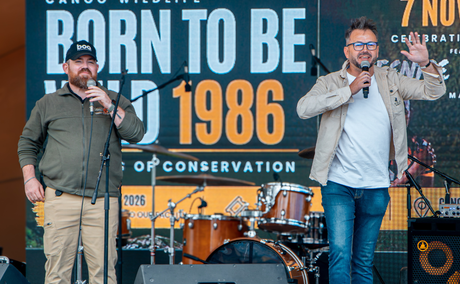
40 Years of Support. One Night to Give Back.
Wed November 25, 2026
Read This Article
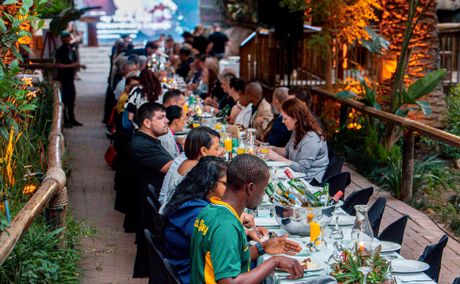
Forty Years, Countless Stories, One Extraordinary Legacy
Wed November 25, 2026
Read This Article
An evening of gratitude beneath the palms at Cango Wildlife On the evening of Friday, 6 November 2026, a single long table stretched along the walkway leading up to Cheetahland. Lights glowed overhead, the palms framed the scene and the table was dressed in true Karoo style. This was our 40th Anniversary Gala Dinner, and one of the most meaningful evenings in Cango Wildlife's history.
A Weekend the Community Made Its Own
Wed November 25, 2026
Read This Article
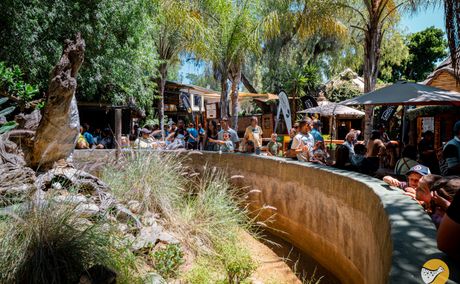
Inside Cango Wildlife's first-ever free open weekend For 40 years, our community has supported us. For our 40th anniversary, we wanted to do something we had never done before: open our gates to everyone, completely free of charge. On Saturday 7 and Sunday 8 November 2026, we did exactly that.
Share This Post