

Oudtshoorn is about to gain a new kind of neighbour: a working campus, built on sustainability principles, aimed squarely at the town's future workforce. On 1 September, Cango Wildlife will officially open its new Africa Skills Cango Academy site to an invite-only audience of civic and business leaders. Four days later, on 5 September, the doors open to the public for a community open day at 291 Adderley Street. Locals will be...
The Living Reserve
Posted on Thu April 30, 2026.
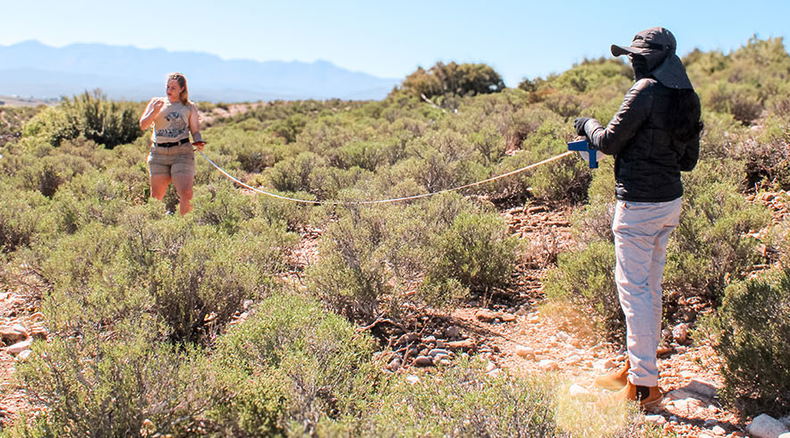
If you walk far enough into Greystone, our private reserve adjacent to Cango Wildlife, you start to notice how the land holds its history. Pale sandstone outcrops, the same stone quarried more than a century ago to help build much of old Oudtshoorn, rise out of a sea of spekboom and Karoo bossies. Footpaths thread through dwarf shrubs that have weathered drought after drought and flood after flood.
In the quiet bits, you can hear the cheetahs at our breeding centre calling to one another. And if you sit still long enough, the small life begins to declare itself: a tortoise easing along a path, a spotted sand lizard sunning itself on a warm rock, the high tilt of a red duiker on the ridge.
I'd like to tell you what that means, why it matters, and what to expect from us in the months ahead.
Greystone is roughly 90 hectares. A small piece of land by African reserve standards, but one that carries an outsized weight of meaning for us. It is where our decades-old cheetah breeding programme, the cornerstone of Cango Wildlife's conservation work, has its main facility. It is where some of our retired animals, including several beloved Bat-Eared Foxes and Caracals, live out their later years in semi-natural quiet. It is also a fossil hotspot and a geological melting pot. It is a fragment of the ecotone where the succulent Karoo and fynbos biomes overlap, holding a botanical richness few small reserves can match. And it is, frankly, a piece of land that has been waiting for us to give it the full attention it deserves.
This year, we are giving it that attention. Starting now, and rolling forward through 2026, the Cango Academy is launching a major Greystone rehabilitation initiative, with our Work-Integrated Learning students at the heart of it.
I'd like to tell you what that means, why it matters, and what to expect from us in the months ahead.
WHAT IS VELD MANAGEMENT, ANYWAY?
Veld is the Afrikaans word for open country, the natural rangeland that defines so much of southern Africa. Veld management is the long, careful art of looking after it. It is, more or less, the conservation-and-agriculture cousin of forestry, animal husbandry, and ecological restoration, all rolled into one. A veld manager is part botanist, part hydrologist, part wildlife ecologist, part labourer, and very often part long-suffering optimist.
At its simplest, veld management asks four questions:
1. What plants and animals belong here, and which ones don't?
2. Is the soil healthy, or is it quietly washing away?
3. Is the land carrying the right kind and number of animals for its size and rainfall?
4. Are we leaving this piece of earth better than we found it, or worse?
Get the answers right, and you get a working ecosystem: soil that holds water, plants that feed wildlife, animals that fertilise the ground, and a landscape that can recover from drought. Get them wrong, and you get bare patches that turn into gullies, alien invasives that crowd out indigenous species, animals that strip the veld faster than it can regrow, and a slow, sad slide from productive land toward wasteland.
Greystone, like most pieces of working land in South Africa, sits somewhere in the middle. A great deal is going right. A great deal can be done better.
WHAT GREYSTONE NEEDS
We are fortunate to already have a thorough veld management plan for the reserve, originally drawn up by Joshua Venter back in 2016. Reading through it again recently was a useful reminder of just how rich and complicated the place is, and how much practical work has been waiting for the right people, time, and approach.
The challenges, in short:
Alien invasives. Greystone has its share of unwelcome guests. Garingboom (sisal agave), prickly pears, torch cactus, mesquite, black wattle, red rivergum, pepper tree, pink tamarisk, wild tobacco, fountain grass, Mexican poppy. Each has a different control method, a different ecology, and a different rate of damage. Some block rivers. Some poison animals. Some, like the prickly pear, were once planted deliberately as fodder reserves a century ago and then turned into something far harder to remove than to introduce.
Erosion. Both sheet erosion (where water sluices off bare ground in flat, scouring sheets) and gully erosion (where deep channels form and widen with each rainstorm) are present on the reserve. Erosion is, in some ways, the most insidious threat, because by the time you see it, you are already losing soil that took centuries to build.
Indicator species and toxic plants. Greystone holds a fair amount of Scholtzbos, an aggressive indigenous shrub that out-competes more palatable plants and is toxic to game when ingested. It also hosts a small pharmacy of poisonous plants: Pigs Ears, Nentabos, Mexican Poppy, Wild Tobacco, Devils Thorn, and others, each with its own particular biochemistry of mischief. Knowing where they are, and how to manage them, is essential when you have animals on the land.
Custodianship of an ecotone. Because Greystone sits where succulent Karoo and fynbos meet, it is botanically rich but also fragile. Pushing too hard in any one direction risks collapsing what makes it special in the first place.
This is the work that lies ahead. It is the work that, frankly, every responsible private reserve in southern Africa should be doing, and that very few are doing as completely as the science calls for.
We intend to do it properly. And we intend to do it with our students.
WHERE THE CANGO ACADEMY COMES IN
Here is where things get genuinely exciting.
The Cango Academy, our academic and training division, has been growing steadily over the last two years. Through partnerships with institutions such as Nelson Mandela University (NMU) and the Newbridge Graduate Institute (NGI) vocational training systems, we host Work-Integrated Learning students who need to complete real, structured field projects as part of their qualifications. Several arrive each year with veld management as a required module and spend an entire year with us doing meaningful conservation work that also ticks their academic boxes.
This year, we are going a step further and building the foundations of an entire rehabilitation programme around them. Every WIL student rotating through the Academy in the coming years will play a part in the Greystone project, at the appropriate level of supervision, training, and academic accountability.
WHAT DOES THAT LOOK LIKE IN PRACTICE?
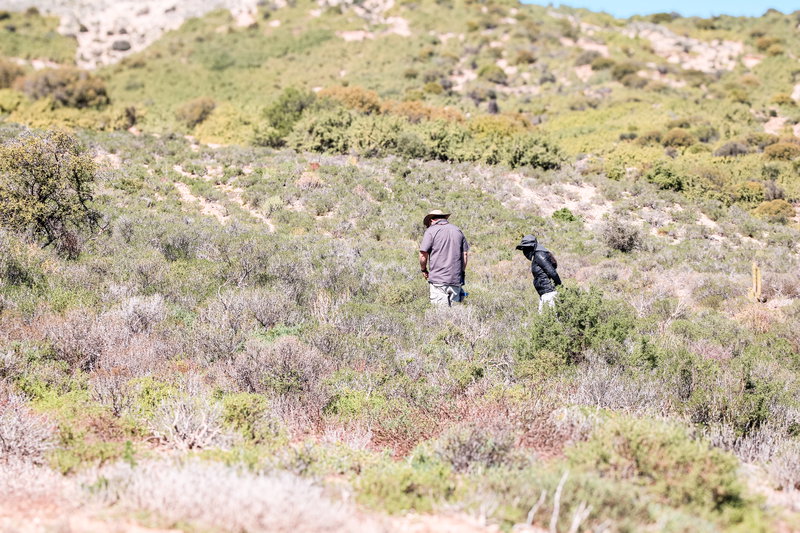
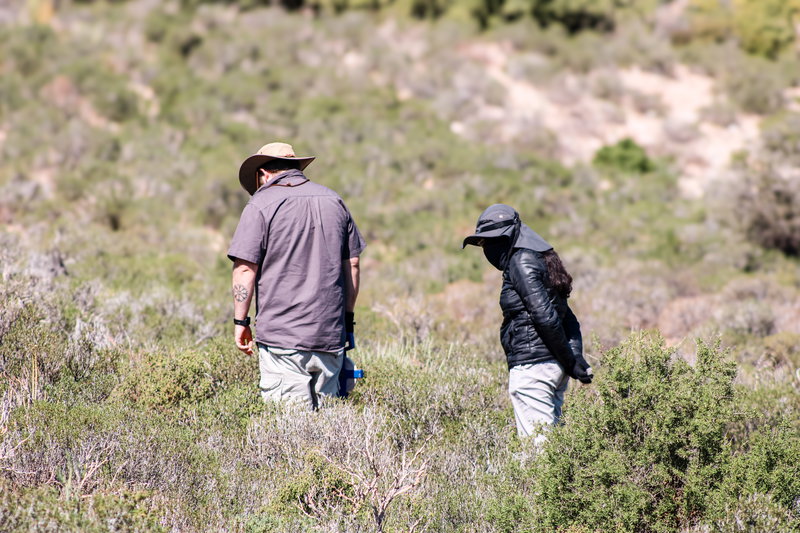
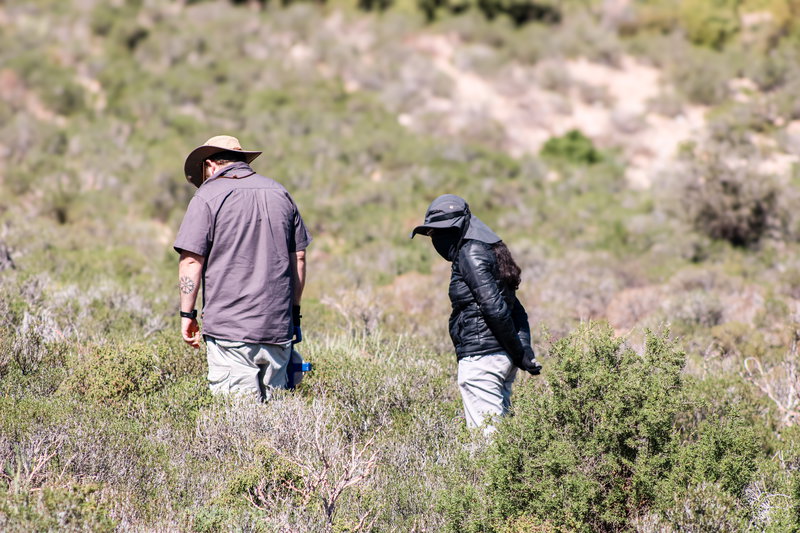
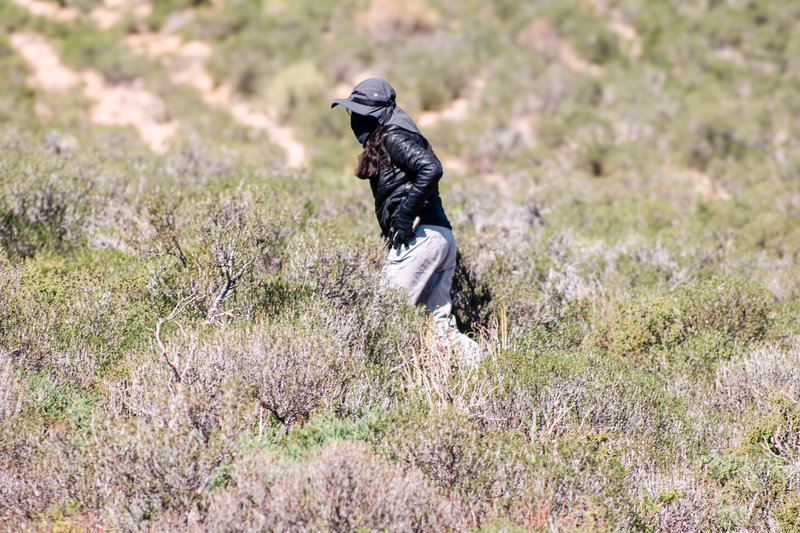
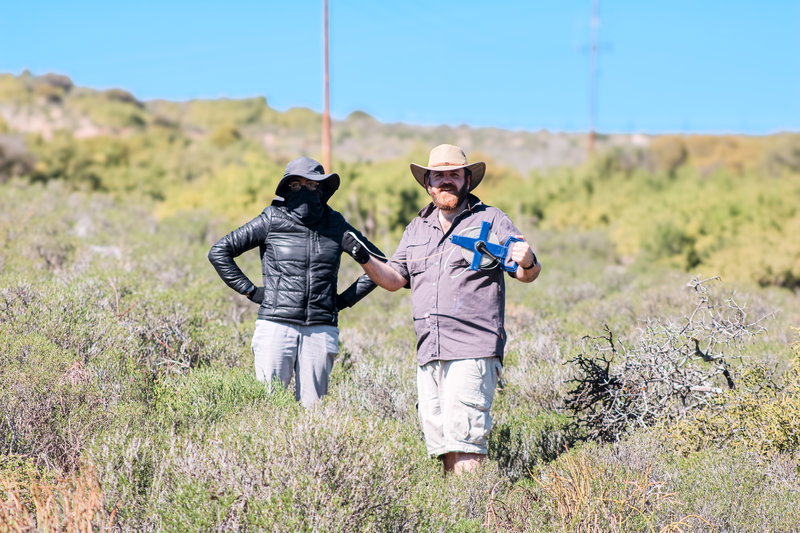
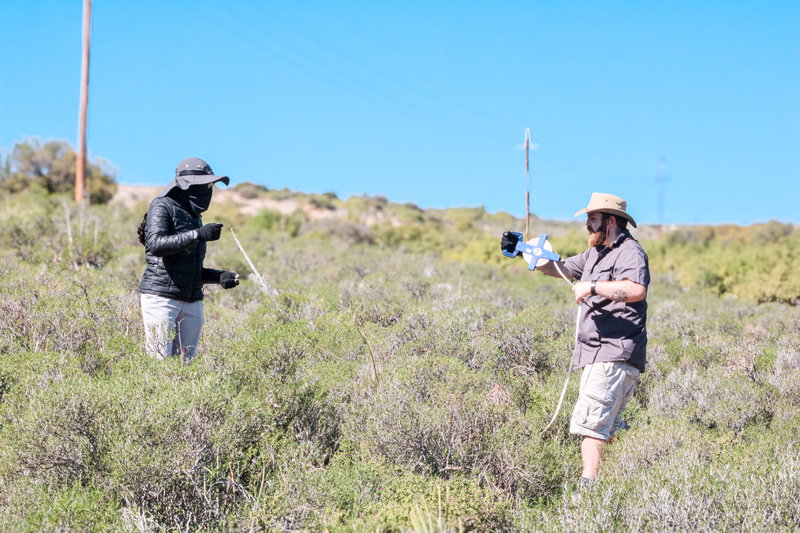
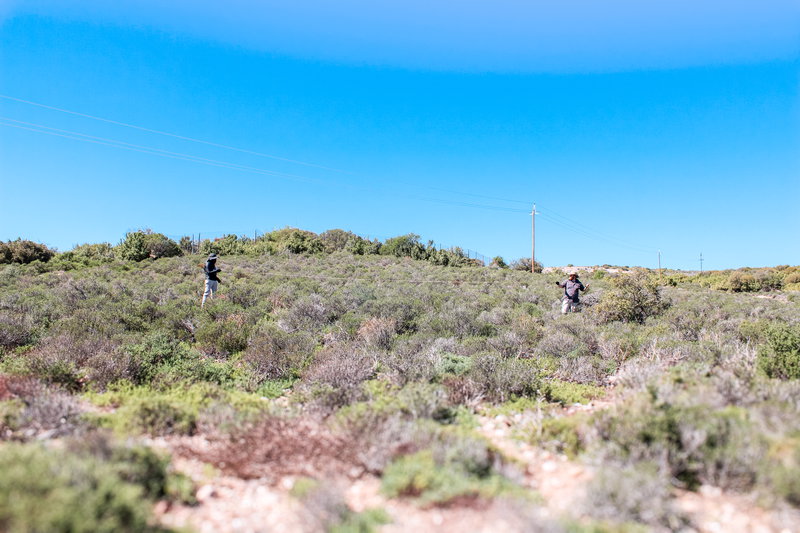
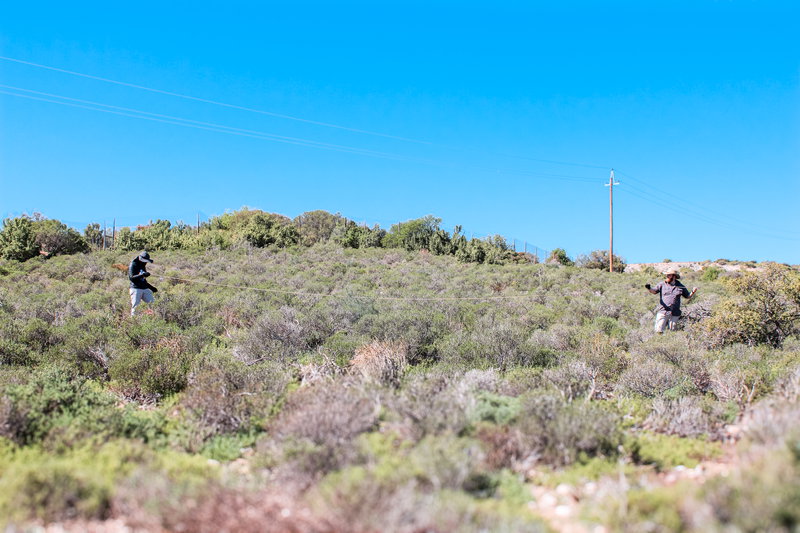
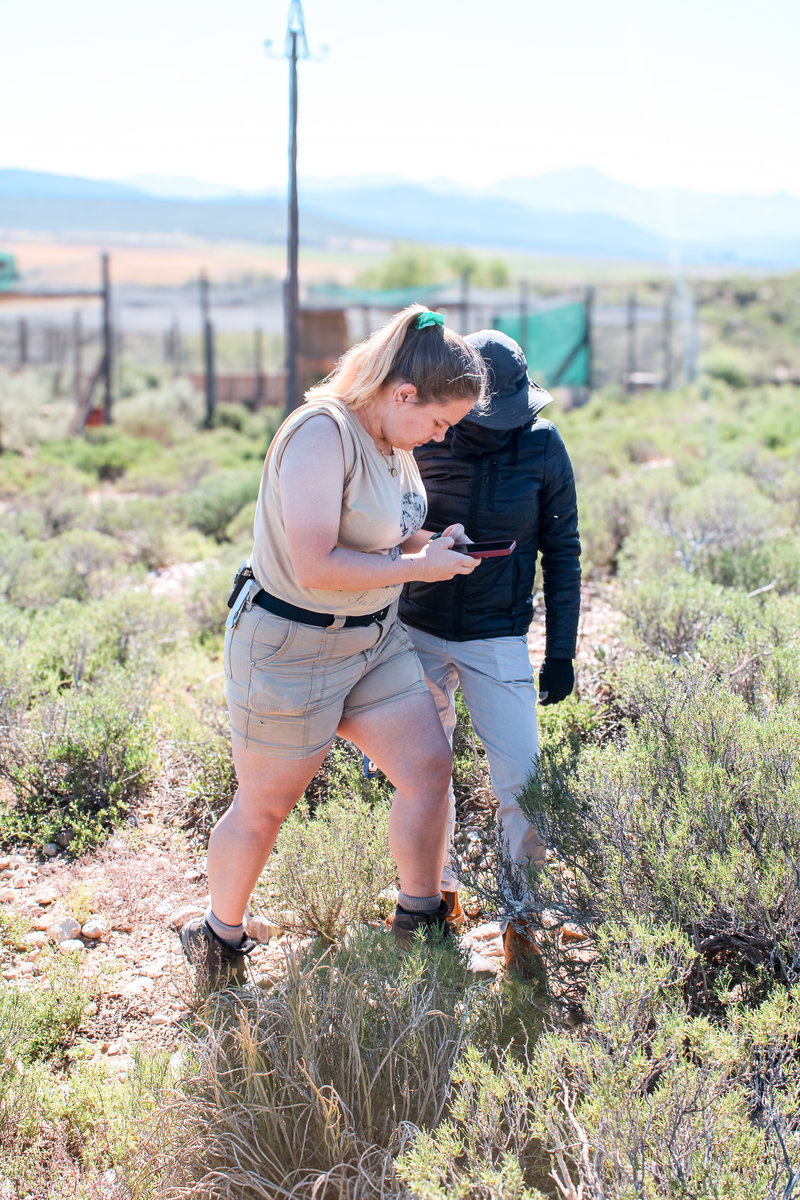
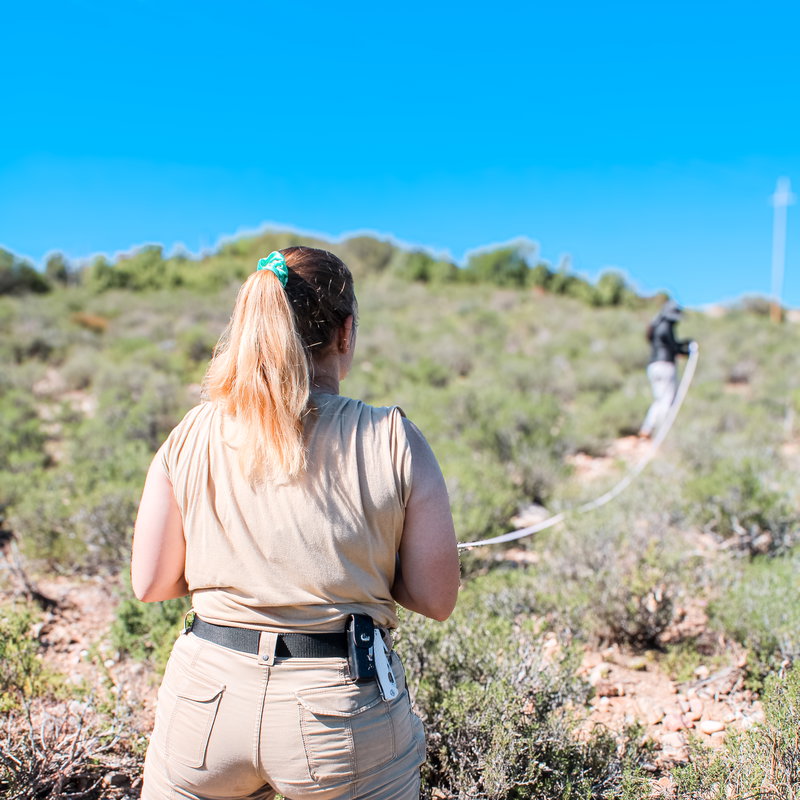
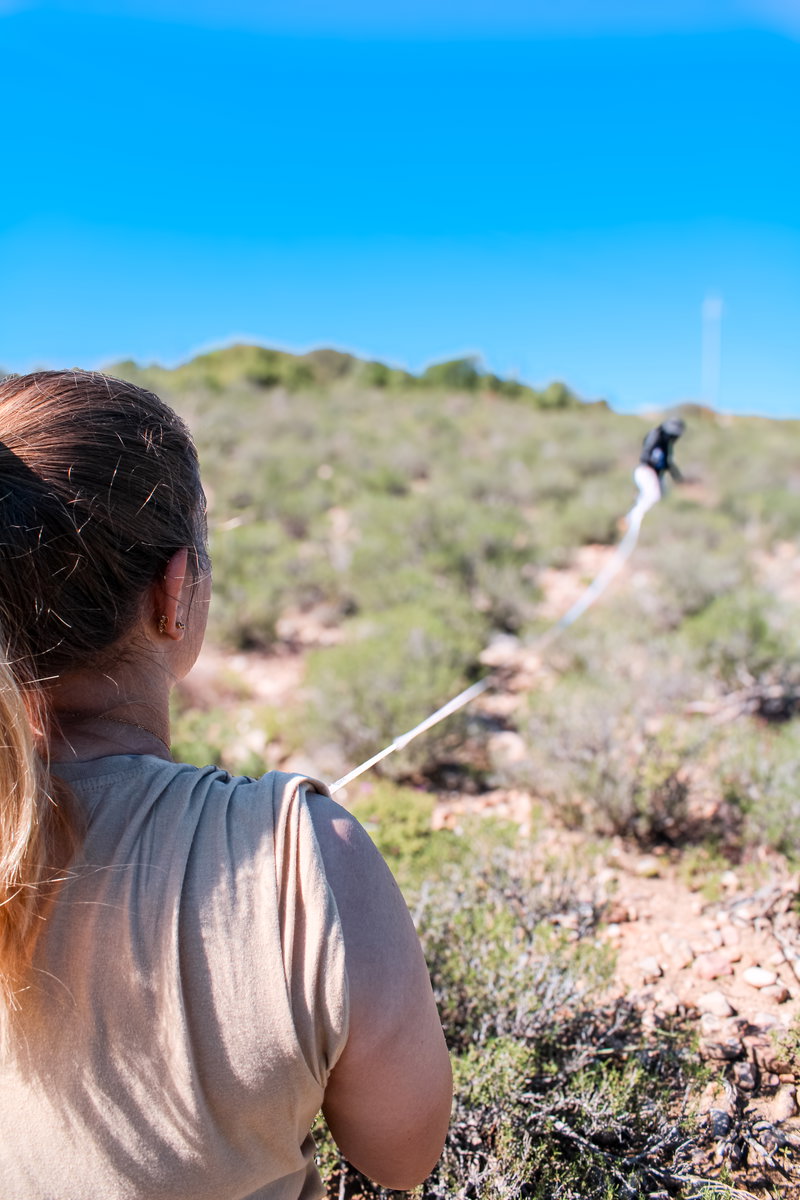
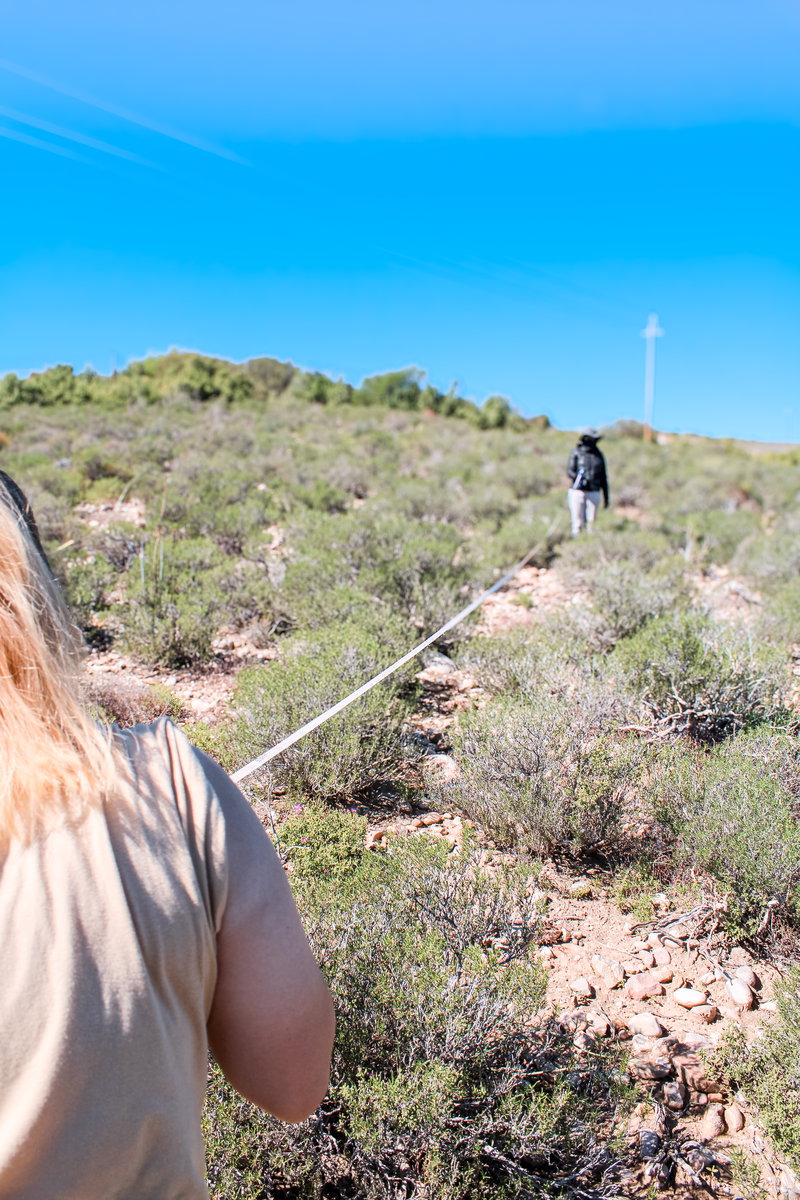
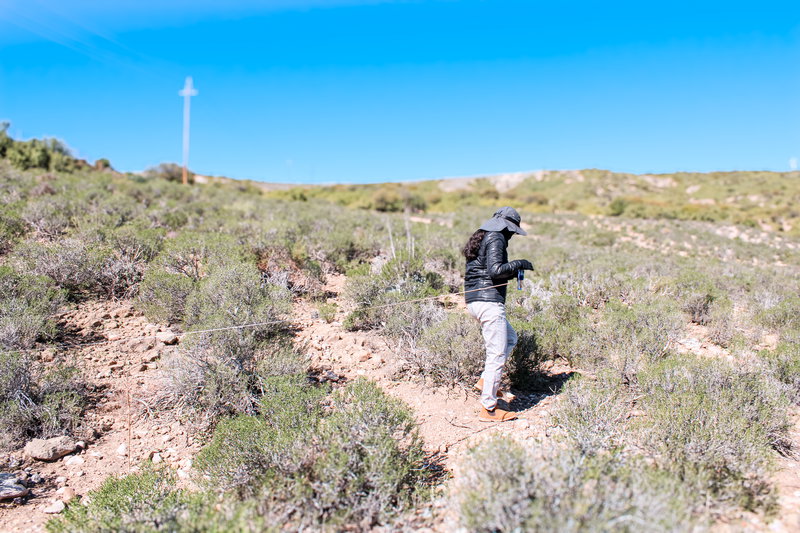
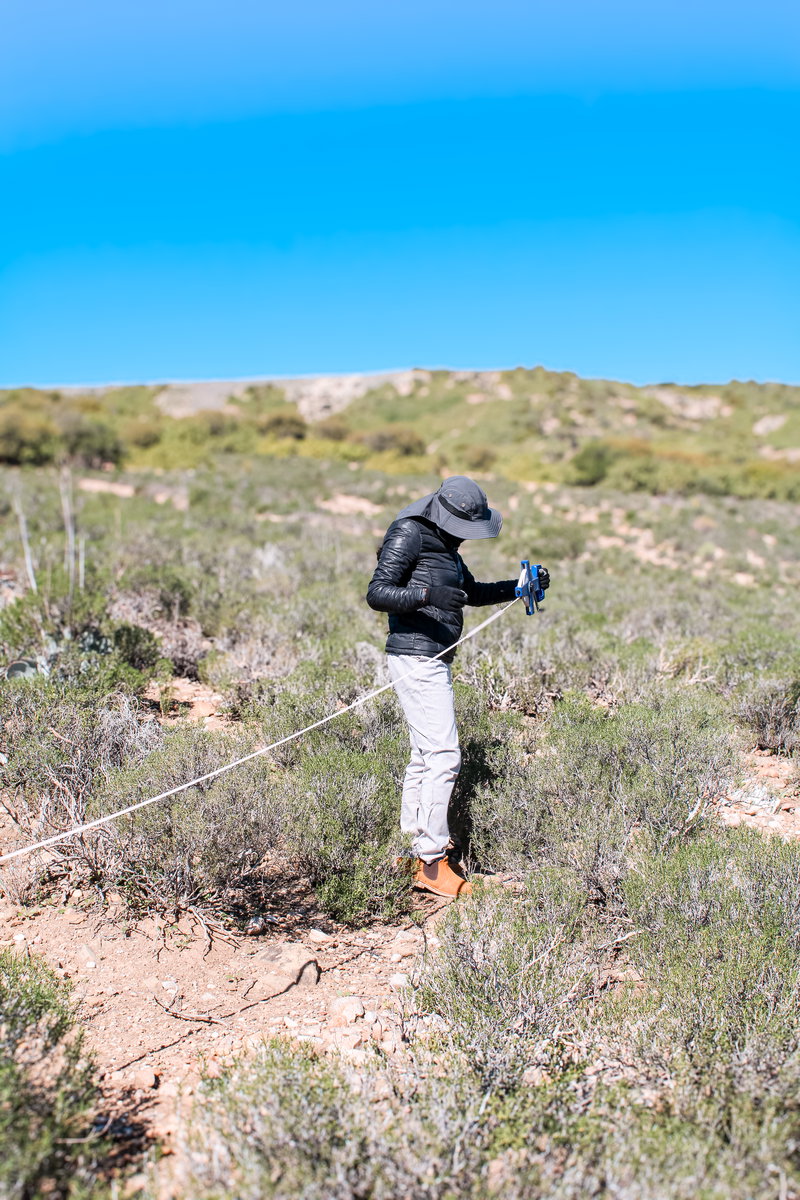
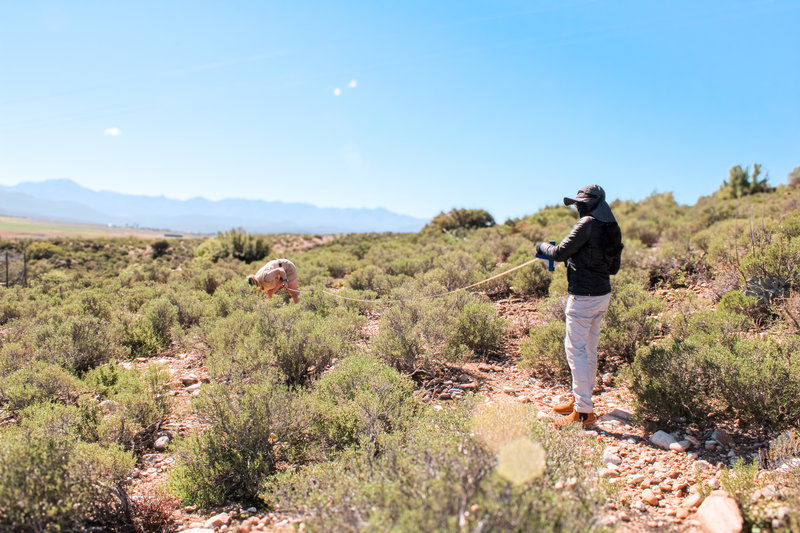
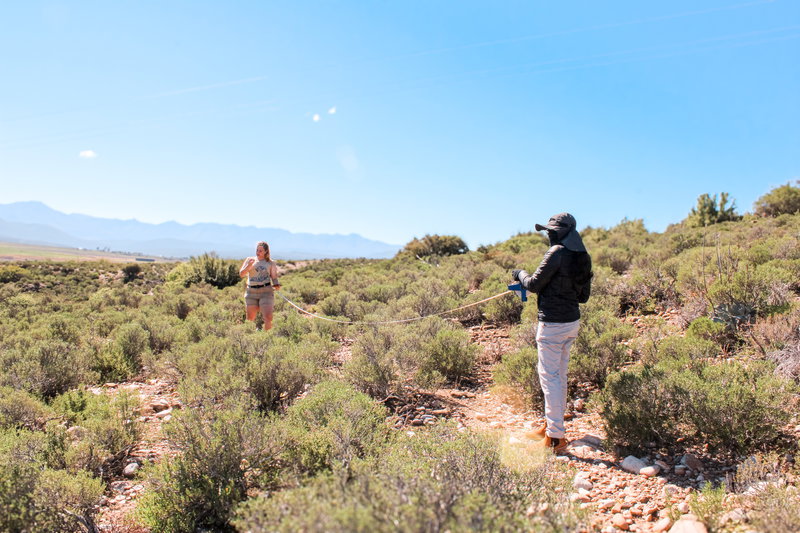
Mapping and assessment. Our first cohort will be doing the foundational work: walking transects, identifying species, photographing alien invasives, marking erosion sites, scoring veld condition using the quick multicriterion method described in our guiding texts. This is patient, careful field ecology, the kind that gives you the data you need before you intervene.
Citizen science through iNaturalist. Greystone is going to become an active iNaturalist hotspot. Every WIL student, intern, and volunteer passing through the Academy this year will be contributing observations: insects, reptiles, birds, plants, the lot. The aim is to build a public, peer-reviewed biodiversity record for the reserve that improves every season.
Targeted alien invasive control. Following the assessment phase, students will be trained in the specific mechanical, chemical, and biological control methods for the most pressing invasives. We will be doing this in line with current best practice.
Erosion rehabilitation. Hollows, mulched fences, reshaped gully banks, gabions where they are genuinely needed, geotextile jute, indigenous reseeding. This is where veld management becomes properly physical, and where students see, in real time, what it takes to bring degraded land back. It is not glamorous and is hard labour, but it is deeply rewarding to see an area begin to rebuild itself over time.
Fossil work and palaeontology. Greystone's bedrock holds genuine palaeontological interest. Earlier this year I joined a science team on a fossil hunt across the reserve and we recovered material worth investigating, including what may be a marine invertebrate trace fossil from the Bokkeveld or Witteberg succession. We will be continuing that work alongside qualified researchers, and our students will be part of a real, ongoing research effort to provide meaningful contribution to the regional fossil record.
Long-term monitoring. Fixed-point photography, annual veld condition scoring and iNaturalist observations across the seasons. The point of all of this is not a single big push followed by an empty field but rather to build a system of stewardship that outlasts any individual student or season.
WHY THIS MATTERS
Yes, it ticks the academic boxes for our partner institutions. Yes, it gives our students rich practical experience that genuinely improves their employability in conservation and environmental fields. Yes, it strengthens the Academy and gives us strong material for accredited course development going forward. All of that is true and good.
But the deeper reason is this. A private reserve that hosts an internationally significant cheetah breeding programme, that contributes animals to release initiatives like at San Wild Nature Reserve, that participates in the Endangered Wildlife Trust's Cheetah Metapopulation Project, that exchanges animals with global partners such as the Wild Cat Conservation Centre in Australia, has a duty to the land it sits on. We cannot reasonably ask the world to care about cheetahs while quietly letting the ground beneath them decline.
Greystone deserves to be more than the backdrop to the work we do. It deserves to be a working, breathing, well-managed example of what a small private reserve in the Klein Karoo can be. A place where the ecotone between fynbos and succulent Karoo is celebrated and protected. A place where the sandstone tells the story of a town. A place where retired Bat-Eared Foxes grow old in peace, where cheetahs breed for genuine conservation outcomes, and where students learn, with their hands in the soil, what custodianship really means.
That is the goal. That is what the next few years of our Greystone work will be about.
WHAT TO EXPECT FROM US
If you are a parent of one of our students, you will start hearing about veld assessments, fossil identifications, alien clearing days, and iNaturalist observation counts. Some of those conversations will get unexpectedly nerdy. Be patient with them. They are learning to see.
If you are a former volunteer, you will recognise the spirit of the place, but you may be quietly pleased to see how much more structured, scientifically literate, and ambitious our reserve work has become.
If you are a supporter or a conservation enthusiast, expect more articles like this one. We will bring you stories from the field, photographs of species you may not have known we had, before-and-after shots of erosion sites we are slowly healing, and updates on the cheetahs and the other animals whose home Greystone is.
And if you are someone who has ever quietly wondered whether small reserves can really make a difference: yes, they can, and yes, they do. But only if we tend them. Only if we listen to what the land is telling us. Only if we are willing, year after year, to do the patient, unglamorous work of putting things right.
We are willing. Our students are ready. Greystone is waiting.
I'll see you out there.
Dr Garrett E. Eriksen Academic Programme Coordinator, Cango Academy
Share This Post
Latest News
-
 A New Campus And It Is Only The Beginning
Thu August 27, 2026 -
 Making Waves Beyond Cango
Thu August 27, 2026 -
 Two Peas In A Pod
Thu August 27, 2026 -
 A Cango Experience They’ll Carry Forever
Thu August 27, 2026 -
 The Story Behind The Menu
Thu August 27, 2026 -
 The Importance of Enrichment at Cango Wildlife
Thu August 27, 2026 -
 Knowledge, Laughter and a Little Friendly Competition
Fri July 31, 2026 -
 Shaping The Next Generation Of Wildlife Veterinarians
Thu July 30, 2026 -
 Walking Together
Thu July 30, 2026 -
 Celebrating The People Behind The Care
Thu July 30, 2026
Further Reading
A New Campus And It Is Only The Beginning
Thu August 27, 2026
Read This Article
Making Waves Beyond Cango
Thu August 27, 2026
Read This Article
At Cango Wildlife, learning is not something that ends with a qualification. It continues every day through the animals in our care, the people we work alongside and the knowledge shared across the wider wildlife community. For Pippa, one of our dedicated Animal Caregivers, that passion for continued learning is now taking her beyond Cango Wildlife as she begins making her mark within the broader animal-care community. Recently, Pippa was invited to...
Two Peas In A Pod
Thu August 27, 2026
Read This Article
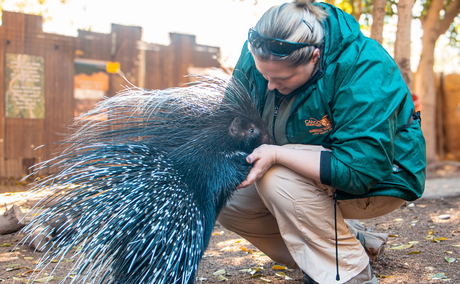
How patience, trust and training created a special bond between Animal Caregiver Pippa and Patricia, our Cape Porcupine When Patricia arrived at Cango Wildlife as a tiny baby, few could have predicted the relationship that would develop between this little bundle of quills and Animal Caregiver Pippa. For Pippa, however, the connection began with something very simple: time. Bottle feeds, playtime, cleaning and every spare opportunity to be around Patricia became the...
Share This Post