

Oudtshoorn is about to gain a new kind of neighbour: a working campus, built on sustainability principles, aimed squarely at the town's future workforce. On 1 September, Cango Wildlife will officially open its new Africa Skills Cango Academy site to an invite-only audience of civic and business leaders. Four days later, on 5 September, the doors open to the public for a community open day at 291 Adderley Street. Locals will be...
Zuko's Recovery
Posted on Thu February 26, 2026.
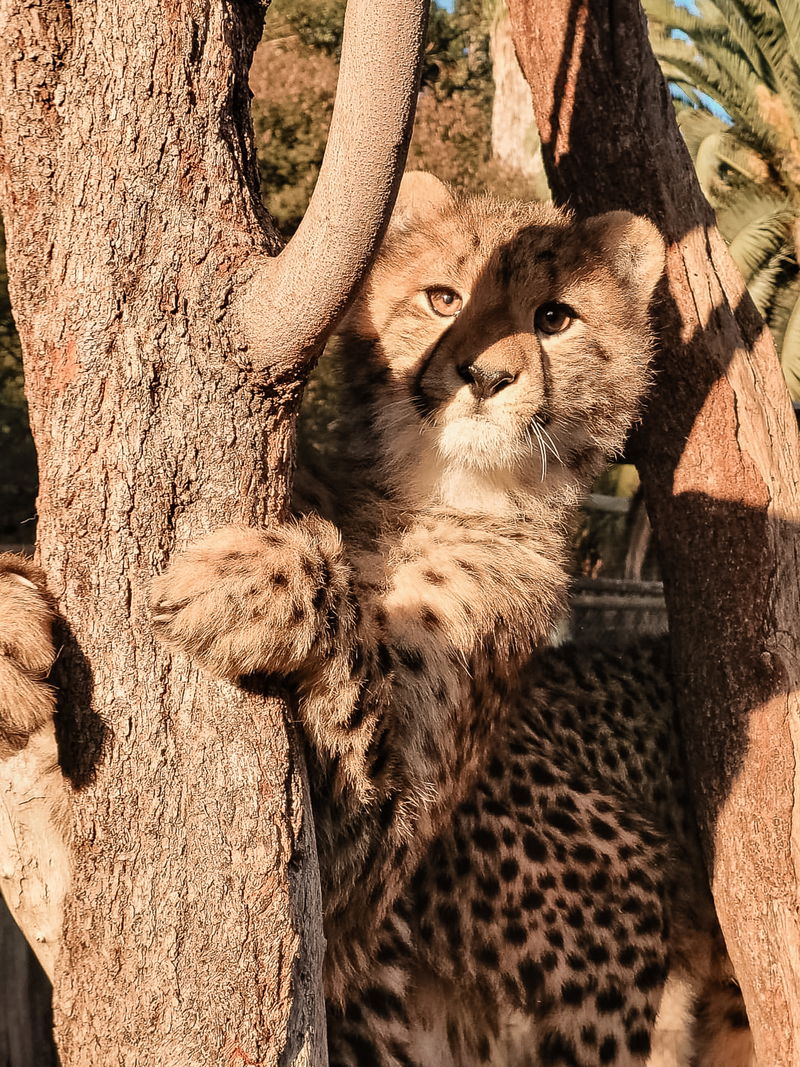
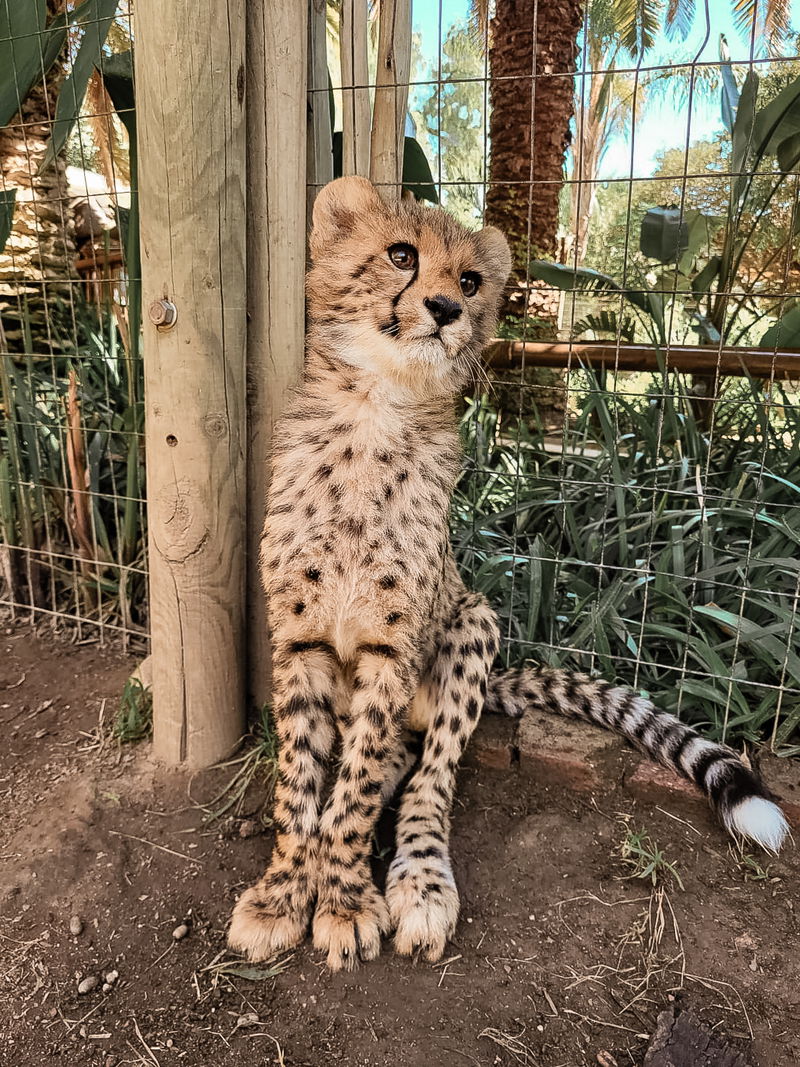
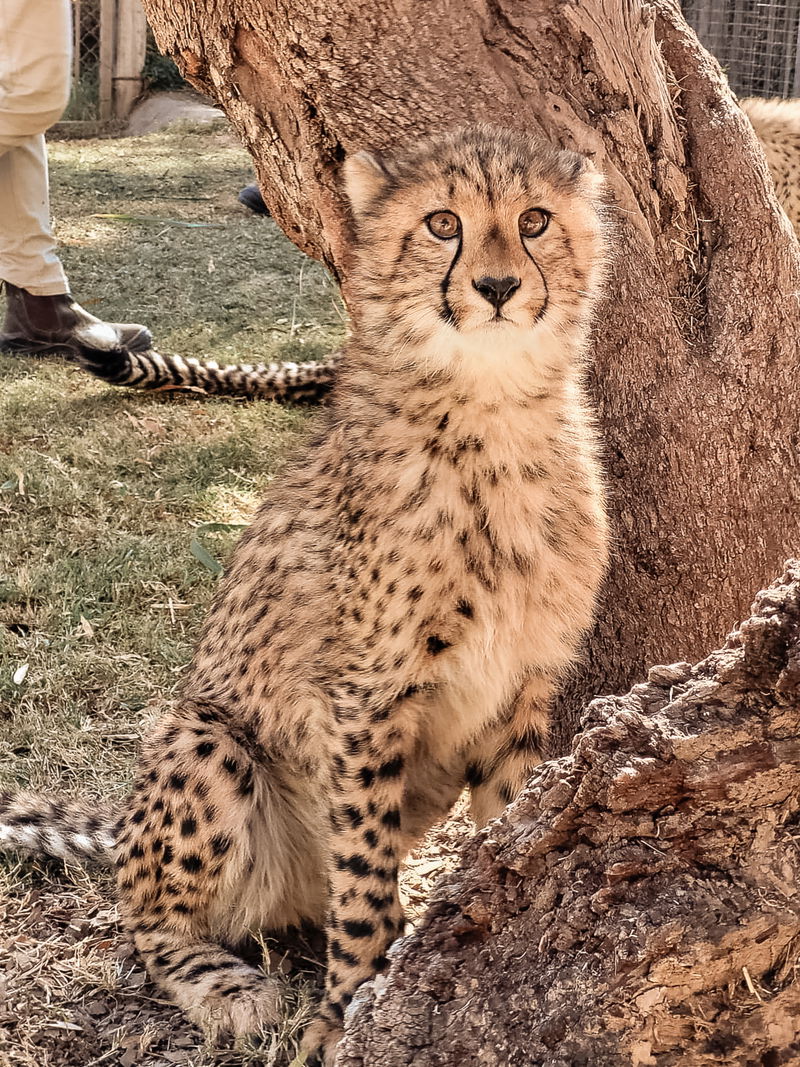
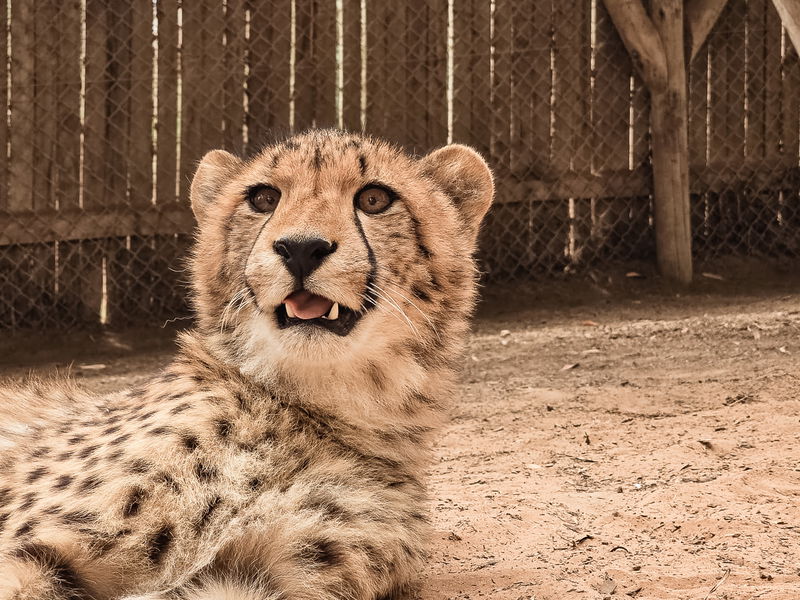
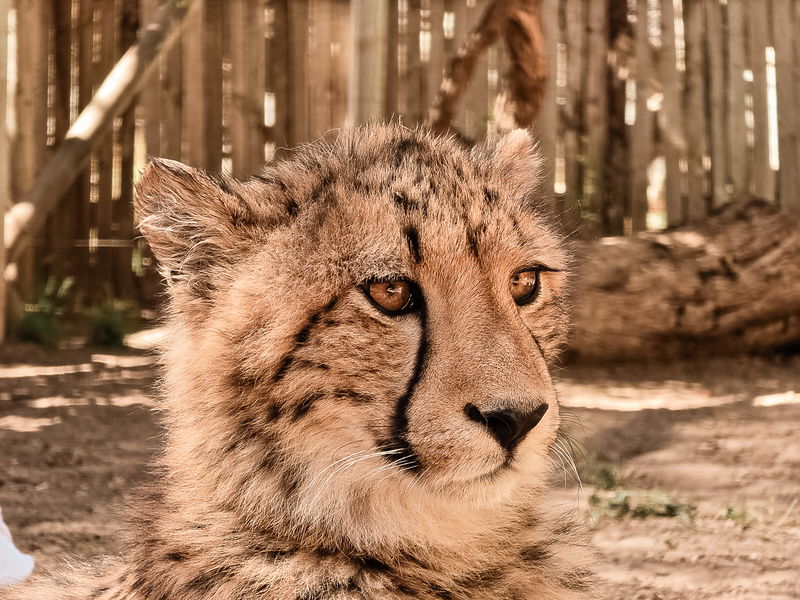
On the morning of 27 January 2026, a routine day at our facility took an unexpected turn. Zuko, our 1.5-year-old male cheetah, was playing with his siblings, Zuri and Zeus, and like many youngsters, the play became very energetic. During one particularly spirited chase, Zuko collided with one of his siblings. In that split second where speed met momentum, Zuko sustained a serious leg injury.
At first, the incident resembled the sort of minor knock that active animals often experience. However, careful observation quickly suggested something more concerning. Zuko was monitored closely, and when discomfort and abnormal movement persisted, the decision was made to proceed with diagnostic imaging.
On 3 February, Zuko was sedated for X-rays. The results immediately changed the tone of the situation. The scans revealed fracture areas near the joint - not a simple injury, but one with potentially severe consequences. The clinical realities were distressing: preserving full function of the leg would require specialist intervention. Without it, the alternatives included amputation, or in a worst-case scenario, euthanasia.
The response was swift and decisive. Zuko would receive the advanced care he needed.
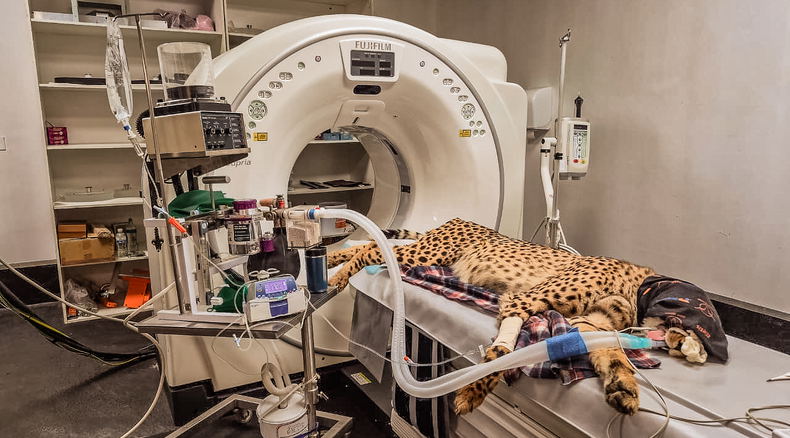
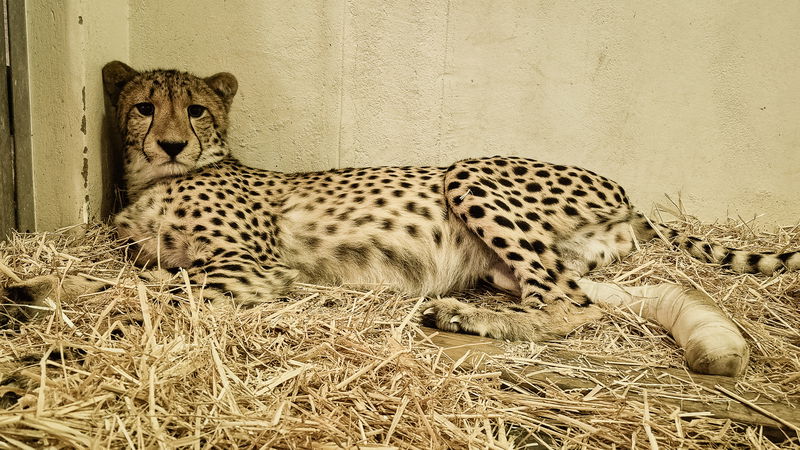
On 11 February, he travelled to Vetscape Animal Hospital in Paarl. There, a CT scan provided a clearer understanding of the injury: a distal tibia fracture just above the tarsal joint. Under the care of specialist surgeon Dr Charlie Boucher, the fracture was stabilised using a cross-pinning technique - the most appropriate solution given the nature of the break.
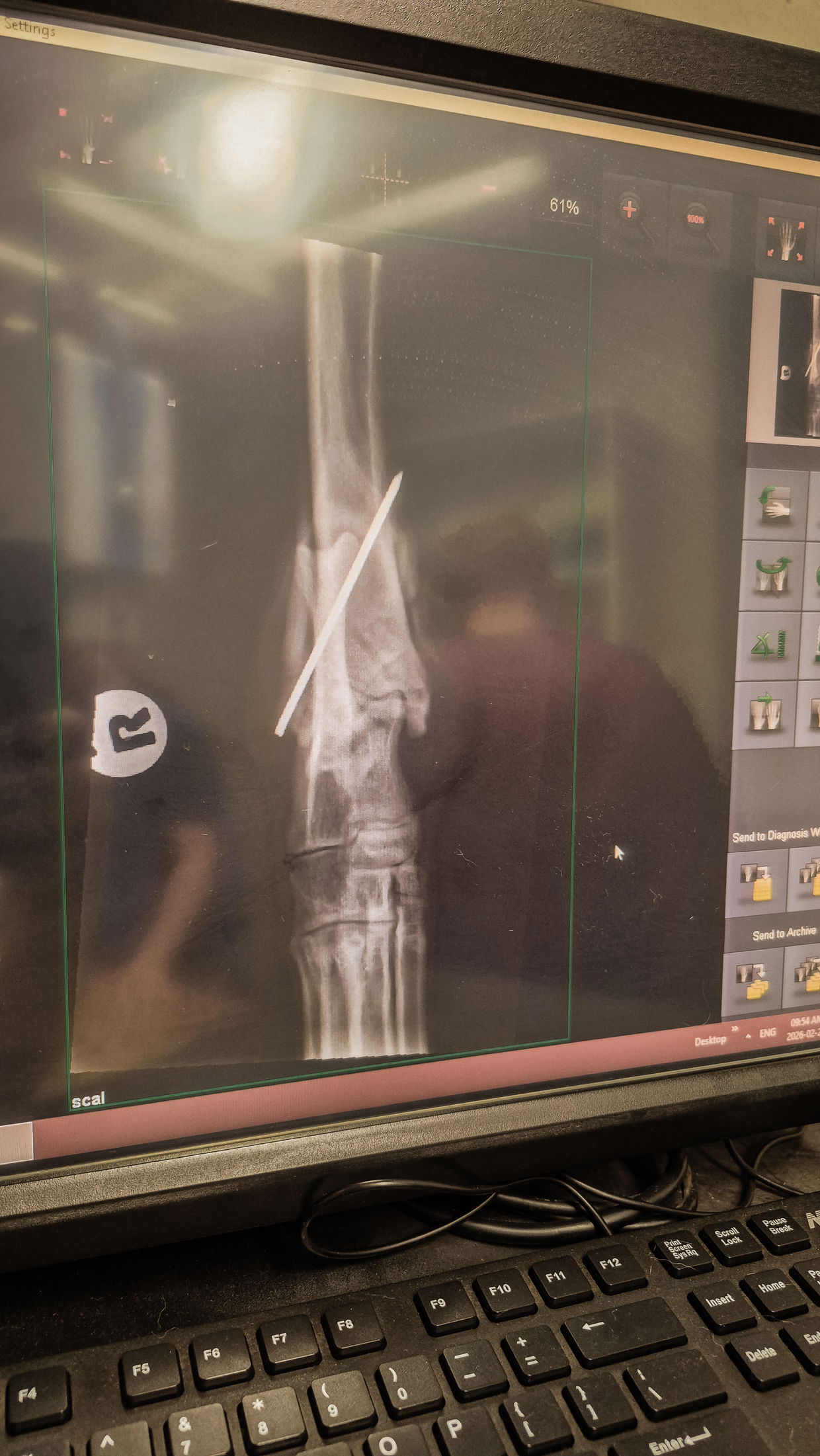 Technically, the surgery was successful. Yet orthopaedic recovery, particularly in an animal built for explosive acceleration and high-impact movement, is rarely simple.
In the days that followed, Zuko’s progress was monitored with exceptional care by our zoological team and local veterinarian Dr Shaun Sagor. Then came the first complication. Bandages began loosening, and one of the pins showed signs of migration. Adjustments were made, and the wound was stabilised.
For a brief period, all seemed well, however, further examinations revealed that the pin was again becoming problematic. Rather than improving stability, it was contributing to tissue irritation and an enlarging wound site. The clinical decision was made to remove it. However, the fracture gap remained too large to leave unsupported. A replacement procedure became unavoidable.
Transporting Zuko once more would have introduced additional stress at a critical stage of recovery. Instead, an alternative solution was arranged. In a remarkable demonstration of professional collaboration, Dr Boucher travelled to Oudtshoorn directly to perform the corrective surgery locally. A longer, more suitable pin was inserted, restoring stability while minimising disruption to Zuko.
Behind these clinical milestones lay a quieter, less visible story. But one that captures the passion that our facility is founded on.
Orthopaedic recovery demands strict movement control and precisely timed medication. Zuko’s sedation cycles and treatment schedule required constant adjustment. Staff routines shifted accordingly, often extending well beyond normal working hours. Curators Leandra Koukakis and Riëtte Koortzen remained on site late into the evenings, often staying overnight, to ensure Zuko stayed calm, safe, and received the care and medication he required.
These were not isolated acts of dedication, but a sustained commitment over weeks of uncertainty.
Parallel to the medical journey ran another critical challenge: funding. Specialist imaging, surgery, travel, and aftercare carry substantial costs. Yet once again, Cango witnessed something deeply moving. Supporters, donors, and well-wishers responded with generosity and urgency. Thanks to the tireless efforts of our Foundation Director, Carmen Jacbos, contributions flowed in through our non-profit arm, the Cheetah Preservation Foundation, enabling not only the initial operation but also the corrective procedure.
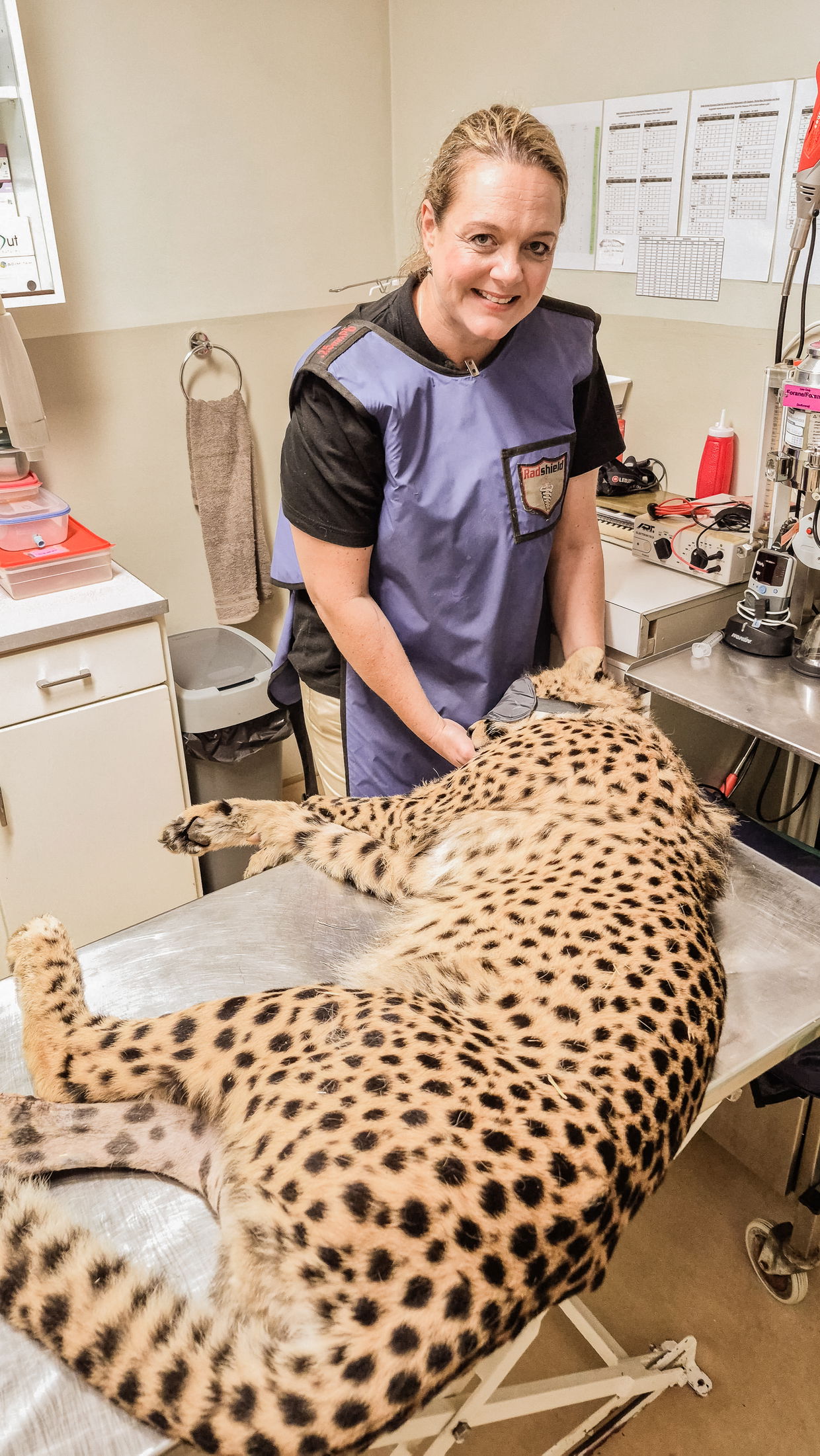 R73 000.00 was raised in only a few days and Zuko’s procedures and recovery remained steady and uninterrupted as a result. Every intervention Zuko needed was made possible through this collective kindness.
Today, Zuko continues his recovery within our on-site Care Centre, a facility generously sponsored by long-term benefactor Pierre Zimmerman. In a fitting reflection of cheetah social bonds, his brother Zeus spends time beside him, providing calm companionship during the healing process. Zuri however, has outgrown the need for her brothers and now has her own habitat.
Zuko’s story serves as a powerful reminder of an essential truth in wildlife care: accidents are an unavoidable reality, even in environments built around the highest welfare standards. What defines a facility is not the absence of challenges, but the response to them.
His journey is ultimately one of rapid clinical assessment, interdisciplinary cooperation, staff dedication beyond duty, and community support beyond expectation. Most importantly, it is a story of responsibility.
Because when animals are in our care, their wellbeing is never optional.
Share This Post
Latest News
-
 A New Campus And It Is Only The Beginning
Thu August 27, 2026 -
 Making Waves Beyond Cango
Thu August 27, 2026 -
 Two Peas In A Pod
Thu August 27, 2026 -
 A Cango Experience They’ll Carry Forever
Thu August 27, 2026 -
 The Story Behind The Menu
Thu August 27, 2026 -
 The Importance of Enrichment at Cango Wildlife
Thu August 27, 2026 -
 Knowledge, Laughter and a Little Friendly Competition
Fri July 31, 2026 -
 Shaping The Next Generation Of Wildlife Veterinarians
Thu July 30, 2026 -
 Walking Together
Thu July 30, 2026 -
 Celebrating The People Behind The Care
Thu July 30, 2026
Further Reading
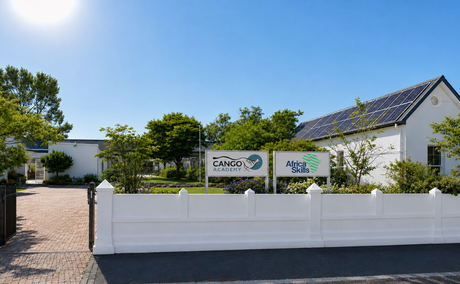
A New Campus And It Is Only The Beginning
Thu August 27, 2026
Read This Article
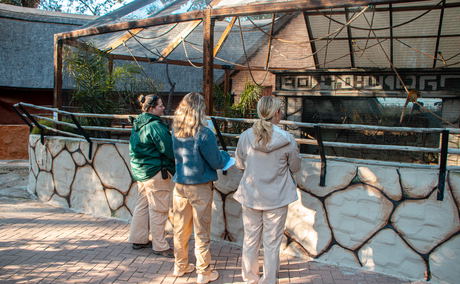
Making Waves Beyond Cango
Thu August 27, 2026
Read This Article
At Cango Wildlife, learning is not something that ends with a qualification. It continues every day through the animals in our care, the people we work alongside and the knowledge shared across the wider wildlife community. For Pippa, one of our dedicated Animal Caregivers, that passion for continued learning is now taking her beyond Cango Wildlife as she begins making her mark within the broader animal-care community. Recently, Pippa was invited to...
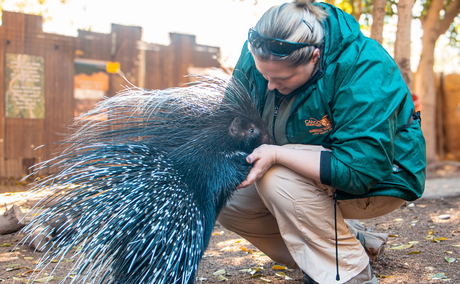
Two Peas In A Pod
Thu August 27, 2026
Read This Article
How patience, trust and training created a special bond between Animal Caregiver Pippa and Patricia, our Cape Porcupine When Patricia arrived at Cango Wildlife as a tiny baby, few could have predicted the relationship that would develop between this little bundle of quills and Animal Caregiver Pippa. For Pippa, however, the connection began with something very simple: time. Bottle feeds, playtime, cleaning and every spare opportunity to be around Patricia became the...
Share This Post