

Oudtshoorn is about to gain a new kind of neighbour: a working campus, built on sustainability principles, aimed squarely at the town's future workforce. On 1 September, Cango Wildlife will officially open its new Africa Skills Cango Academy site to an invite-only audience of civic and business leaders. Four days later, on 5 September, the doors open to the public for a community open day at 291 Adderley Street. Locals will be...
World Lion Day
Posted on Tue August 12, 2025.
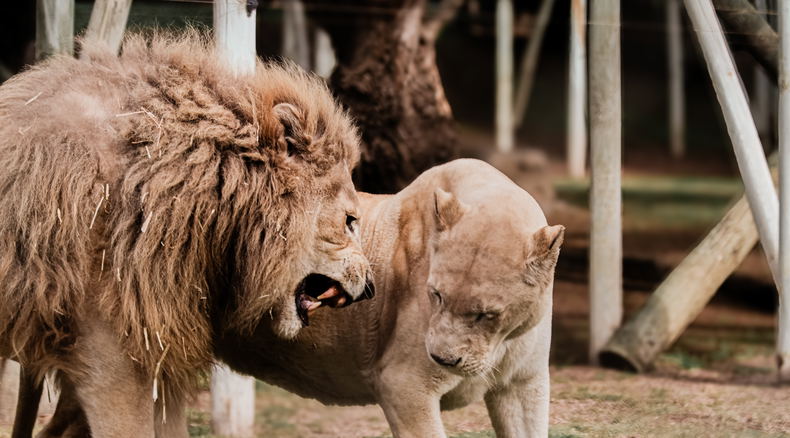
Lions are among Africa’s most iconic predators, yet their future is far from secure. These social cats live in prides that work together to hunt, defend territory, and raise their young. In the wild, they play a vital role in keeping ecosystems balanced by controlling herbivore populations, which allows vegetation to recover and supports many other species. Over the past century, lions have lost more than 90 percent of their historic range. Today, an estimated 20 000 to 25 000 remain in the wild in Africa, with about 670 Asiatic Lions surviving in India’s Gir Forest. Their numbers continue to decline due to habitat loss, human-wildlife conflict, and illegal hunting.
World Lion Day, marked on 10 August, is a reminder that these animals need protection. By supporting conservation efforts that safeguard wild species and wild environments, you help ensure that future generations will still hear the powerful sound of a lion’s roar. Tribe and Sindile, our much-loved lions, are more than impressive animals to admire. They are ambassadors for their species, helping us educate over 100 000 visitors each year. For many, especially the countless schoolchildren who visit, it is their very first time seeing a lion. We believe that such moments are invaluable - igniting lifelong respect for the animals and a deeper desire to protect them.
Did you know?
A lion’s roar can be heard up to 8 kilometres away, and a pride’s roar chorus at dawn or dusk can make it sound like there are more lions than there really are, helping to deter rivals.
A male’s mane not only protects his neck during fights, but its size and colour can signal his health and strength to other lions.
Female lions do most of the hunting, but males defend the pride’s territory from intruders.
Lions can sleep for 16 to 20 hours a day to conserve energy for hunting and patrolling.
Cubs are born with spots on their fur, which fade as they grow older.
Lions once roamed across Africa, Europe, the Middle East, Asia, and the Americas; today they occupy less than 10 percent of that historic range.
In the wild, lions usually live for 10 to 14 years, but in protected environments they can live into their twenties. Tribe and Sindile are thriving at the impressive age of 19.
Share This Post
Latest News
-
 A New Campus And It Is Only The Beginning
Thu August 27, 2026 -
 Making Waves Beyond Cango
Thu August 27, 2026 -
 Two Peas In A Pod
Thu August 27, 2026 -
 A Cango Experience They’ll Carry Forever
Thu August 27, 2026 -
 The Story Behind The Menu
Thu August 27, 2026 -
 The Importance of Enrichment at Cango Wildlife
Thu August 27, 2026 -
 Knowledge, Laughter and a Little Friendly Competition
Fri July 31, 2026 -
 Shaping The Next Generation Of Wildlife Veterinarians
Thu July 30, 2026 -
 Walking Together
Thu July 30, 2026 -
 Celebrating The People Behind The Care
Thu July 30, 2026
Further Reading

A New Campus And It Is Only The Beginning
Thu August 27, 2026
Read This Article

Making Waves Beyond Cango
Thu August 27, 2026
Read This Article
At Cango Wildlife, learning is not something that ends with a qualification. It continues every day through the animals in our care, the people we work alongside and the knowledge shared across the wider wildlife community. For Pippa, one of our dedicated Animal Caregivers, that passion for continued learning is now taking her beyond Cango Wildlife as she begins making her mark within the broader animal-care community. Recently, Pippa was invited to...
Two Peas In A Pod
Thu August 27, 2026
Read This Article
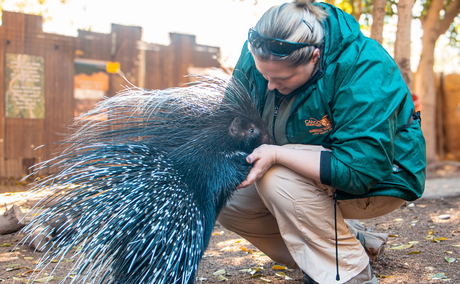
How patience, trust and training created a special bond between Animal Caregiver Pippa and Patricia, our Cape Porcupine When Patricia arrived at Cango Wildlife as a tiny baby, few could have predicted the relationship that would develop between this little bundle of quills and Animal Caregiver Pippa. For Pippa, however, the connection began with something very simple: time. Bottle feeds, playtime, cleaning and every spare opportunity to be around Patricia became the...
Share This Post