

Oudtshoorn is about to gain a new kind of neighbour: a working campus, built on sustainability principles, aimed squarely at the town's future workforce. On 1 September, Cango Wildlife will officially open its new Africa Skills Cango Academy site to an invite-only audience of civic and business leaders. Four days later, on 5 September, the doors open to the public for a community open day at 291 Adderley Street. Locals will be...
World Bee Day
Posted on Fri May 20, 2022.
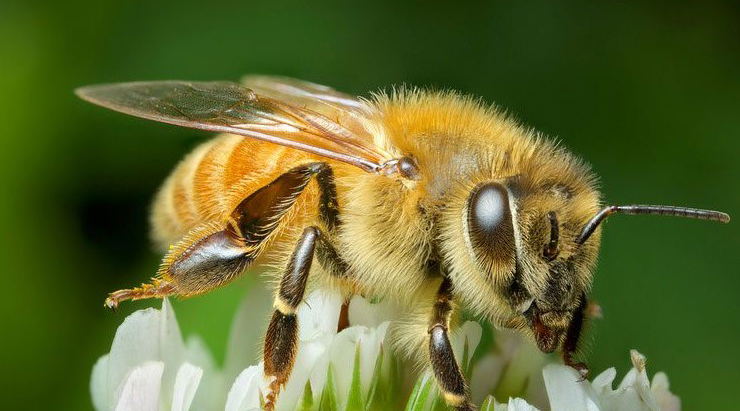
There is no life without bees…
Today, every third spoonful of food depends on pollination, and bees are some of the most important pollinators, ensuring food and food security, sustainable agriculture, and biodiversity. They significantly contribute to the mitigation of climate change and the conservation of the environment. In the long-term, the protection of bees and the beekeeping sector can help reduce poverty and hunger, as well as preserve a healthy environment and biodiversity.
Bees are also important in terms of sustainable agriculture and creating rural jobs. By pollinating, they increase agricultural production, thus maintaining diversity and variety in our fields and on our plates. In addition, they provide millions of people with jobs and are an important source of farmers' income.
Nevertheless, scientific studies show that there are more and more negative effects on the health of bees, which makes them increasingly endangered. This, in turn, requires us to take extra care of their survival, as harmful factors cause a decline in the resistance of bees, which affects their susceptibility to diseases, pests and the like. In addition, this is also problematic in terms of the protection and preservation of the environment, as bees foster biodiversity in nature and have a positive impact on the entire ecosystem and are a good indicator of the state of the environment. As a result, in 2011 Slovenia became one of the first countries in the EU to prohibit the use of certain pesticides that are harmful to bees.
Slovenia also proposed that the United Nations proclaim 20 May as World Bee Day.
On 20 December 2017, following three years of international efforts, the UN Member States unanimously approved Slovenia’s proposal and 20 May was proclaimed World Bee Day.
In order to produce a kilogram of honey, a bee has to visit four million flowers and fly four times the distance around the planet! These little hardworking creatures deserve all the admiration, respect and protection that we can muster!
Reference: www.worldbeeday.org
Share This Post
Latest News
-
 A New Campus And It Is Only The Beginning
Thu August 27, 2026 -
 Making Waves Beyond Cango
Thu August 27, 2026 -
 Two Peas In A Pod
Thu August 27, 2026 -
 A Cango Experience They’ll Carry Forever
Thu August 27, 2026 -
 The Story Behind The Menu
Thu August 27, 2026 -
 The Importance of Enrichment at Cango Wildlife
Thu August 27, 2026 -
 Knowledge, Laughter and a Little Friendly Competition
Fri July 31, 2026 -
 Shaping The Next Generation Of Wildlife Veterinarians
Thu July 30, 2026 -
 Walking Together
Thu July 30, 2026 -
 Celebrating The People Behind The Care
Thu July 30, 2026
Further Reading

A New Campus And It Is Only The Beginning
Thu August 27, 2026
Read This Article
Making Waves Beyond Cango
Thu August 27, 2026
Read This Article
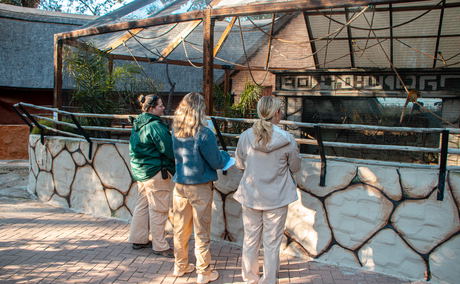
At Cango Wildlife, learning is not something that ends with a qualification. It continues every day through the animals in our care, the people we work alongside and the knowledge shared across the wider wildlife community. For Pippa, one of our dedicated Animal Caregivers, that passion for continued learning is now taking her beyond Cango Wildlife as she begins making her mark within the broader animal-care community. Recently, Pippa was invited to...
Two Peas In A Pod
Thu August 27, 2026
Read This Article
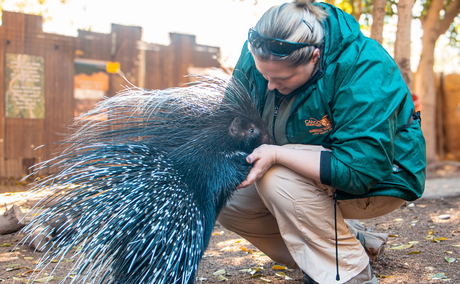
How patience, trust and training created a special bond between Animal Caregiver Pippa and Patricia, our Cape Porcupine When Patricia arrived at Cango Wildlife as a tiny baby, few could have predicted the relationship that would develop between this little bundle of quills and Animal Caregiver Pippa. For Pippa, however, the connection began with something very simple: time. Bottle feeds, playtime, cleaning and every spare opportunity to be around Patricia became the...
Share This Post