

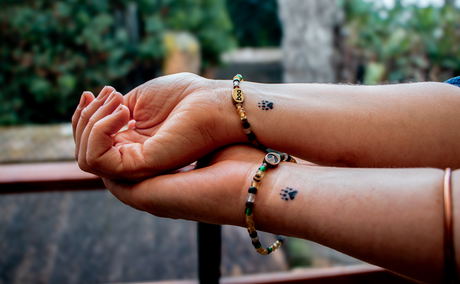
Some memories are captured in photographs. Others come home with you in a slightly more permanent way. For Australian volunteers Jamie, Hayley and Jess, and Cango Academy student Zenny, their time together in the Klein Karoo was marked with an experience they will quite literally carry with them forever.
Where Climate Meets Conservation
Posted on Tue July 29, 2025.
Why Oudtshoorn is the Ideal Home for Wildlife and Visitors Alike
At first glance, Oudtshoorn may appear to be just another small town nestled between the Swartberg and Outeniqua mountain ranges. But those who spend time here, whether local or visiting, quickly realise that this place is something extraordinary. With its semi-arid climate, minimal air pollution, and remarkably consistent sunshine, Oudtshoorn offers far more than just a picturesque setting. It provides a uniquely supportive environment for wildlife conservation, sustainable operations, and unforgettable visitor experiences.
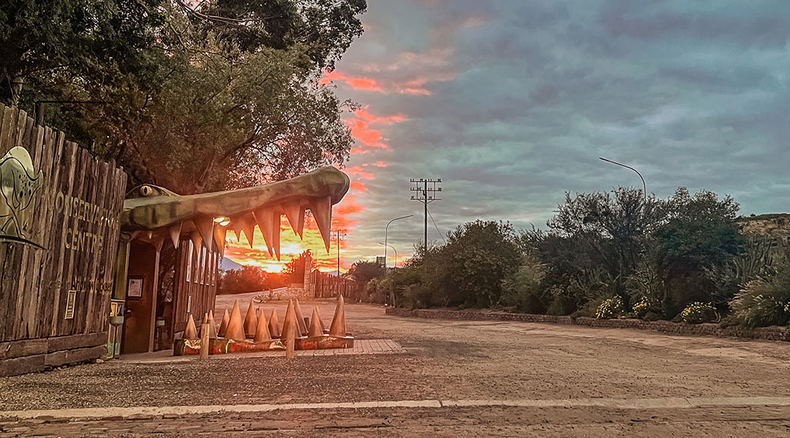
Located in the heart of the Klein Karoo, the climate here is naturally dry, with clear skies for most of the year and only modest seasonal rainfall. This means our days are filled with light, and our evenings are often capped off with stunning sunsets - like the ones you can spot just outside our gates. But beyond the beauty, the climate here plays a vital role in the day-to-day success of Cango Wildlife Ranch.
For us, the benefits are both practical and powerful:
Reduced reliance on artificial lighting and climate control: Thanks to ample natural light and stable temperatures, we’re able to significantly reduce energy use in both our animal habitats and visitor facilities. This supports our mission to operate more sustainably and minimise our environmental footprint. Improved long-term sustainability: Fewer mechanical systems running means less maintenance, lower costs, and more resources we can dedicate directly to animal care and conservation. It's not just about being green - it's about being smart and sustainable.
Ideal conditions for animal health: Many of our resident species benefit from this climate, as it closely mirrors the natural environments they would experience in the wild. Stable, dry conditions reduce stress and support overall wellness, while open-air enclosures allow for plenty of natural behavioural expression. Optimal comfort for guests: For our visitors, the consistent weather means year-round access to outdoor tours, educational talks, and unique encounters without weather disruptions. Clear skies enhance visibility, making every interaction more engaging - whether you're admiring a lounging Lemur or spotting a stealthy Cheetah beneath a tree.
Whether you’re joining a conservation talk, strolling through the Valley of Ancients, or simply pausing to take in the surrounding views, you’ll feel it - the stillness in the air, the clarity of the light, the freshness of the breeze. It’s all part of the experience here, and it’s one of the many reasons we’re proud to call Oudtshoorn our home.
As we continue to lead with conservation, education, and care, we’re reminded that nature itself is our strongest partner. And in a place like this - where skies stay blue and the air stays clean - that partnership is as enduring as the mountains that surround us.
Share This Post
Latest News
-
 A Little Piece Of Africa, Forever
Wed September 30, 2026 -
 From Cango To Kruger: Sharing The Story Of Project ZOA
Wed September 30, 2026 -
 Planting For The Future: Arbor Month Takes Root At Cango Academy
Wed September 30, 2026 -
 Building Trust, One Click At A Time
Tue September 29, 2026 -
 Trust Is Earned, Not Expected
Tue September 29, 2026 -
 Born To Be Wild: Celebrating 40 Years & Building The Next 40
Tue September 29, 2026 -
 Coming Home To Cango
Tue September 29, 2026 -
 A New Campus And It Is Only The Beginning
Thu August 27, 2026 -
 Making Waves Beyond Cango
Thu August 27, 2026 -
 Two Peas In A Pod
Thu August 27, 2026
Further Reading
A Little Piece Of Africa, Forever
Wed September 30, 2026
Read This Article
From Cango To Kruger: Sharing The Story Of Project ZOA
Wed September 30, 2026
Read This Article
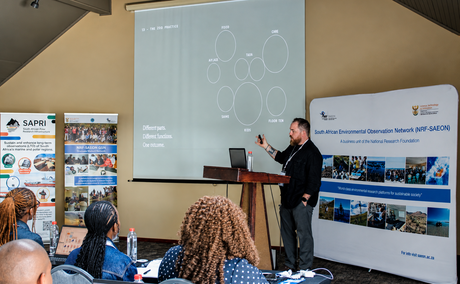
Cango Wildlife CEO Douglas Eriksen recently took Project ZOA to a new audience, delivering the keynote address at the 18th NRF-SAEON Graduate Student Network Indibano in Hazyview, Mpumalanga, on 16 September 2026. The South African Environmental Observation Network (SAEON), a research platform of the National Research Foundation, brings together scientists working across South Africa’s terrestrial, marine, freshwater and atmospheric environments. Its Graduate Student Network connects Master’s and PhD researchers from across the...
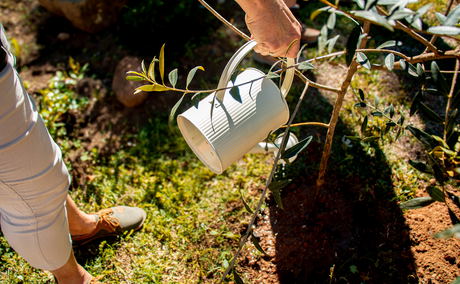
Planting For The Future: Arbor Month Takes Root At Cango Academy
Wed September 30, 2026
Read This Article
The final day of Arbor Month brought with it a fitting moment of growth at the newly opened Africa Skills Cango Academy, as representatives from the Garden Route District Municipality joined the Cango team for the handover and planting of indigenous trees. The Garden Route District Municipality donated 35 indigenous plants, comprising 20 Karee trees and 15 Spekboom, to be planted at the Academy. The initiative formed part of Arbor Month and...
Share This Post