

World Veterinary Day may have passed, but the work it recognises continues every single day at Cango Wildlife. Veterinary care sits quietly at the centre of everything, supporting each animal, guiding every decision, and ensuring that those in our care receive the attention they deserve. It is not always visible to visitors, but it is always present. This year, we took a moment to reflect on the people behind that care. Dr...
The Living Reserve
Posted on Thu April 30, 2026.
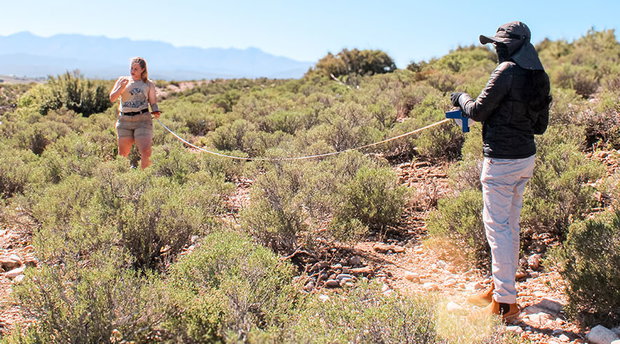
If you walk far enough into Greystone, our private reserve adjacent to Cango Wildlife Ranch, you begin to notice how the land holds its history. Pale sandstone outcrops, the same stone quarried more than a century ago to help build much of old Oudtshoorn, rise out of a sea of spekboom and Karoo bossies. Footpaths thread through dwarf shrubs that have weathered drought after drought and flood after flood.
In the quiet moments, you can hear the cheetahs at our breeding centre calling to one another. If you sit still long enough, the smaller life begins to reveal itself. A tortoise easing along a path. A spotted sand lizard warming itself on a rock. The high, alert posture of a red duiker on the ridge.
Greystone spans roughly 90 hectares, a modest footprint by African reserve standards, yet a landscape of real significance within the Cango Wildlife story. It holds the legacy of a decades old cheetah breeding programme that continues to play a central role in conservation efforts, while also offering a quieter refuge where retired animals such as Bat Eared Foxes and Caracals spend their later years in semi natural surroundings. Beyond its role in animal care, Greystone carries scientific weight. It sits within a fossil rich zone and marks a rare geological meeting point between the Succulent Karoo and Fynbos biomes, creating a level of botanical diversity that far exceeds what one would expect from a reserve of its size. It is a place with depth, history, and untapped potential, a landscape that has long required more focused attention.
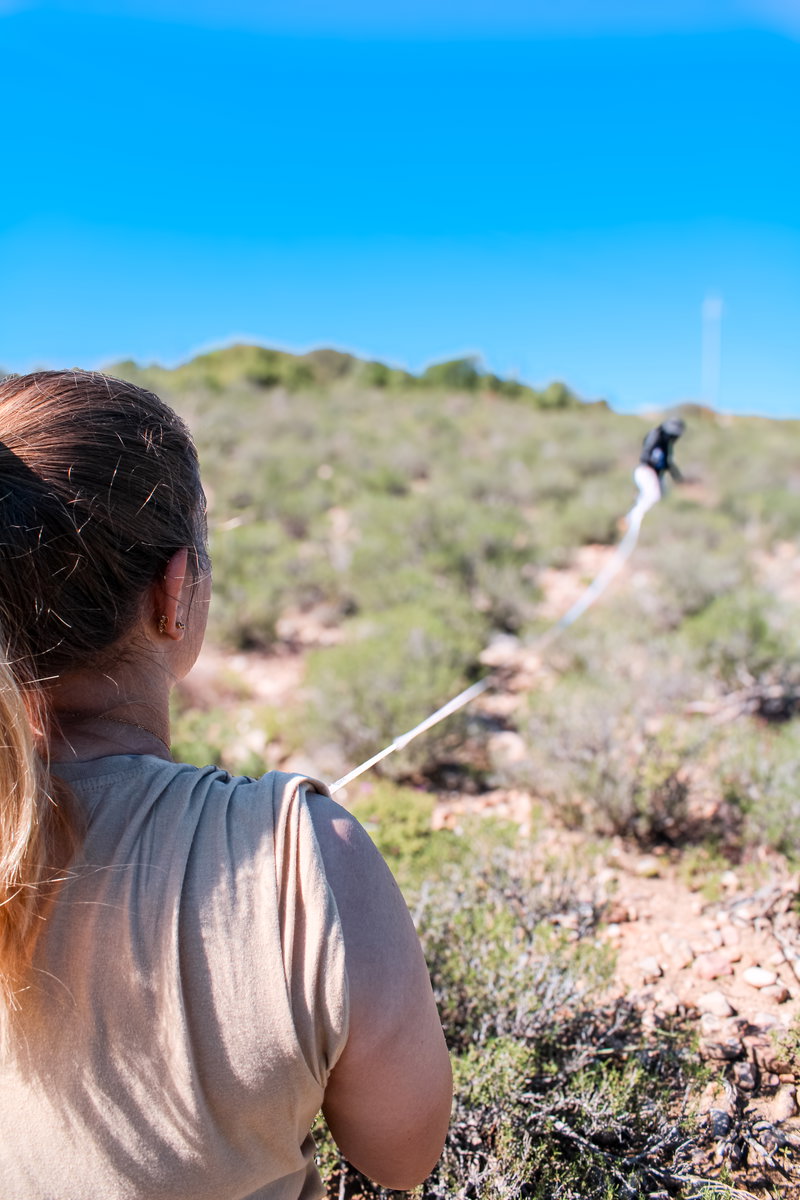
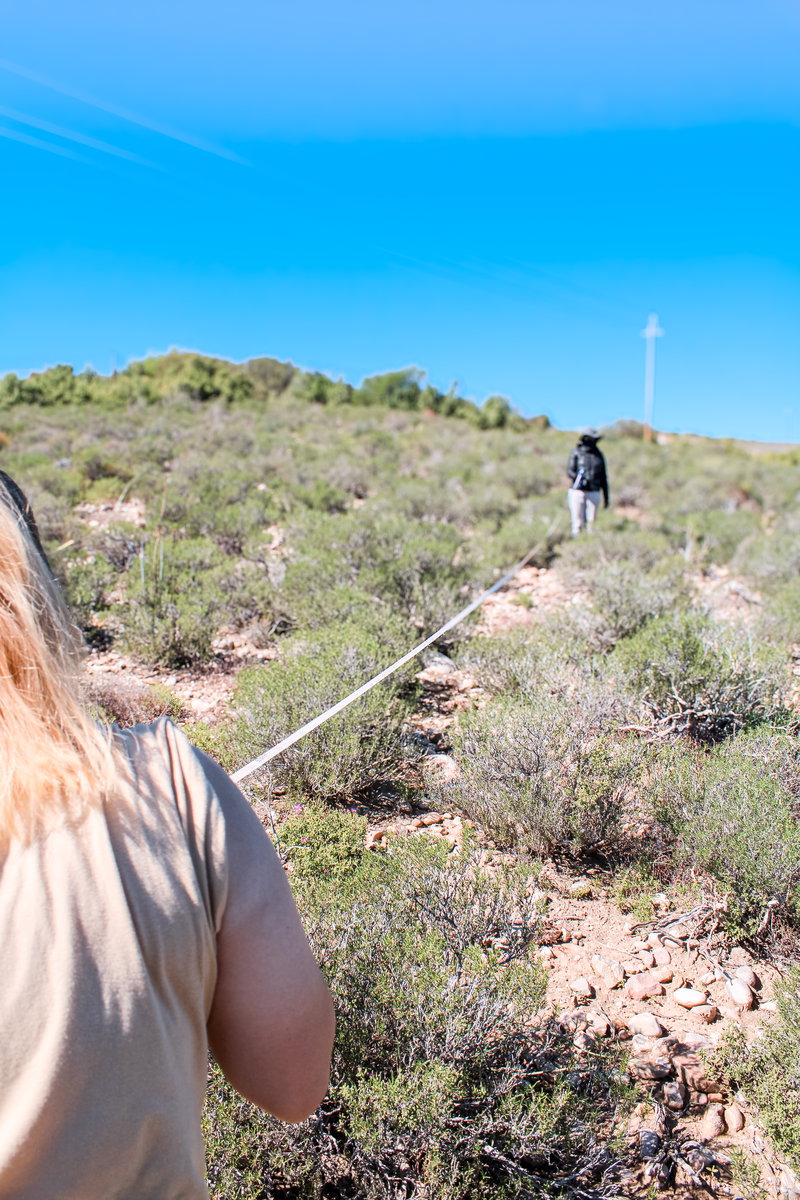
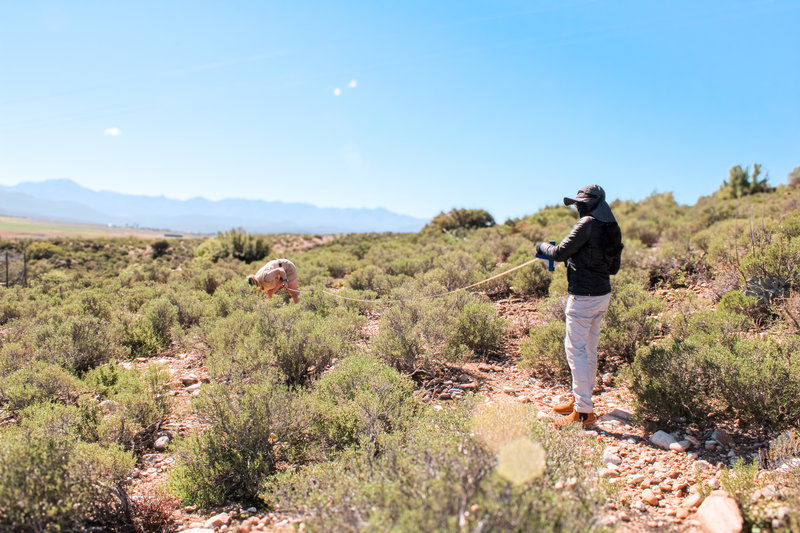
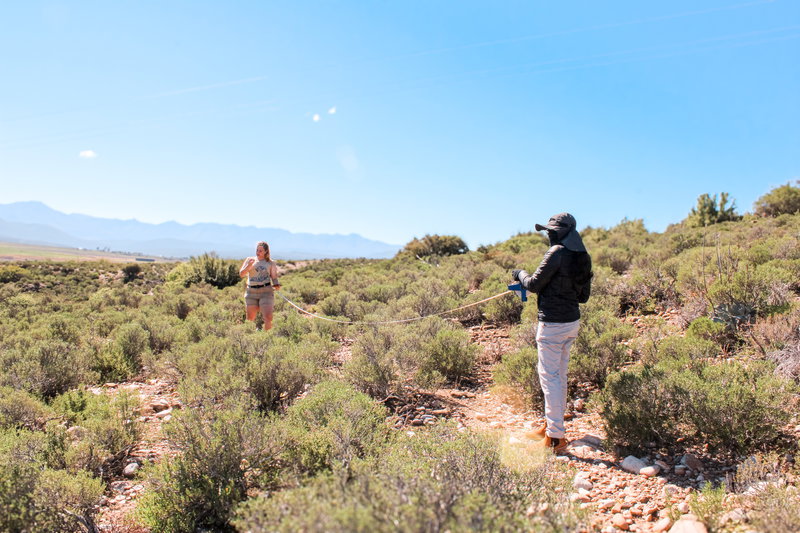
That attention is now taking shape through a dedicated rehabilitation initiative led by the Cango Academy. Beginning this year and extending through 2026, the programme places Work Integrated Learning students at the centre of the effort, turning Greystone into a living classroom where conservation theory meets practical application. The work is grounded in the principles of veld management, a discipline rooted in understanding and maintaining the integrity of open landscapes across southern Africa. It is a process that demands observation, patience, and long term thinking, asking fundamental questions about what belongs in a system, how the soil is functioning, whether biodiversity is being supported, and how human intervention can either stabilise or degrade the land.
At its best, veld management restores balance. Soil retains moisture, vegetation supports wildlife, and ecological processes begin to function as they should. When neglected, the same systems unravel. Erosion accelerates, invasive species take hold, and biodiversity declines. Greystone currently sits between these two states. Much of the land remains resilient, but clear challenges persist and require structured intervention.
Invasive alien plants remain one of the most visible pressures. Species such as prickly pear, black wattle, and mesquite continue to outcompete indigenous vegetation, altering soil composition, disrupting water flow, and in some cases posing risks to animal health. Alongside this, erosion has taken hold in both sheet and gully forms. Soil loss often begins subtly, but over time it strips the land of its ability to sustain life. There are also pockets of toxic and aggressive plant species, and the added complexity of managing an ecotone where two distinct biomes meet, each with its own ecological requirements.
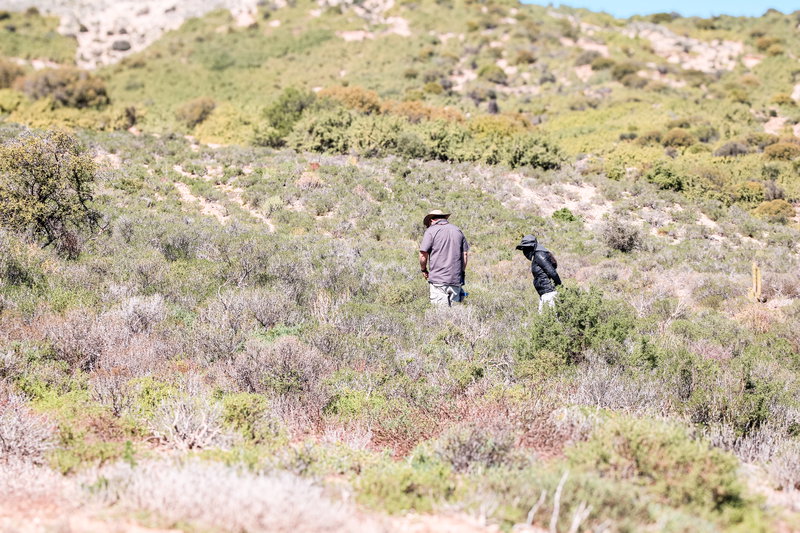
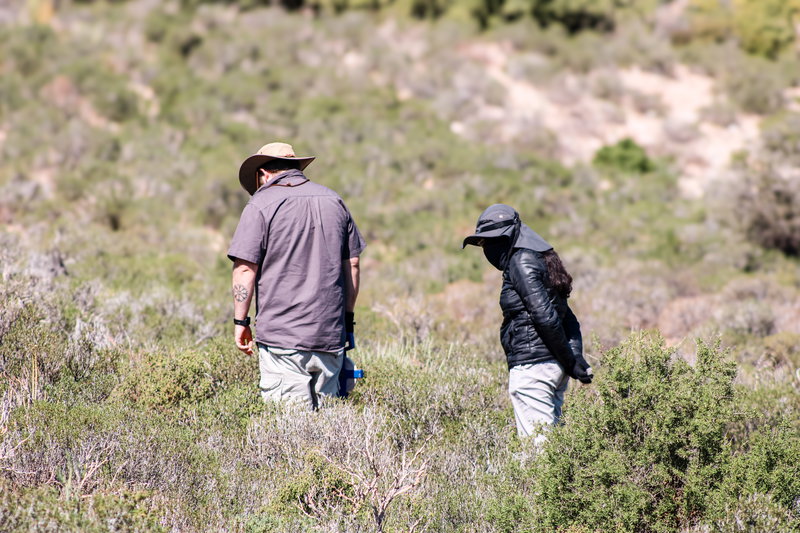
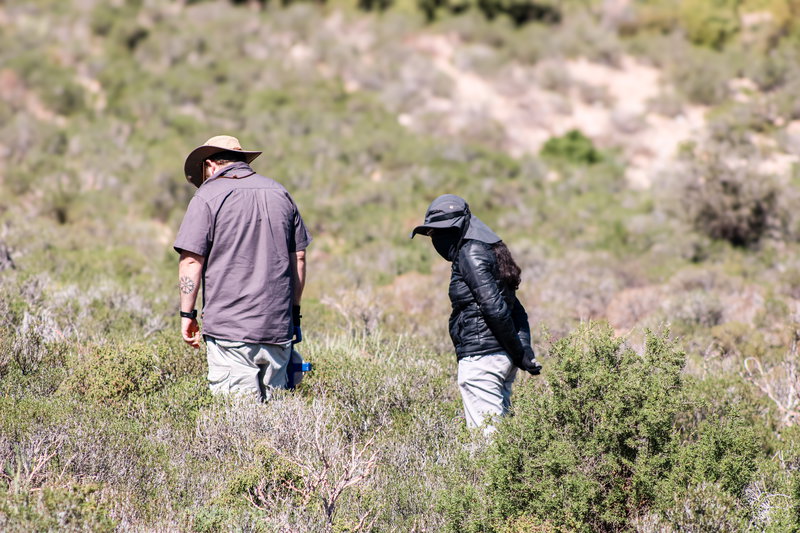
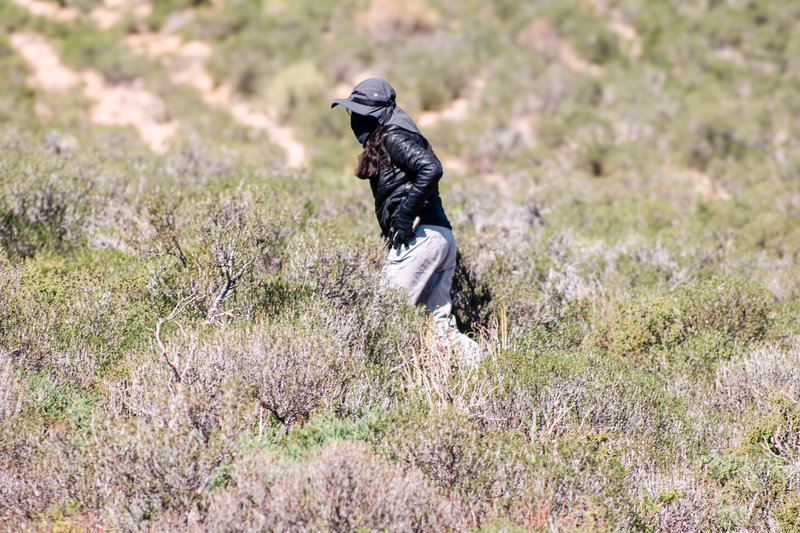
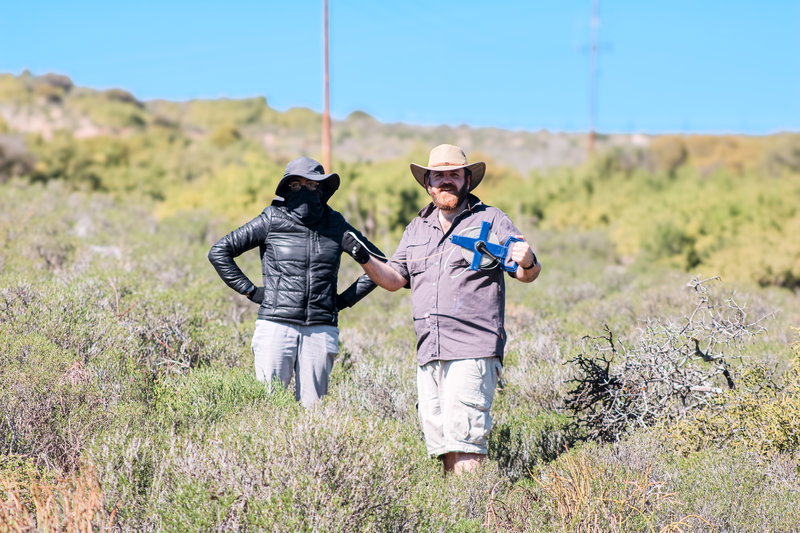
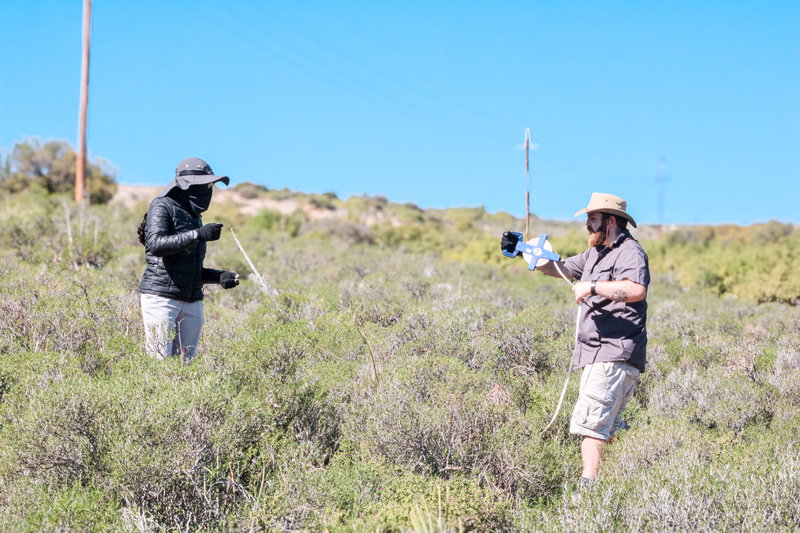
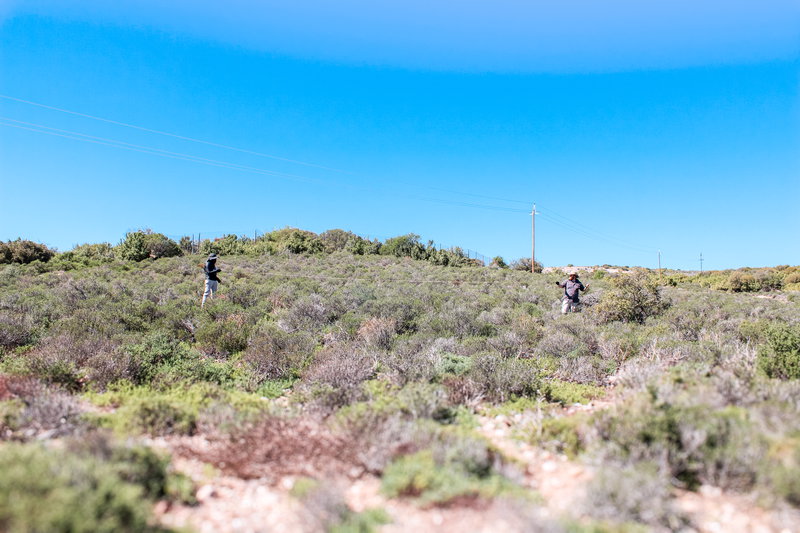
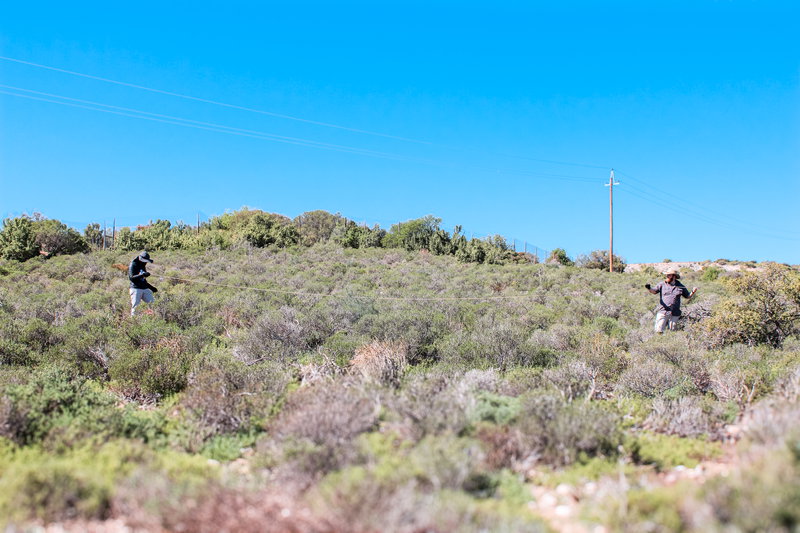
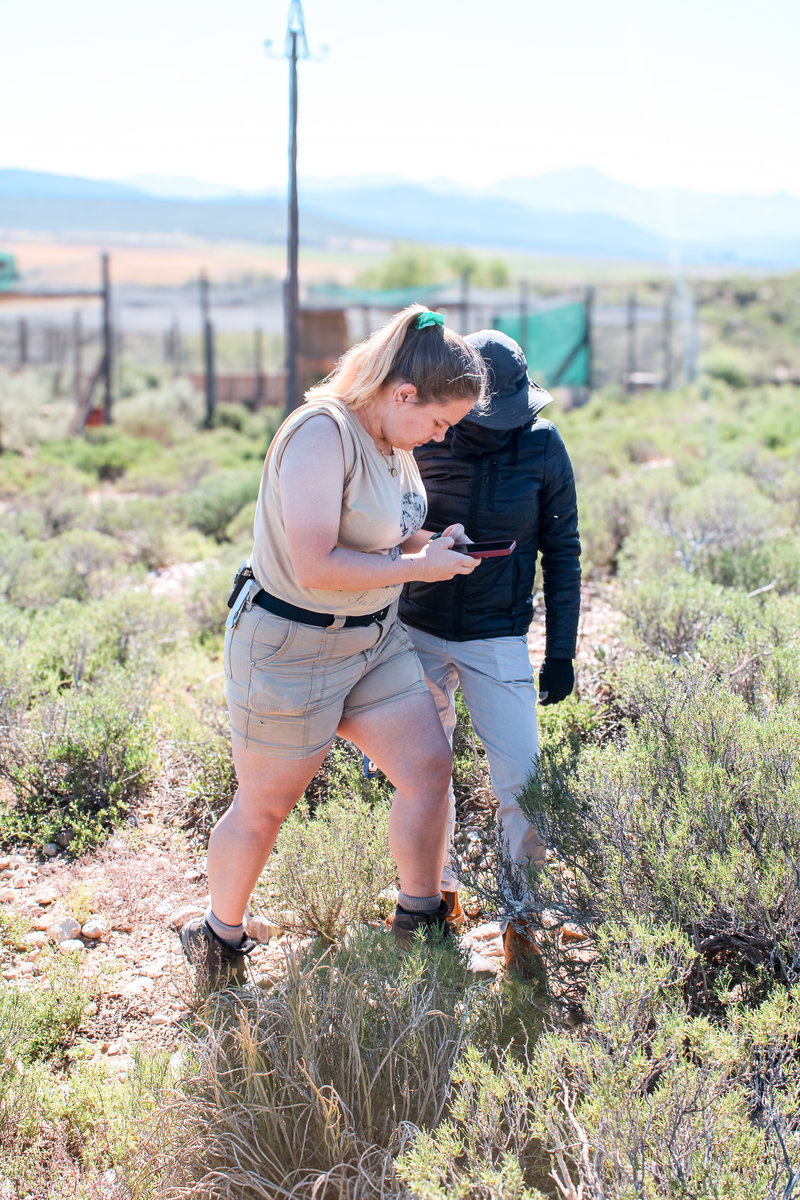
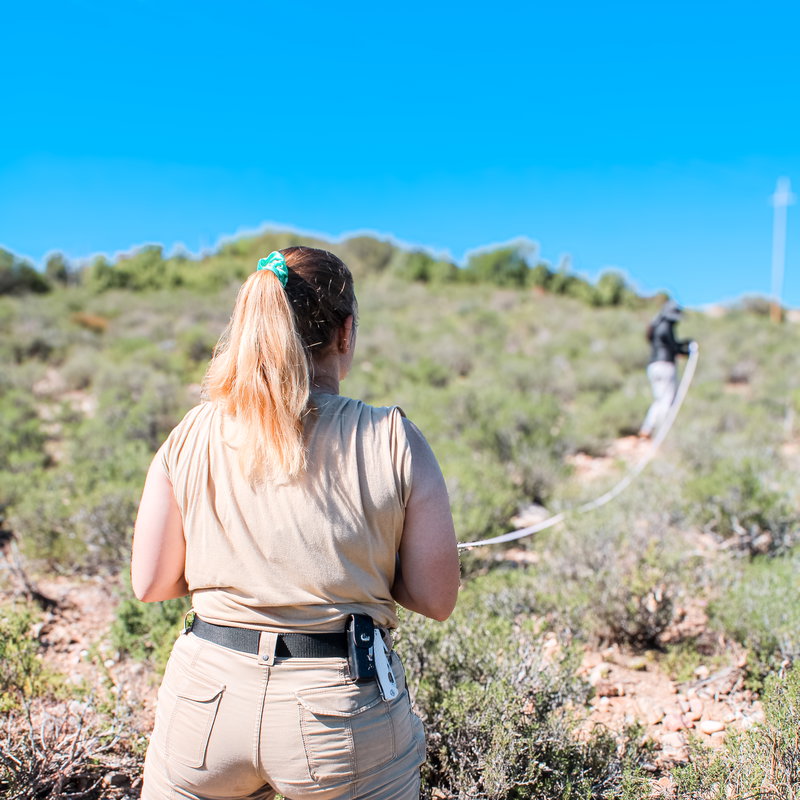
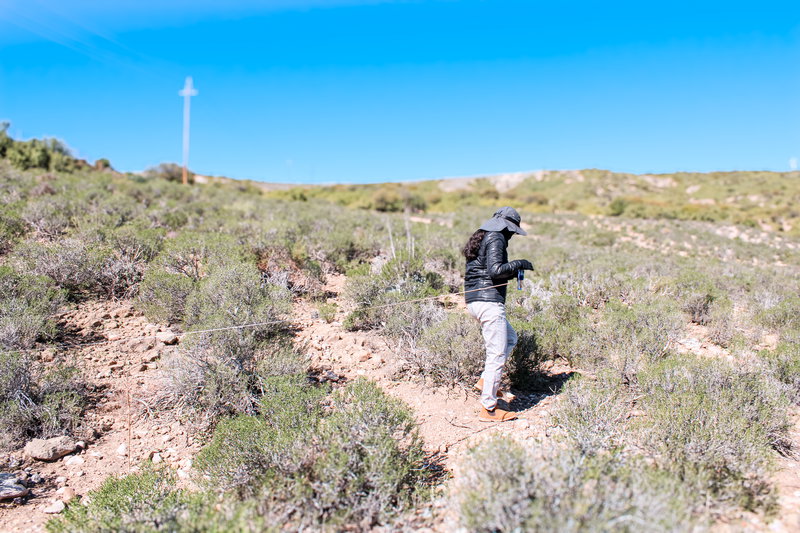
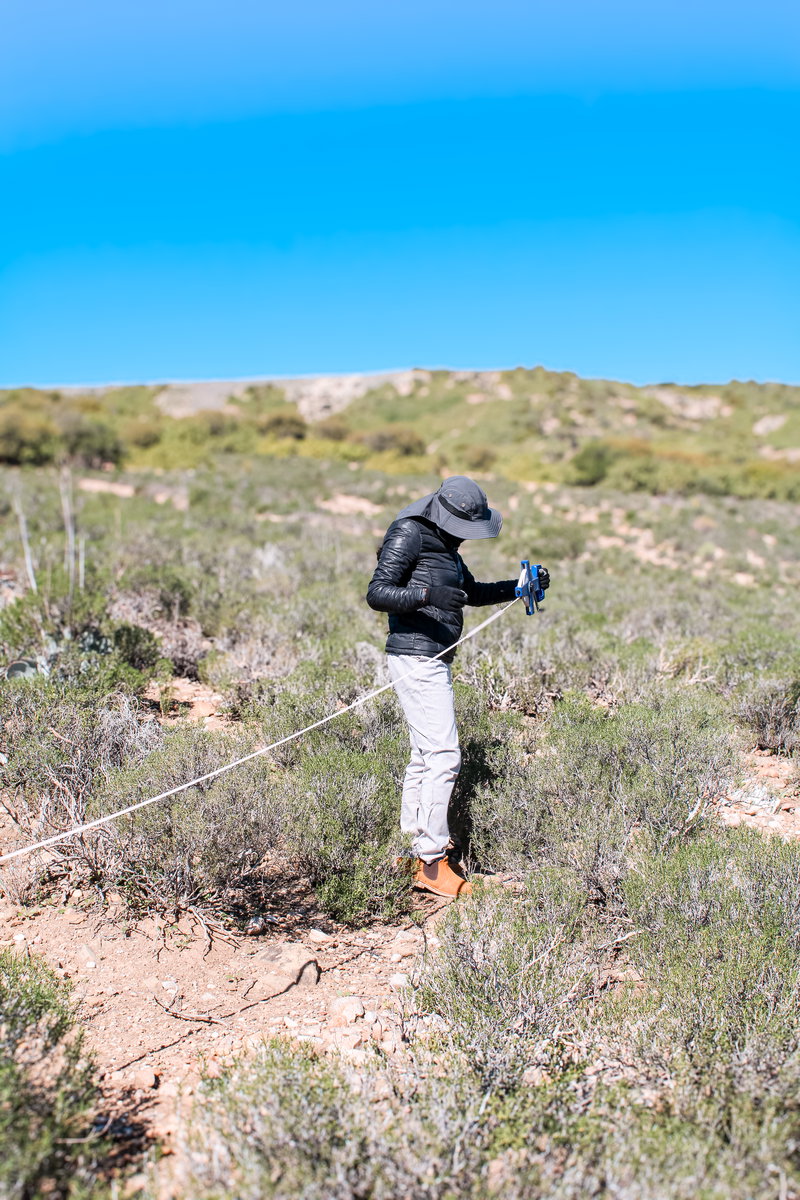
Addressing these challenges requires more than short term action. It calls for consistent, informed management, and this is where the Cango Academy’s student programme becomes essential. Through partnerships with institutions such as Nelson Mandela University and the Newbridge Graduate Institute, students engage in structured fieldwork that directly contributes to the rehabilitation of Greystone. Their role is active and ongoing. They map and assess the land, identify plant and animal species, record the spread of invasive vegetation, and monitor erosion patterns. They contribute to biodiversity tracking through platforms such as iNaturalist, while also taking part in hands on restoration efforts including invasive clearing, erosion control using methods like mulching and gabions, and the reseeding of indigenous plant species.
The work extends beyond ecology into the geological significance of the site. Students are involved in fossil and palaeontological activities, contributing to research that connects the present landscape with its ancient past. Through this, they gain a broader understanding of how ecosystems evolve over time and what it takes to protect them.
At its core, the initiative is not only about meeting academic requirements. It reflects a deeper responsibility. A reserve that supports an established cheetah breeding programme, contributes to national conservation priorities, and maintains relationships with global partners cannot separate wildlife care from land stewardship. The health of one depends entirely on the other. Greystone is not a backdrop to conservation work. It is an active part of it.
As the programme unfolds, the progress will become visible through ongoing field updates, species records, and clear before and after restoration outcomes. More importantly, it will be reflected in the development of students who learn to read the land, understand its pressures, and respond with purpose. This is not quick work. It requires consistency, physical effort, and long term commitment, but it is necessary work.
Small reserves hold value when they are managed with intent. When the land is understood, when interventions are guided by knowledge, and when care is applied consistently, even a relatively small space can contribute meaningfully to conservation. That is the direction Greystone is moving toward, supported by a new generation of conservationists who are gaining the skills to continue this work into the future.
The commitment is clear. The work has begun. Greystone, long waiting for focused care, is now receiving it.
Dr Garrett E. Eriksen
Academic Programme Coordinator, Cango Academy
Share This Post
Latest News
-
 Stories From Our Veterinary Team
Thu April 30, 2026 -
 For Every Kind Of Mother
Thu April 30, 2026 -
 A Community That Shows Up
Thu April 30, 2026 -
 Small Choices, Real Impact
Thu April 30, 2026 -
 Redefining Conservation For What Comes Next
Thu April 30, 2026 -
 Be Part Of Their Story
Thu April 30, 2026 -
 A Fight Worth Having
Thu April 30, 2026 -
 Staying Visible in a Fast Moving Industry
Thu April 30, 2026 -
 The Living Reserve
Thu April 30, 2026 -
 Third Annual Easter Egg Hunt 4/5 April
Fri March 27, 2026
Further Reading
Stories From Our Veterinary Team
Thu April 30, 2026
Read This Article

For Every Kind Of Mother
Thu April 30, 2026
Read This Article
Mother’s Day is often marked with flowers, gifts, and quiet moments of appreciation. This year at Cango Wildlife, it becomes something more. A two day celebration, on 09 and 10 May, dedicated not only to human mothers, but to every form of motherhood we are privileged to witness. Because care is not limited to one species. Across the facility, motherhood takes many shapes. It is seen in the quiet watchfulness of a...
A Community That Shows Up
Thu April 30, 2026
Read This Article
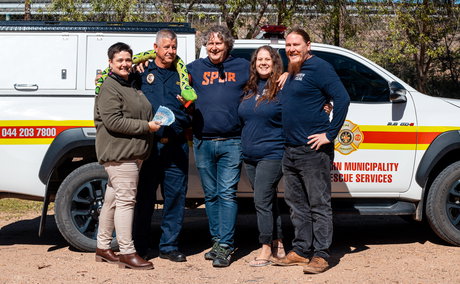
In Oudtshoorn, wildlife is part of daily life. And when that life crosses into homes, schools, or businesses, there is often one person people call first - Mornay Thysse. For years, Mornay has been the steady hand in moments of panic. Safely removing and relocating snakes, protecting both people and wildlife with calm, skill, and respect for the animals he works with. His role is not always easy. It is often urgent,...
Share This Post