

Oudtshoorn is about to gain a new kind of neighbour: a working campus, built on sustainability principles, aimed squarely at the town's future workforce. On 1 September, Cango Wildlife will officially open its new Africa Skills Cango Academy site to an invite-only audience of civic and business leaders. Four days later, on 5 September, the doors open to the public for a community open day at 291 Adderley Street. Locals will be...
From 1 Gram To The Night Sky
Posted on Thu February 26, 2026.
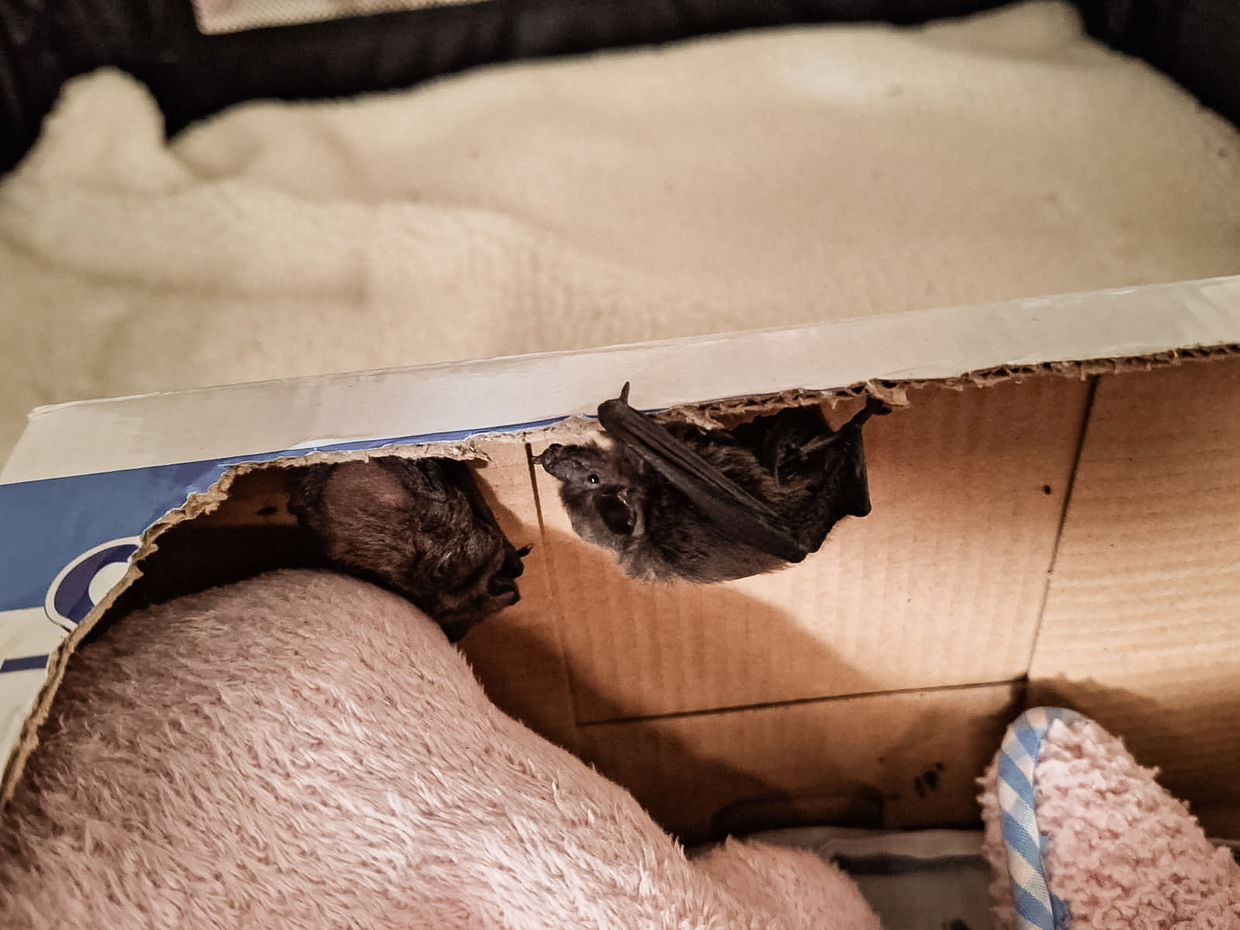
In early December, a male bat weighing just 1 gram arrived at Cango Wildlife after being attacked by a cat and brought in by a concerned member of the public. At that weight, he fit easily into the palm of a hand. Fragile. Silent. Fighting for survival long before he reached our care.
Whenever wildlife has contact with a cat, immediate veterinary care is essential. Cat saliva carries bacteria that can be fatal to small mammals within hours. Immediate veterinary care becomes the difference between loss and survival. This tiny bat arrived just in time.
Intensive Care Begins
Hand rearing started immediately. Feeding took place every two hours using a specialised milk formula. Warmth was carefully controlled. Handling remained gentle and minimal to reduce stress. At this size, survival depends on consistency, patience, and absolute attention to detail.
On 21 December, a second patient arrived. A 5 gram female bat, slightly older and stronger than the male had been on admission. She too had survived a cat attack and was estimated to be about a week ahead in development.
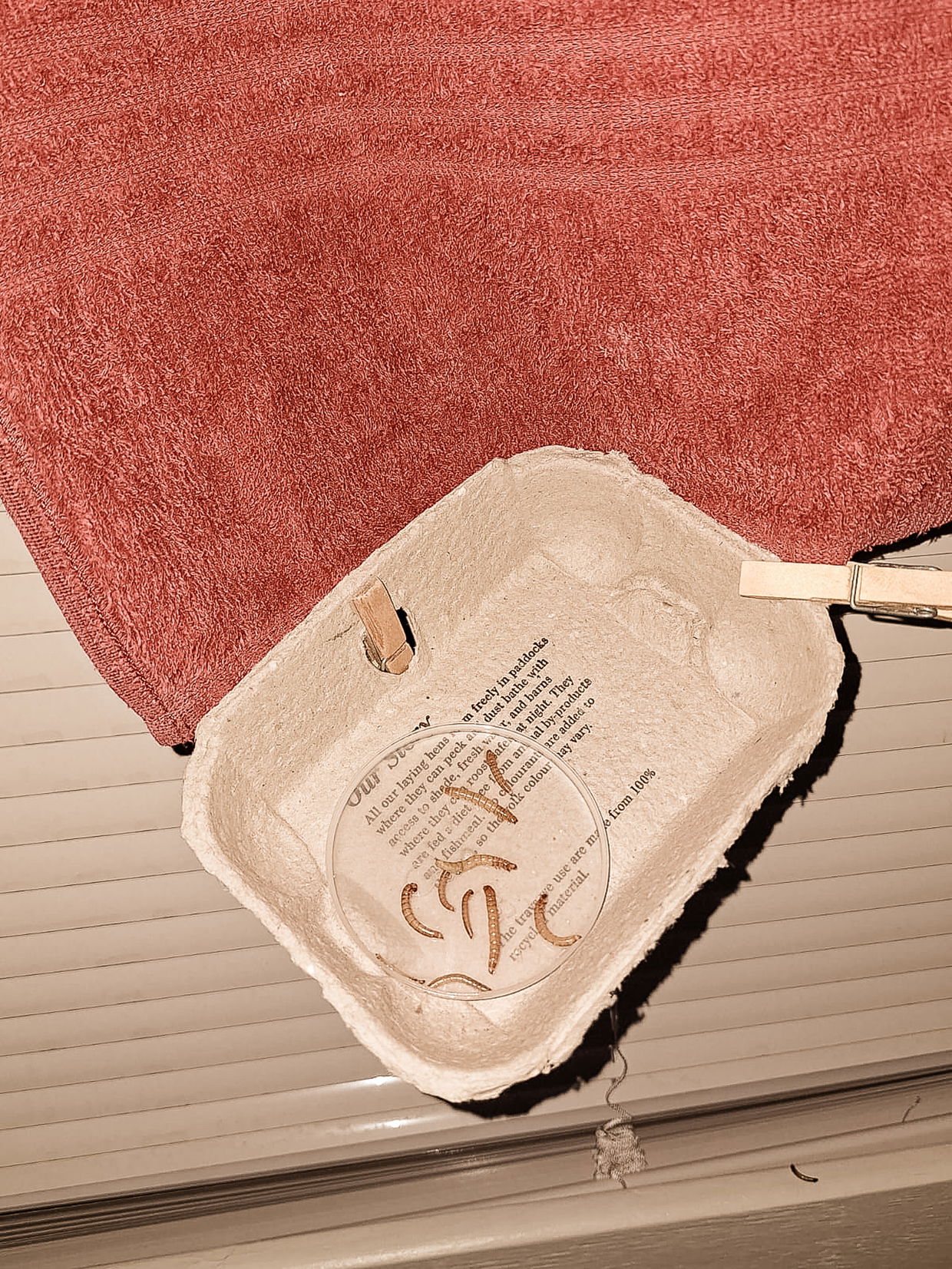
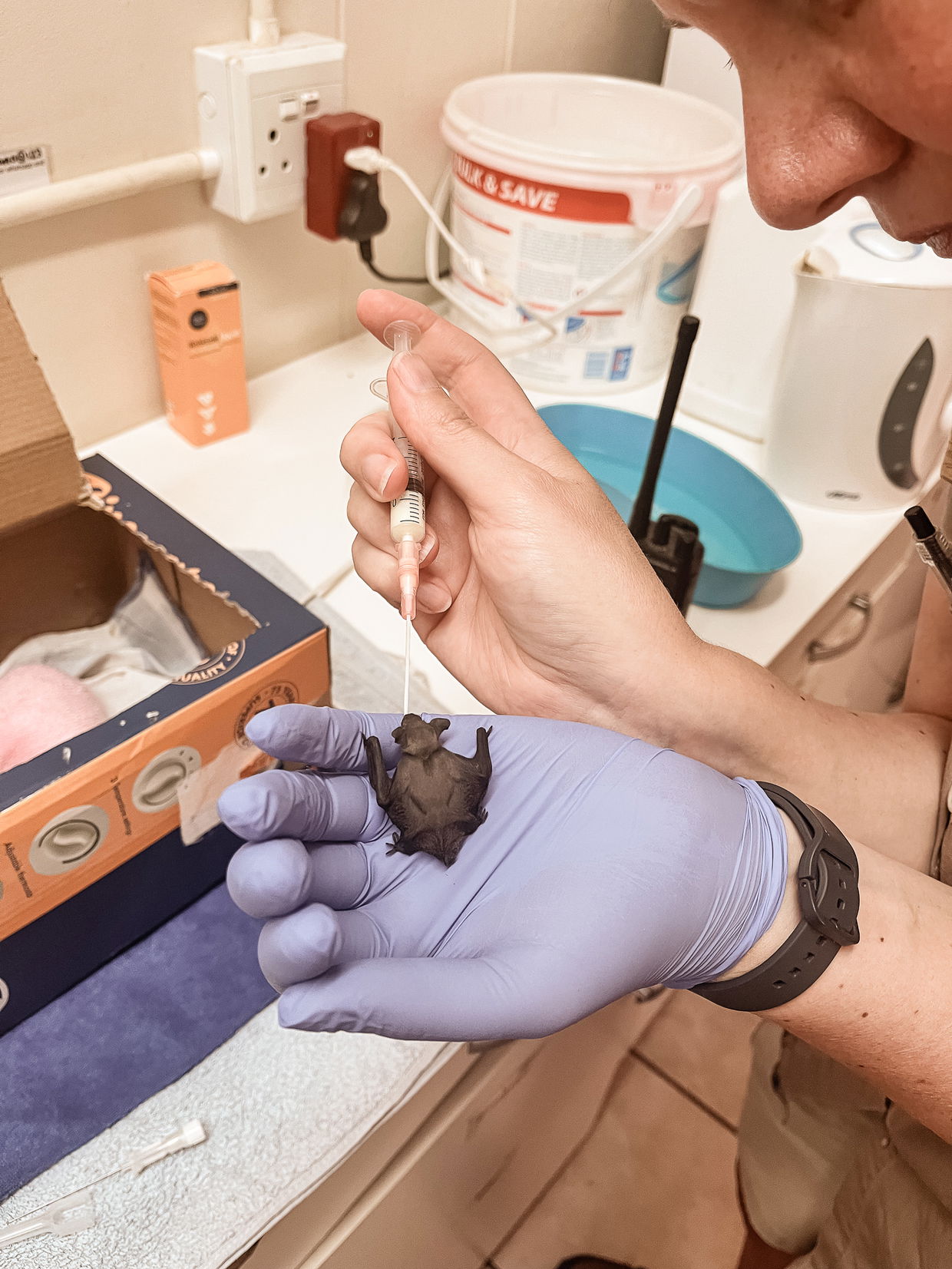 As both bats stabilised, feeding progressed from milk to mealworm mash. Each feeding required extracting the nutrient rich contents of mealworms and offering them slowly by hand. Progress came in grams, not milestones. At peak feeding, each bat consumed between 20 and 30 mealworms per session.
Milk feeds gradually reduced. Whole mealworms followed, beginning at just a few millimetres in size. As strength returned and coordination improved, prey size increased.
In time, both bats moved from hand feeding to independent feeding from a dish. The female adapted quickly, while the male required closer monitoring. They were housed in neighbouring enclosures, separated only to ensure accurate feeding while still able to hear and sense one another nearby.
Learning to Fly
As their bodies strengthened, their world expanded. They moved from a small box to soft mesh carriers. A toddler tent became a safe roosting space. Controlled flight practice began in a secure room, with soft landings onto a bed.
Throughout the process, Cango Wildlife remained in consultation with two specialised bat rehabilitation groups in South Africa. This was our first time raising bats at such a small size. Expert guidance shaped every stage.
In their final month, they were transferred to our hand raising premises, which was transformed into a dedicated flight space. Towels were suspended to simulate roosting sites. Multiple feeding stations were introduced. At this stage, they weighed 6 grams and 7 grams.
 CCTV monitoring showed steady progress. Short flights became confident loops. They located food even when repositioned. Natural insects entering the space likely supplemented their diet. By the final stages of rehabilitation, the male had consumed more than 1,500 mealworms. At the time of release, each bat had consumed close to 2,000 to regain full strength.
Release Night
Release depended on readiness and the right conditions. Weeks of extreme heat and strong winds delayed the moment. Then, finally, a calm evening settled over the facility. Both bats were released within the natural range of Cape Serotine colonies, offering the best chance of joining wild populations.
The female launched first. A brief pause. A survey of the darkening sky. Then she was gone. The male hesitated. He needed a gentle lift, a little height, and then instinct took over. He disappeared into the dusk. It was quiet. It was powerful.
Three months of round the clock care. Hundreds of feeds. Thousands of mealworms. Little sleep. And then, flight. Two more bats now contribute to mosquito control and ecological balance in the Klein Karoo night.
The woman who rescued the male did more than bring him in. She supported his rehabilitation and checked in regularly throughout his recovery. When informed of their release, her gratitude reflected something shared by everyone involved, relief that the tiny 1 gram survivor made his way back to the wild. Rescue is commitment. Rehabilitation is discipline. Release is hope.
Share This Post
Latest News
-
 A New Campus And It Is Only The Beginning
Thu August 27, 2026 -
 Making Waves Beyond Cango
Thu August 27, 2026 -
 Two Peas In A Pod
Thu August 27, 2026 -
 A Cango Experience They’ll Carry Forever
Thu August 27, 2026 -
 The Story Behind The Menu
Thu August 27, 2026 -
 The Importance of Enrichment at Cango Wildlife
Thu August 27, 2026 -
 Knowledge, Laughter and a Little Friendly Competition
Fri July 31, 2026 -
 Shaping The Next Generation Of Wildlife Veterinarians
Thu July 30, 2026 -
 Walking Together
Thu July 30, 2026 -
 Celebrating The People Behind The Care
Thu July 30, 2026
Further Reading

A New Campus And It Is Only The Beginning
Thu August 27, 2026
Read This Article
Making Waves Beyond Cango
Thu August 27, 2026
Read This Article
At Cango Wildlife, learning is not something that ends with a qualification. It continues every day through the animals in our care, the people we work alongside and the knowledge shared across the wider wildlife community. For Pippa, one of our dedicated Animal Caregivers, that passion for continued learning is now taking her beyond Cango Wildlife as she begins making her mark within the broader animal-care community. Recently, Pippa was invited to...
Two Peas In A Pod
Thu August 27, 2026
Read This Article
How patience, trust and training created a special bond between Animal Caregiver Pippa and Patricia, our Cape Porcupine When Patricia arrived at Cango Wildlife as a tiny baby, few could have predicted the relationship that would develop between this little bundle of quills and Animal Caregiver Pippa. For Pippa, however, the connection began with something very simple: time. Bottle feeds, playtime, cleaning and every spare opportunity to be around Patricia became the...
Share This Post