

Oudtshoorn is about to gain a new kind of neighbour: a working campus, built on sustainability principles, aimed squarely at the town's future workforce. On 1 September, Cango Wildlife will officially open its new Africa Skills Cango Academy site to an invite-only audience of civic and business leaders. Four days later, on 5 September, the doors open to the public for a community open day at 291 Adderley Street. Locals will be...
Familiar Visitor With Ancient Roots
Posted on Thu August 14, 2025.
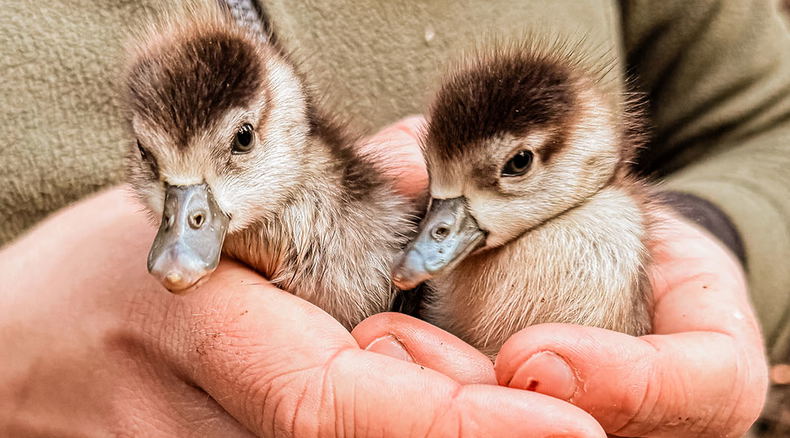
The Egyptian Goose (Alopochen aegyptiaca) is a striking waterfowl, easily recognised by its chestnut eye patches, pink legs, and bold chest markings. Despite their name, they are not limited to Egypt. Their name comes from their strong presence along the Nile River in ancient times, where they were revered and often depicted in art and hieroglyphs. They were symbols of fertility and protection, appearing in some of the earliest known bird artwork. Egyptian Geese are native to sub-Saharan Africa and the Nile Valley, thriving in wetlands, rivers, lakes, and open grasslands.
Their adaptability has allowed them to spread into parts of Europe and the Middle East, where introduced populations have become established. In their native range they remain common, but they carry a unique cultural and ecological significance. At Cango Wildlife Ranch, these geese are not part of our resident collection. They are completely wild, free to come and go as they please. Many return to the ranch year after year to raise their young, drawn by the safe environment, available food, and calm waters on site. Watching these seasonal visitors rear their fluffy goslings has become a cherished experience for both our team and our guests.
Here, Egyptian Geese often choose to nest high in the tall Eucalyptus trees that tower over the property. These lofty sites keep eggs safe from ground predators, but they also set the stage for one of nature’s most nerve-testing spectacles. Once the eggs hatch, the tiny goslings take a fearless leap from the nest - sometimes from heights 20+ metres. Despite the heart-stopping drop, they almost always land unharmed, cushioned by their light bodies and soft down, before being led by their parents to the nearest water. A testament to natures resilience and the remarkable adaptations of their species.Just this week, our team arrived to find a cluster of tiny goslings wandering in and around Cheetahland.
Their mother had clearly decided that morning was “moving day” and had evicted them from the nest. Our staff quickly stepped in to guide the little ones to safety and reunite them with mom.
Did You Know?
Goslings have the ability to swim within a day of hatching.
Their loud, honking call is used to defend territory and warn off rivals.
Pairs often mate for life, returning to the same nesting site each year, and both parents take turns guarding and leading their goslings
Egyptian Geese are strong fliers and can travel long distances between feeding and nesting grounds.
Share This Post
Latest News
-
 A New Campus And It Is Only The Beginning
Thu August 27, 2026 -
 Making Waves Beyond Cango
Thu August 27, 2026 -
 Two Peas In A Pod
Thu August 27, 2026 -
 A Cango Experience They’ll Carry Forever
Thu August 27, 2026 -
 The Story Behind The Menu
Thu August 27, 2026 -
 The Importance of Enrichment at Cango Wildlife
Thu August 27, 2026 -
 Knowledge, Laughter and a Little Friendly Competition
Fri July 31, 2026 -
 Shaping The Next Generation Of Wildlife Veterinarians
Thu July 30, 2026 -
 Walking Together
Thu July 30, 2026 -
 Celebrating The People Behind The Care
Thu July 30, 2026
Further Reading

A New Campus And It Is Only The Beginning
Thu August 27, 2026
Read This Article
Making Waves Beyond Cango
Thu August 27, 2026
Read This Article
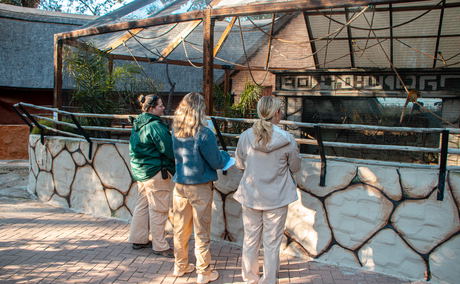
At Cango Wildlife, learning is not something that ends with a qualification. It continues every day through the animals in our care, the people we work alongside and the knowledge shared across the wider wildlife community. For Pippa, one of our dedicated Animal Caregivers, that passion for continued learning is now taking her beyond Cango Wildlife as she begins making her mark within the broader animal-care community. Recently, Pippa was invited to...
Two Peas In A Pod
Thu August 27, 2026
Read This Article
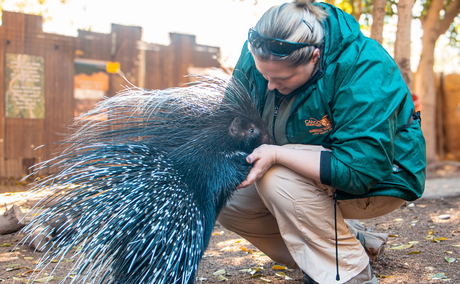
How patience, trust and training created a special bond between Animal Caregiver Pippa and Patricia, our Cape Porcupine When Patricia arrived at Cango Wildlife as a tiny baby, few could have predicted the relationship that would develop between this little bundle of quills and Animal Caregiver Pippa. For Pippa, however, the connection began with something very simple: time. Bottle feeds, playtime, cleaning and every spare opportunity to be around Patricia became the...
Share This Post