


Some memories are captured in photographs. Others come home with you in a slightly more permanent way. For Australian volunteers Jamie, Hayley and Jess, and Cango Academy student Zenny, their time together in the Klein Karoo was marked with an experience they will quite literally carry with them forever.
The Importance of Enrichment at Cango Wildlife
Posted on Thu August 27, 2026.
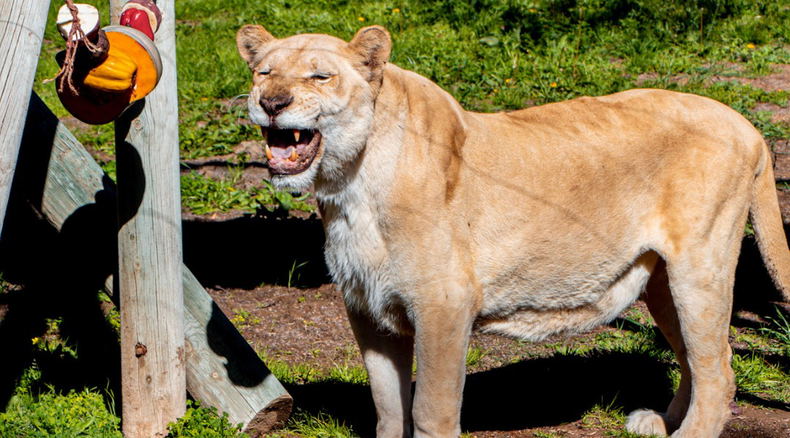
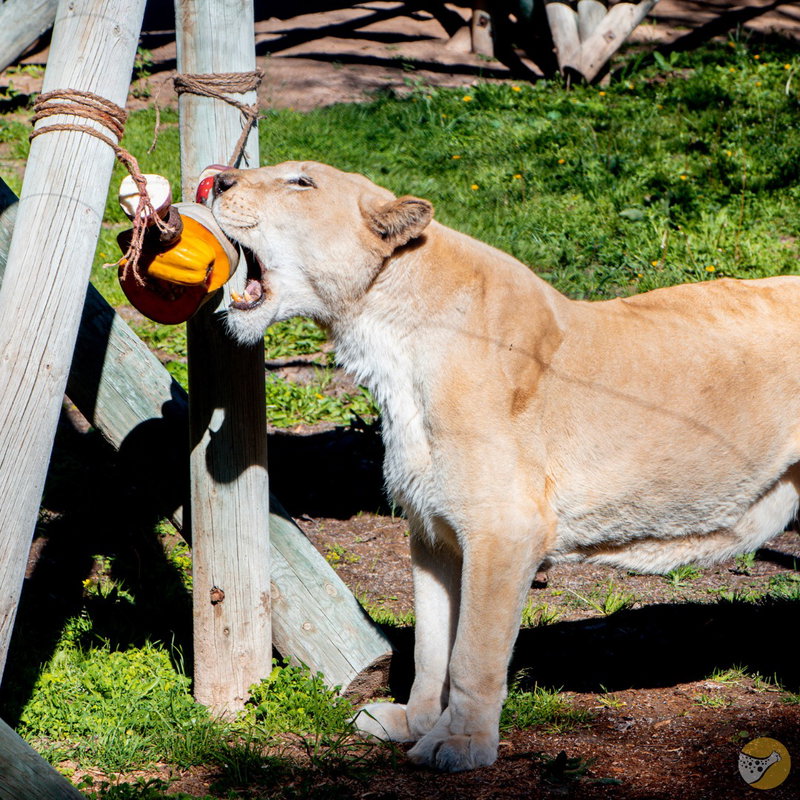
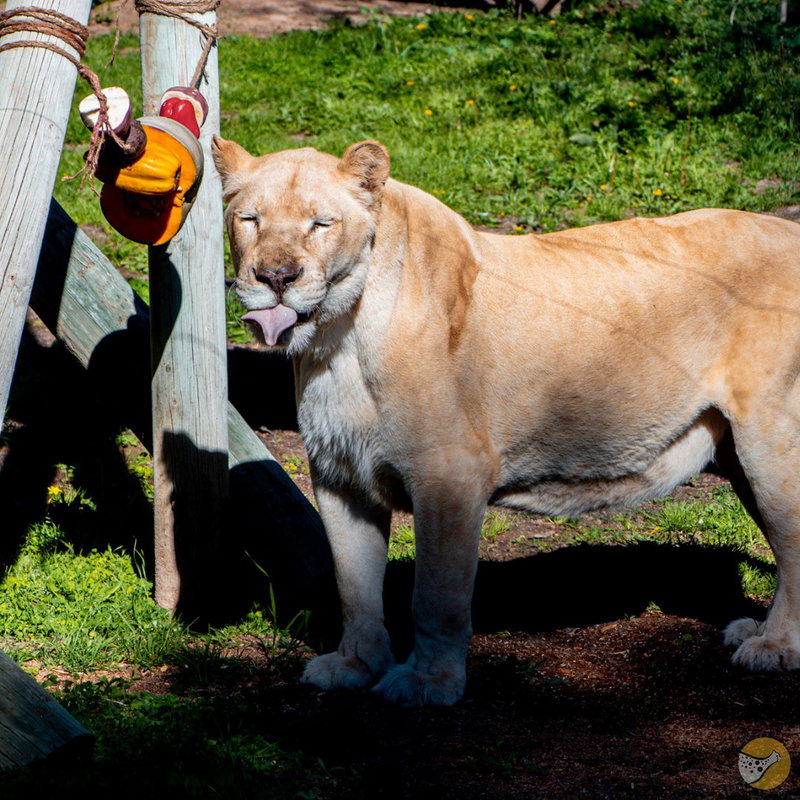
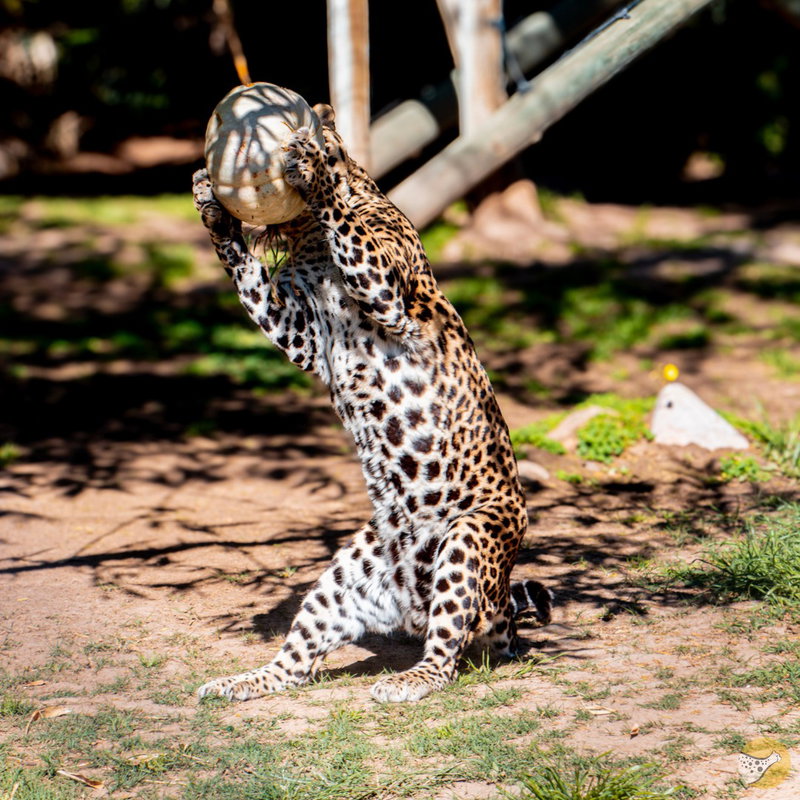
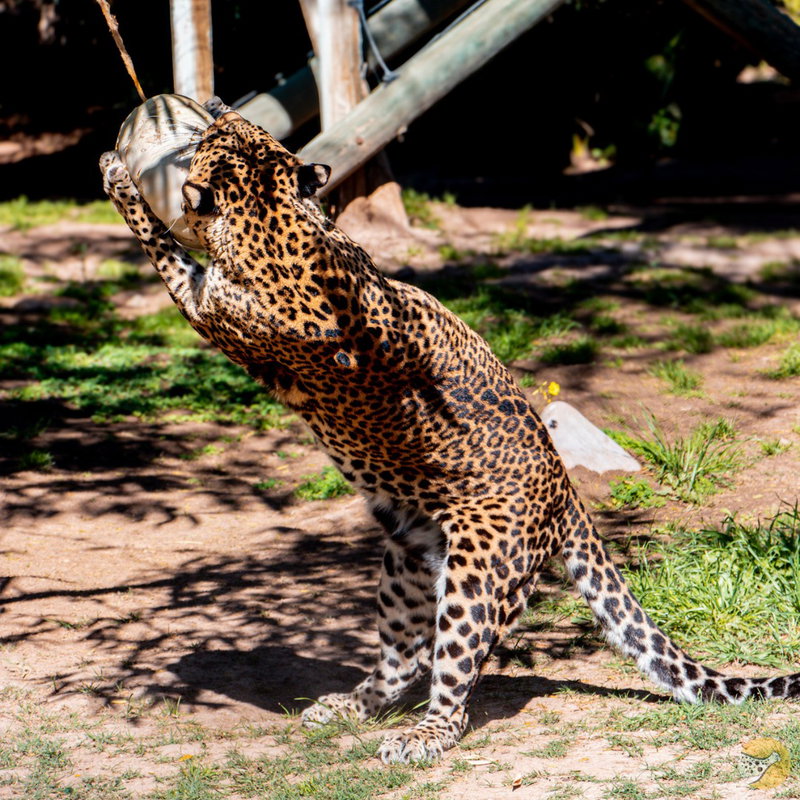
Behind every puzzle feeder, hidden treat, new scent or cleverly designed activity is a much bigger purpose: animal welfare. Enrichment plays an essential role in ensuring that animals in human care are not only physically healthy, but mentally stimulated, engaged and able to express their natural behaviours.
In this article, we take a closer look at what enrichment really means, why it is such an important part of daily animal care at Cango Wildlife, and how different activities are carefully designed to meet the unique needs of each species.
What is enrichment?
Enrichment is the practice of enhancing an animal’s environment and daily lives to encourage the expression of natural behaviours, stimulate their senses and promote the animal’s overall wellbeing. In the wild, animals spend a good portion of their day foraging, problem-solving, socialising, exploring and expressing species-specific behaviours. For animals in human care, it is our job to mimic and recreate those challenges and opportunities in creative ways that continue to grab the attention of the animals on a daily basis.
Why is Enrichment Important?
Without mental and physical stimulation, animals can become bored, stressed and start expressing stereotypical behaviours. By providing the animals with enrichment it helps to:
· Encourage natural behaviours such as foraging, digging, climbing and problem-solving
· Reduce stress and boredom
· Promote physical health and fitness
· Support mental stimulation and cognitive development
· Strengthens the bond between animals and their keepers
Why Enrichment Matters for Animal Welfare
Think about how you would feel spending every single day in the same room, looking at the same four walls, with nothing new to see, smell or do. It wouldn't take long before you started to feel restless, bored, frustrated, or depressed. Now imagine you couldn't simply get up and leave that room whenever you wanted to. That’s the reality for many animals in human care. Unlike us, they don't have the opportunity to leave their habitats whenever they choose to. Their habitats are their whole world, day in and day out.
That's exactly why enrichment is so essential to their welfare. By changing scents, textures, layouts and giving them challenges regularly, we give animals new things to investigate and engage with even within the same space. It keeps their environment dynamic rather than static, which is a key part of protecting their mental and emotional wellbeing, not just their physical health, ensuring that they have good welfare.
One Size Doesn’t Fit All
Every species has different needs, instincts and natural behaviours, so enrichment can never be a “one size fits all” approach. What excites a meerkat will mean nothing to a macaw and what challenges a squirrel monkey won’t necessarily stimulate a porcupine. That’s why it is essential to understand each species natural history, behaviours and instincts when designing enrichment so that it actually makes a difference and enhances their welfare.
Types of Enrichment
There are several different categories of enrichment such as feeding/foraging enrichment which includes puzzle feeders, scatter feeding the animal’s meals and hiding treats for the animals to explore and find. Sensory enrichment includes new scents, sounds, textures or tastes. Environmental enrichment is new furniture, substrates or layout changes in the animal’s habitats. Cognitive/training-based enrichment such as husbandry training and problem-solving tasks. Lastly, there is social enrichment which gives animals the opportunity to interact with others of their kind or even bonding with their keepers.
Why We Do Enrichment at Cango Wildlife
At Cango Wildlife, animal welfare sits at the heart of everything we do. Enrichment isn’t optional, it’s a core part of our daily animal care. It gives our animals the opportunities to express their natural and species-specific behaviours, while also keeping them physically and mentally fit, allows us to monitor their wellbeing and helps to create more meaningful experiences for the animals in our care.
My Current Focus: Porcupines, Meerkats, Blue and Gold Macaws, Sun Conures, Squirrel Monkeys and Bat-Eared Foxes
My enrichment work currently is centred around a wonderful group of highly intelligent animals including the porcupines, meerkats, blue and gold macaws, sun conures, squirrel monkeys and bat-eared foxes.
For the porcupines, enrichment is often centred around scent trails and foraging opportunities that tap into their strong sense of smell and natural digging instincts. We also give them enrichment items that they can gnaw on which help to naturally wear down their teeth as porcupine’s teeth never stop growing.
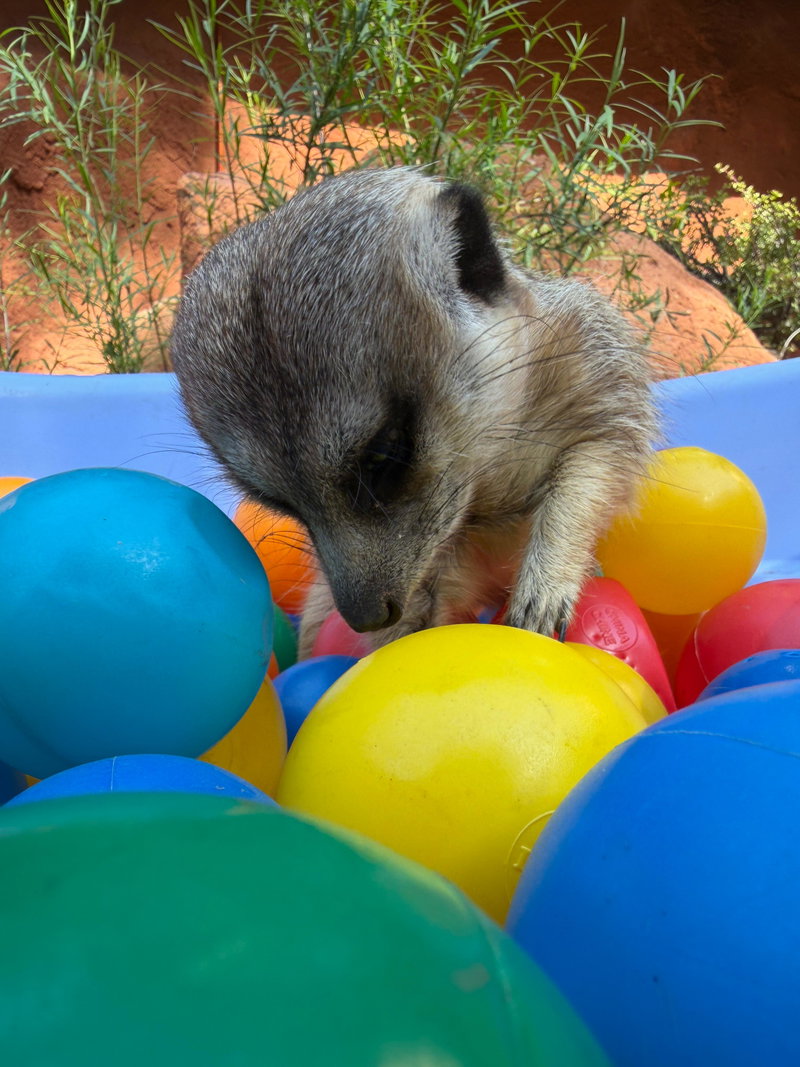
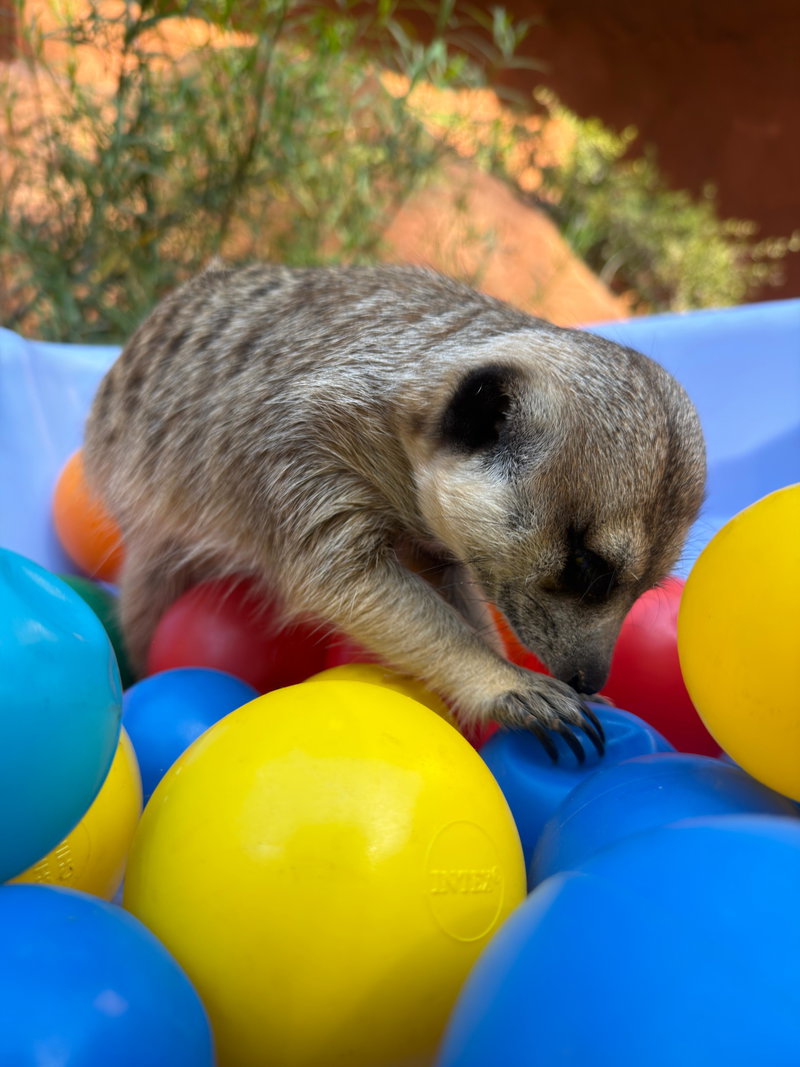
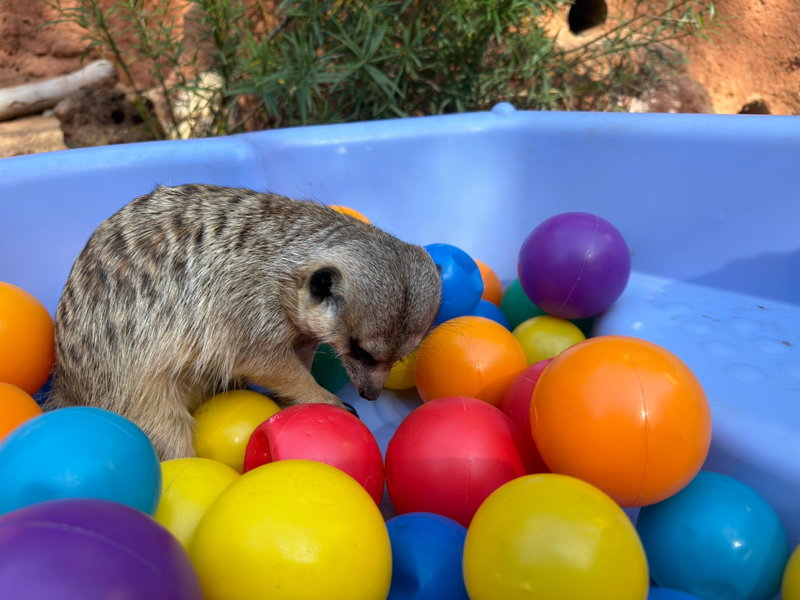
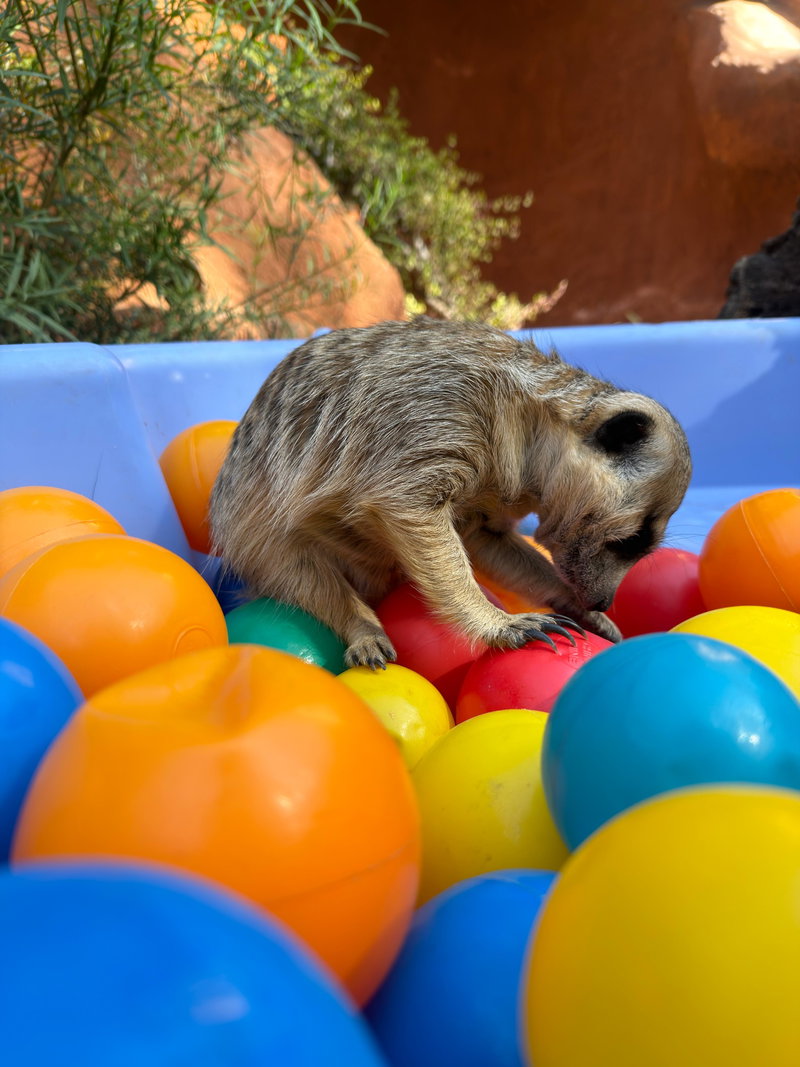
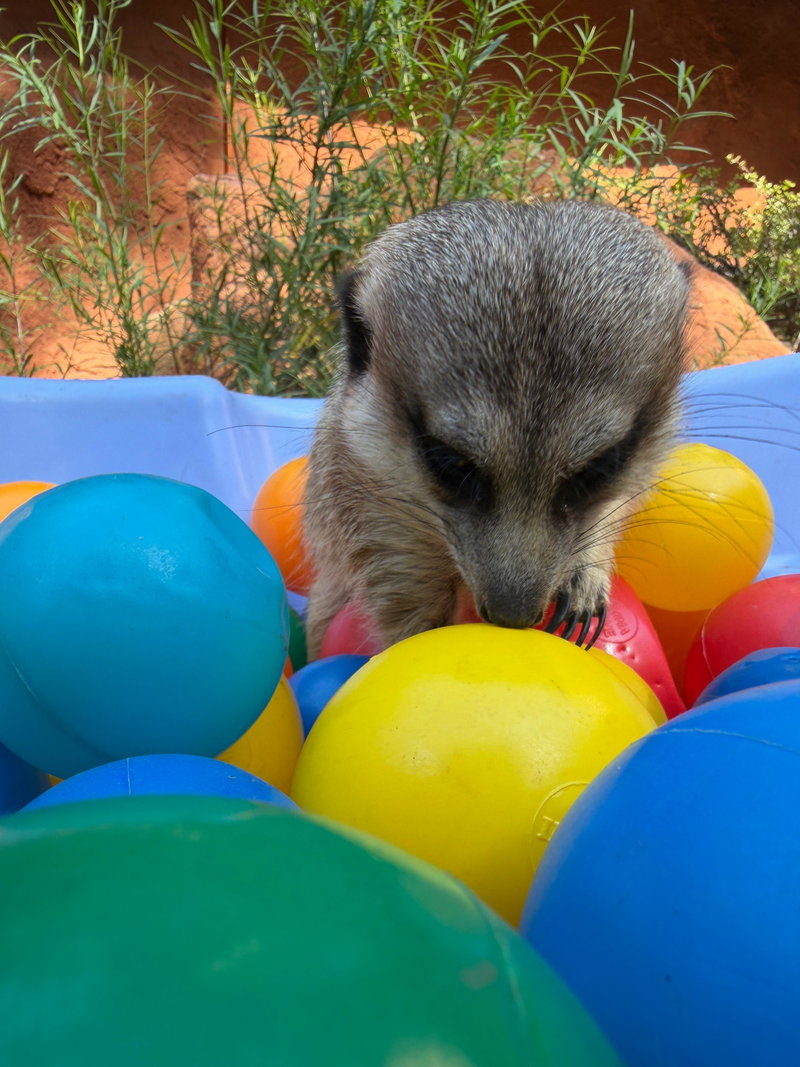
The meerkats thrive on activities that encourage their sharp foraging, digging and investigatory behaviours. One of our meerkat’s favourite enrichment items is a Kong ball with mealworms on the inside, which they have to roll and scratch to get to the reward on the inside.
Birds are extremely intelligent animals, and they require a lot of stimulation and attention, so with the blue and gold macaws and the sun conures, their enrichment is more focused on cognitive challenges and foraging puzzles. The blue and gold macaws also have very strong beaks, and they love a good hanging toy to destroy.
For the squirrel monkeys, I focus on activities that stimulate their cognitive and problem-solving abilities, usually in the form of a hanging puzzle feeder or giving them something with multiple layers that they need to figure out how to get through to get to the reward in the middle.
The bat-eared foxes are known for their large ears, and they enjoy hunting for insects. They respond well to auditory, scent-based enrichment along with digging and foraging opportunities that mimic them having to listen, dig and forage for their reward.
Even though all six species get different enrichment the goal is the same, to give each animal the chance to express their natural behaviours, stay mentally engaged and reduce stereotypical behaviours. Allowing the animals in our care to thrive in their environment. Enrichment is a small daily effort that makes a big difference in the animal’s lives and it is a privilege to see the animals light up when given the chance to be truly themselves.
Written by Cango Academy student – Zhenzin-Bo Claassen
Share This Post
Latest News
-
 A Little Piece Of Africa, Forever
Wed September 30, 2026 -
 From Cango To Kruger: Sharing The Story Of Project ZOA
Wed September 30, 2026 -
 Planting For The Future: Arbor Month Takes Root At Cango Academy
Wed September 30, 2026 -
 Building Trust, One Click At A Time
Tue September 29, 2026 -
 Trust Is Earned, Not Expected
Tue September 29, 2026 -
 Born To Be Wild: Celebrating 40 Years & Building The Next 40
Tue September 29, 2026 -
 Coming Home To Cango
Tue September 29, 2026 -
 A New Campus And It Is Only The Beginning
Thu August 27, 2026 -
 Making Waves Beyond Cango
Thu August 27, 2026 -
 Two Peas In A Pod
Thu August 27, 2026
Further Reading

A Little Piece Of Africa, Forever
Wed September 30, 2026
Read This Article
From Cango To Kruger: Sharing The Story Of Project ZOA
Wed September 30, 2026
Read This Article
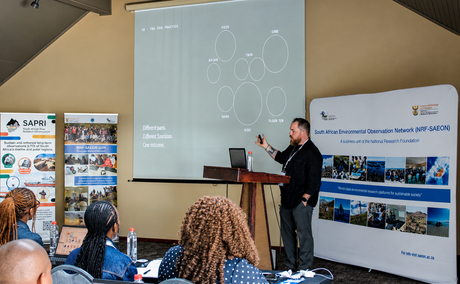
Cango Wildlife CEO Douglas Eriksen recently took Project ZOA to a new audience, delivering the keynote address at the 18th NRF-SAEON Graduate Student Network Indibano in Hazyview, Mpumalanga, on 16 September 2026. The South African Environmental Observation Network (SAEON), a research platform of the National Research Foundation, brings together scientists working across South Africa’s terrestrial, marine, freshwater and atmospheric environments. Its Graduate Student Network connects Master’s and PhD researchers from across the...
Planting For The Future: Arbor Month Takes Root At Cango Academy
Wed September 30, 2026
Read This Article
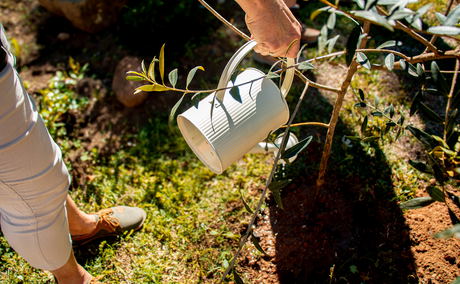
The final day of Arbor Month brought with it a fitting moment of growth at the newly opened Africa Skills Cango Academy, as representatives from the Garden Route District Municipality joined the Cango team for the handover and planting of indigenous trees. The Garden Route District Municipality donated 35 indigenous plants, comprising 20 Karee trees and 15 Spekboom, to be planted at the Academy. The initiative formed part of Arbor Month and...
Share This Post